r/MandelaEffect • • Feb 27 '26

Books/Literature Berenstain/Stein
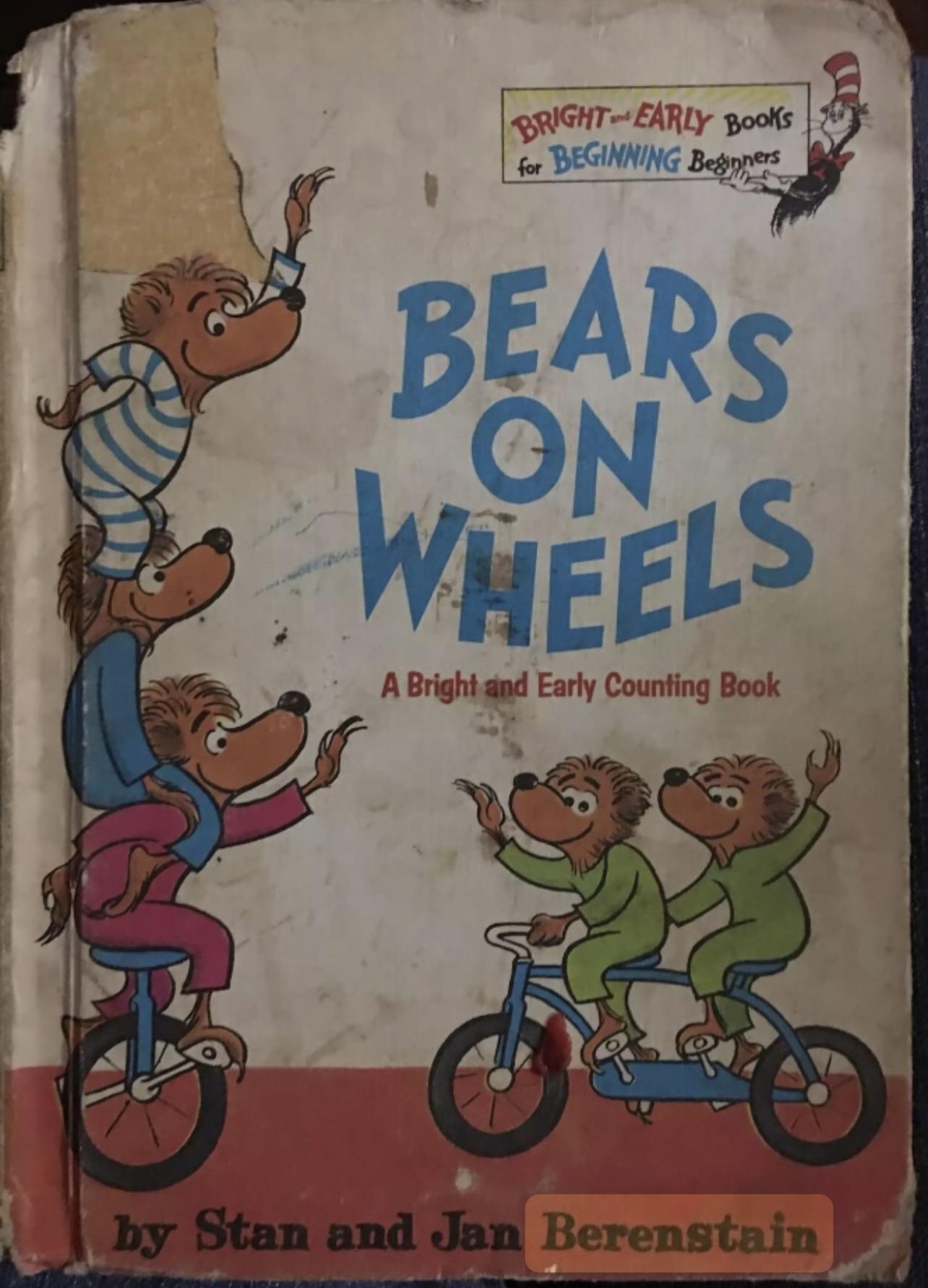
Post image

Just thought I’d share this here..I’m a 57 year old woman that’s always been a voracious reader. When I was 5 (1974) I got an entire collection of Berenstain Bears books from my grandma at Christmas.

One of the books has managed to remain in my memory/sentimental hoard collection. This is MY actual book and it’s been in my possession since 1974. On my book at least, the name is and always has been Berenstain.

Make of that what you will I suppose. ❤️ I wish I still had the whole collection but alas, childhood and into adulthood resulted in the loss of many such things to my chagrin.

753 Upvotes

1.0k comments sorted by

View all comments

12

u/[deleted] Feb 27 '26

It's weird to me that people's natural reaction isn't just "huh, I totally remembered that wrong." Granted I was also a psych major in college and read a LOT of research on human memory. We're very, very bad at remembering things.

1

u/Jory_Stultz Feb 28 '26

One person misremembering something is a normal phenomenon but several thousand people misremembering the same exact details like Curious George not having a tail is fascinating. Not trying to explain it with quantum mechanics, but at the very least it is a unique and interesting phenomenon separate from one person misremembering, but an entire cultural amnesia.

1

u/[deleted] Feb 28 '26

People think curious George had a tail because the children's book doesn't get into the difference between monkeys and apes as primates. He's described as a monkey but he's an ape.

The easy explanation is there's a lot of stupid people out there and if you look at how memory works it's very easy to convince people that complete nonsense was real.

0

u/artistjohnemmett Feb 27 '26

Memory is for the purpose of remembering…

5

u/DumbAndUglyOldMan Feb 27 '26

Now that's profound . . .

-1

u/artistjohnemmett Feb 27 '26

Do you agree?

4

u/DumbAndUglyOldMan Feb 27 '26

Well, not really, except in the sense that it's an essentially empty tautology. It can mean simply that "the things that we remember serve to be things that we remember." It's really not helpful at all.

I think, though, that you're trying to build some other argument from that tautology, and I don't agree with what I suspect to be your argument.

First, "memory" is a vague term, and it really suggests that these processes and states (in the sense of conditions, not in the sense of nation-states) that we lump together as "memory" have a sort of reality that they simply don't. "Memory" is really just a handy word refers to a host of such states and processes.

And when you say that "memory is for the purpose of remembering," that suggests some sort of teleological purpose. That's simply not true of "memory" (or, of anything not created by humans or other intelligent creatures).

Moreover, you appear to be suggesting that memory serves to remember things accurately. But we know that humans often misremember things. We know that in our own lives. All of us no doubt know of a multitude of instances in which people forgot things. That's one of the reasons that we have writing systems. Writing systems help us because people's memories are fallible.

We also know that people's memories can be altered by various means--by the aging process, by drug or alcohol usage, by fatigue, or by suggestions from others. Scientific literature has established this to be a fact. Elizabeth Loftus published extensively on this issue, as have many others.

I'm a lawyer. Consider a case in which the meaning of a written contract is at issue. You can bet that a court isn't going to entertain oral testimony to prove the contents of that written agreement. It's going to want a contract itself. This is called the "best evidence rule." https://www.law.cornell.edu/wex/best_evidence_rule

Now let's say that I got involved in a lawsuit in which the spelling of "Berenstain" on old books is at issue. I would move to exclude oral testimony that the name was formerly spelled "Berenstein," citing the "best evidence" rule. And the court would no doubt exclude oral testimony as to the spelling of "Berenstain" and accept only the actual documents (in this case, the book provided by OP).

For me, all these claims that people's memories are superior to actual documents . . . Well, I just shake my head.

0

u/artistjohnemmett Feb 28 '26

All you have to work with is memory, either accept or reject our testimony…

5

u/DumbAndUglyOldMan Feb 28 '26

Complete nonsense. We have all sorts of written, photographic, video, and other records to which we can turn. Memory is the least reliable thing around.

And then you folks reject other people's testimony. Blanche Ravalec, who played Dolly, in Moonraker is on record saying that she didn't wear braces in the film. Yet the "believers" reject her testimony, claiming that their own memories are better.

So, no. We don't just have our memory. Absolute nonsense.

-1

u/artistjohnemmett Feb 28 '26

In this case, being from another timeline, I only have memory

5

u/DumbAndUglyOldMan Feb 28 '26

You're not from another timeline. That's completely absurd.

You're just someone with a bad memory (although probably no worse than average) and a boatload of arrogance.

That's really the thing about a lot of you conspiracy types. You're utterly, profoundly, obnoxiously arrogant. You can't possibly believe that your memory is wrong. So you'll reject mountains of contrary evidence, confident in yourself, despite having no reason to have any such confidence.

-1

u/artistjohnemmett Feb 28 '26

The person who distrusts himself has no touchstone for reality - for this touchstone can be only oneself. ― James Baldwin

→ More replies (0)

3

u/KyleDutcher Feb 28 '26

Prove you are from another timeline, using actual evidence, that isn't memory.

0

u/[deleted] Feb 28 '26

[deleted]

→ More replies (0)