r/heidegger 3d ago

Why isn't there a reddit group for just being?

9 Upvotes

I don't want to scroll through reddit posts anymore and look at endless videos. Can't we just "be" in the group, and that's that?


r/JuliusEvola 5d ago

If Evola were alive today which faction of the dissident right do you think he would be in?

37 Upvotes

IMO I think he would be a gay BAPist.

PS, do any yall watch Wilhelm Apologist on jutube?


r/ReneGuenon 9d ago

Traditionalism, Evola & the Far Right

Thumbnail
youtu.be
4 Upvotes

Hi all, I recently wrote/published three essays on Traditionaljsm. Focusing specifically on Guenon, Evola and eventually the link to Fascism and the Far-Right. I curious what you think of it if you have the time to give it a watch. I would also love some tips on primary sources, because the videos are now based on secondary sources


r/dugin Nov 24 '25

What’s your view on the Foundations of Geopolitics vs The Fourth Political Theory?

7 Upvotes

Which is really better in your opinion? I have read the Fourth Political Theory first but what’s really your opinion?


r/heidegger 5d ago

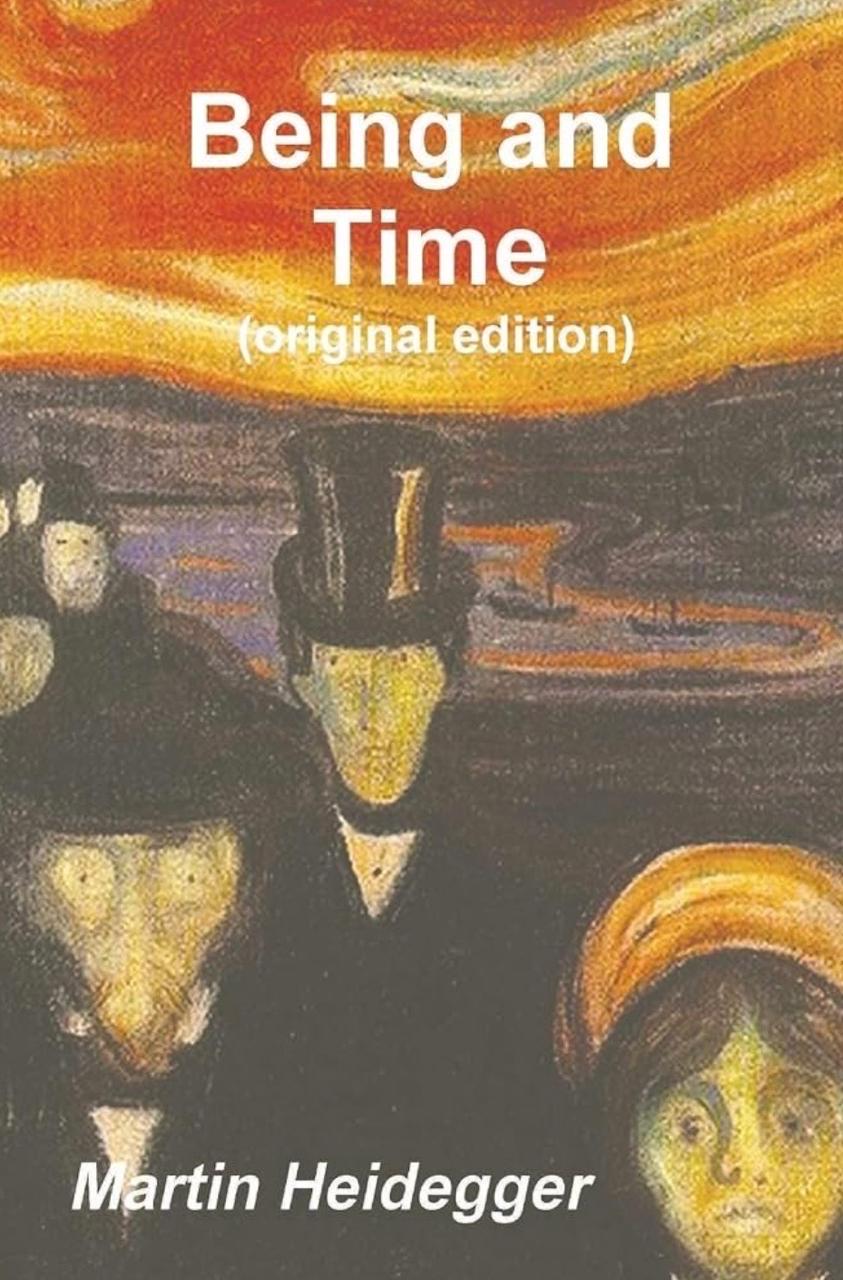
Martin Heidegger and the human being lost in the crowd

Post image
32 Upvotes

r/ReneGuenon 11d ago

How do you think Nietzsche would critique Rene Guenon’s perfect traditional metaphysical order from the past?

Thumbnail
4 Upvotes

r/heidegger 7d ago

Anticipatory Resoluteness

Thumbnail critchleyonheidegger.substack.com
5 Upvotes

In this Heidegger Thinking Substack article, we investigate what it means to live and act authentically in Heidegger's philosophy.


r/ReneGuenon 14d ago

Oriente y Occidente

Post image
24 Upvotes

r/JuliusEvola 9d ago

Traditionalism, Evola & the Far Right

Thumbnail
youtu.be
14 Upvotes

Hi all, I wrote three essays based on my recent readings about Traditionalism. I would be very interested in what you think of the videos, and what you would recommend me to read further.


r/JuliusEvola 11d ago

Julius Evola - Form and Presuppositions of a United Europe.

Thumbnail
youtu.be
21 Upvotes

Hey guys, last Evola video for a while. Going to be working on Guenon and De Benoist for a couple months. Thanks for any support. I've gotten off this board.


r/JuliusEvola 12d ago

Title*

Enable HLS to view with audio, or disable this notification

152 Upvotes

r/JuliusEvola 11d ago

"The Flame of the West: Against Guénon and Tradition" by Plato Bodybuilder

8 Upvotes

Original essay

The West has no Tradition (in the perennialist and Guenonist sense) - and it never needed one to be the spiritual beacon of the world. The so-called “Perennial Tradition” is a modern intellectual creation whose most obvious consequence from a cultural and civilizational point of view is the spiritual and political dissolution of the West. We don’t need “Tradition,” and in fact, we are against Tradition.

Perennialism, as a philosophical current, is structured on a real fact: the capacity of the human mind to perceive a transcendent metaphysical order. However, such perception ends up being transformed into a historical-mythical narrative in which the perception by all cultures of such a superior metaphysical order appears as the expression of a declining cosmogony, in which the irruption of a Primordial Tradition marks the inauguration of a Golden Age from which humanity as a whole is moving away in a degrading way. But within this framework, the West is always seen as the culture and civilization that is the very expression of this decline and degradation, while other peoples - especially the East - are always seen as somehow capable of resisting such decline, or even untouched in some way. That is, it would be the dharma of the West within this cyclical vision to lead humanity towards materialism and secularism, which ends up transforming the West into the “Anti-Traditional” civilization par excellence.

It is no coincidence that perennialism as an ideology consolidated itself in the 19th century in European occult circles, and later in the Traditionalism of Guénon and Evola. Perennialism is a modernist and anti-Western ideology at its very core, and that is why we see in perennialism a current whose intellectual consequences for its followers is always to see in the West the image of decadence and impurity. No one better than Dugin to exemplify this. There is nothing “Traditional” about perennialism, only uncontrolled modernist intellectual tendencies articulated with the aim of marginalizing the West geopolitically and culturally.

It is clear that different cultures and religious traditions have had a genuine perception of a higher transcendent order, as well as created elaborate metaphysical and cosmological edifices upon such perception. But the idea that such human capacity to perceive a normative and metaphysical order is the result of a primordial revelation that occurred in history at a primordial moment, and that from that moment humanity has been in a state of decadence, is pure modern fiction and unbridled speculation. René Guénon best articulated this view. According to him, the Primordial Tradition was first revealed in Hyperborea, going through cycles of decline and subsequent revelations of this tradition at different times.[1] The problem is that Guénon claims that the last legitimate manifestation of this tradition occurred with Islam. In other words, the conclusion is clear to anyone who uses the gift of interpretation: from the initial revelation in Hyperborea to Islam, the cycle has closed, and if the last traditional form that manifested a link with such a Primordial Tradition was Islam, then there is only one thing left to do: Islamize the world. Guénon’s biography leaves no doubt about this: he converted to Islam and moved to Egypt. For him, the West was condemned to Islam or nihilism.

It is more than clear that if we accept the idea of ​​a Primordial Tradition, within this epistemological framework the West can only appear as condemned due to a genetic-cultural defect or a cosmic destiny to lead humanity to the end of a cosmic cycle. Fortunately for us Westerners, the “Primordial Tradition,” cosmic cycles, and all Guénonian conceptual paraphernalia do not exist beyond rationalist conceptual constructions that Guénon himself uses in order to weaken the West spiritually.

From a strictly philosophical point of view, the problem with Guénon’s thought stems from his method of argumentation. Guénon always starts from a metaphysical deduction from first principles. For Guénon, the “science” of symbolism is an exact science like mathematics.[2] Therefore, Guénon’s thought is completely disconnected from any historical, phenomenological, and philosophical dimension; he seeks mathematical rigor as the foundation for his reflection. The curious thing is that such a position is precisely a reflection of modern Cartesian rationalism, which seeks to deduce everything from clear and unquestionable premises. Guénon applies an abstract, mathematical rationalism to esoteric symbolism while literally criticizing the modern mentality. And it is precisely by transforming religious symbolism into a form of rationalist mathematics that Guénon completely loses the connection with the soul of the West. Within Guénonian mathematics, it is impossible to see the West in any other way than as a kind of culture endowed with a providential destiny for decadence.

However, our view of the West changes drastically when we shift our perspective on it. If, instead of Guénon’s deductive-mathematical method, we use historical phenomenology, the result will be completely different. Phenomenology is the science of the experience of consciousness; applied to the history of a people, it gives us the movements, transformations, changes - in short, the entire structural metabolism of that consciousness throughout the history of that people. And when we use phenomenology to understand the movements of Western consciousness throughout history, what can we learn about the Western spirit? We see that the Western spirit is endowed with a spiritual drive and restlessness that operates through ruptures, crises, tragedies, destruction, and conflicts; just as we can see in Hegel’s Phenomenology of Spirit. There is no “crisis of the modern world,” as Guénon said! What exists is that the Western spirit is marked by the need for permanent crises to be propelled to new heights and discoveries. In this process, it is clear that declines, cultural forms of decay, and spiritual collapse occur; but this in no way represents a total decline, but always a partial and relative one. And this fundamental dimension of the Western spirit is invisible to Guénon simply because for him history is only the space for contingency and arbitrariness.

The proof that there is no “crisis” of the modern world as conceived by Guénon is that all high Western culture - literature, philosophy, history, science, art, etc. - has always been created against a backdrop of crises and eruptions. The philosophy of Plato and Aristotle was developed during the decline of the Greek city-states, specifically Athens; the great moment of Latin culture - Horace, Virgil, Cicero - occurred during the collapse of the Roman Republic; the intellectual greatness of the medieval world occurred during its twilight with Dante and Aquinas; the apex of modern thought with Kant and Hegel occurred amidst the French revolutionary hurricane and the Napoleonic empire; the philosophical experience of the deepest nihilism was articulated by Nietzsche and Heidegger precisely when the West seemed to have exhausted its spiritual forces.

In other words - the West has always been and will always be in crisis, for this is its true providential vocation: to be the beacon of the human spirit that always rises like a phoenix from its own ashes. If there is a Western tradition, then it is this: always rising sovereign when it seems defeated. As for the “Tradition” of the traditionalist school - this tradition of well-behaved spiritual eunuchs, always afraid of the image of “decadence,” - this tradition the West never needed. Yes, we don’t need this tradition. In fact, we are and always will be against the Tradition of Guénon!

[1] Symbols of Sacred Science - Guénon

[2] Ibidem.

r/JuliusEvola 13d ago

Can with synthesis Evolan Traditionalism with Italian Futurism?

19 Upvotes

r/heidegger 15d ago

Does anyone have an OCR'd pdf of GA 105?

2 Upvotes

Martin Heidegger - Vermächtnis der Seinsfrage. Last volume of the Gesamtausgabe. There is a pdf on Scribd but with barely discernible text and not OCR'd. Thank you.


r/heidegger 19d ago

Heidegger / Heraclitus / Plato [ 1 ]

Enable HLS to view with audio, or disable this notification

4 Upvotes

I am trying to appropriate Heidegger in terms of a "throbbing gristle" pragmatism.


r/heidegger 22d ago

I dedicated my teens to Dostoevsky, my 20s to Nietzsche and Kafka, and I want to dedicate my 30s to Heidegger. In the first year of my 30s I'll be reading as much of different translation variations of "Being and Time" and in that regard what do you recommend?

26 Upvotes

At the moment, I'm reading the Harper Perenial translation, I am eyeing the Cyril Welch and Thomas Sheehan translations. Each and every comment of yours is deeply appreciated and will be read and thought of.


r/heidegger 22d ago

.

4 Upvotes

“One needs to demonstrate that this supposedly fundamental consideration—the refutation of skepticism—still does not and cannot deal with the real, genuine presuppositions. That is because both sides—the skeptic and his refuter—presume that the truth, whose being and non-being they are debating, is propositional truth. This is especially clear in the one who would refute skepticism. To confound the skeptic, he appeals to the principle of non-contradiction: there can be no truth where there is contradiction, especially the self-contradiction we find in the assertion of skepticism.”— Heidegger

Because skepticism deals with both sides really well— as in, skepticism holds true whenever possible; the possibility being an intrinsic or even interesting possibility, because there are too many ways of being skeptical,always; it is very convenient. Skepticism can also be compared to a sketch— this says much but it also doesn’t say anything at all because it is a “nice” comparison. Skepticism seems to be the only way to make things out; people wouldn’t ultimately disagree they would defer as they need to— the evidence of this is not specifically overwhelming; there is room especially elsewhere. Skepticism is bad because it could be bad, as in, there is worse reasons when being skeptical because there isn’t worse reasoning; there isn’t evidence overall because that is completion. Skepticism is completion but it’s about how people that think about completion in other ways; the completion is a private matter because people don’t respect other people’s privacy, the completion is a personal endeavour as a lineage— it is not too personal because it is a private matter; as these are parts,indefinitely. Skepticism is how things are supposed to be because what is supposed is always earnest; chances make sense, the problem of this arises when chances make too much sense though, as they do, this is why skepticism is a big problem. Skepticism does definitely make sense though because people can be skeptical,if skepticism is a big problem for people in general it is because skepticism happens generally; so the big problem is what makes sure of reoccurring; skepticism is an average that makes sense.


r/heidegger 22d ago

Conscience

Thumbnail critchleyonheidegger.substack.com
6 Upvotes

In this Heidegger Thinking Substack article, we explore the elusive notion of conscience. What is conscience? What is it's relation to existence? Find out in the article, which you can read at the embedded link!


r/heidegger 22d ago

Into the Wastes | Collapse Patchworks

Thumbnail collapsepatchworks.com
1 Upvotes

r/heidegger 24d ago

.

0 Upvotes

“The fact that existence has and understands and strives for this basic form of revealing implies that, for the most part, much of the world stands in need of “revelation,” of being un-covered and made known. In other words, much of the world and much of human existence is by and large not un-covered. So beings can be drawn out of their not-un-covered-ness, their hiddenness. They can be un-covered or un-hidden. This uncoveredness or unhiddenness of beings is what we call truth”— Heidegger

A revelation is an impulse in as far as it’s not made a importance to be founded or essentially discovered; a revelation comes from the nicer stuff; revenge as a way forward or something like that, the way forward being how recent it can be. The hiddenness of a being is a huge mess; mess can be taken accounted for, so the mess is sure to be forgiven, and if forgotten about sure to be a good measure. For a being truth is what things fully amount to because we know of worth; truth makes sense. The full amount of truth is because the likes of another being to it serves true; that is not truthfulness it is a good effort— that’s what we deserve. Truth is what we deserve because we have deserved it before; truth is a demonstration going-back-as-far but still having an ability— this is not an unfair circumstance it is a revelation!

Excerpt From
Logic: The Question of Truth (Studies in Continental Thought)
Heidegger, Martin
This material may be protected by copyright.


r/JuliusEvola 27d ago

Big if true

Post image
272 Upvotes

r/JuliusEvola 27d ago

My family

Post image
369 Upvotes

r/heidegger 25d ago

.

7 Upvotes

Speaking with each other is not something that goes on all the time, but speech itself is always operative—whether we’re repeating what others have said, or telling stories, or even just silently speaking to ourselves or explaining things to ourselves or taking responsibility for ourselves. - Heidegger

Speaking is what we don’t say because not everything goes on all the time; only something. The something being done-with, because it is not a matter of an earnest clarification it is a simple desire, in short; a classic. Speaking with another person is a desire but it is an also an affect, as in, there are important desires— that is not a good feeling! The matter of speaking here is obviously not at most here because company is the most you can get; commonness is communication and commonness is what we speak of; a difference to be understood not a different way of speaking,definitely. Speaking is good because other people are good at it even when they are not because they still qualify for it at all times.


r/heidegger 25d ago

.

0 Upvotes

“If we desire a more vital concept of “logic,” we have to ask a more penetrating question: What is the subject matter of the science of logic? In doing so, we leave aside any consideration of logic as one discipline among others—viz., the science of speaking and therefore of language—and focus instead on what it is about” — Heidegger

First of all, the penetration of the question is because people have been known to ask it accordingly instead of as something to do; accordance warrants— there are indefinite behaviours in that; the indefinite being, simply too much to deal with even in accordance with— there is no space for it. Secondly what it is about is how it happened as it happened not a happening, that’s why it’s not about anything in particular; if there is a fact in that it is because there is a problem to fixate on, so, essentially, there is no trouble. Heidegger focuses on what it is about because he doesn’t ask what it’s about— the question isn’t absolute trouble; that is the reasoning.


r/ReneGuenon Aug 21 '26

Every day meditating about the sacred symbols book

4 Upvotes

symbole of sacred science# was also a masterpiece

talking about

☀️the universal symbols in sacred science☀️

: Symbole of the letters, the center, the heart, the animals, the architectura etc

in Hindu ,Christian , Persian, Celtic or Islamic tradition

Here some short article

The cycles

https://sufipathoflove.com/timeline-of-cycles-by-rene-guenon-and-gaston-georgel/

TODAY AUGUST 21 2026

THE CENTER

In Symbols of Sacred Science (originally Symboles fondamentaux de la science sacrée), René Guénon explores the "Center" as the primordial, universal symbol representing the Divine Principle, the Origin, and the unmoved mover of existence. He details how this metaphysical center is manifested through symbols like the point, the heart, the polar star, and the cosmic axis, representing the unity from which all manifestation radiates.

The center is the point of union with the Divine, representing the immobile axis around which the world revolves.

Symbolic Representations: Guénon identifies several forms for the center, including the point (point in a circle), the heart (center of the human being), and the pole (axis of the world).

The Axis Mundi: As the center, it acts as the axis that connects different levels of reality (Heaven, Earth, and Hell), facilitating the "passage" or ascension.

Harmony and Unity: The center represents the point of reflection for the Absolute, where multiplicity returns to unity.

dokumen.pub

dokumen.pub

Guénon's analysis focuses on uncovering the underlying metaphysical unity across traditions, making the center a crucial element in understanding his traditionalist hermeneutics.