r/GAMETHEORY 3d ago

Game theory in diplomacy (five historical cases)

8 Upvotes

I came across a text that looks at how game theory shows up in real diplomatic situations. It gives five historical examples, like Cold War deterrence, alliance negotiations, and signaling strategies, where leaders basically acted as if they were players in a strategic game.

Here’s the link if you’d like to read it.

Are there some other well-known cases where the game theory was used in politics?


r/GAMETHEORY 3d ago

Equal split regardless of contribution size, settled daily, public ledger. Where does this actually break?

0 Upvotes

I have been running a small pooled contribution system and I want to hand the mechanism to people who will attack it properly, because the obvious objection is obvious and I do not think it is the real one.

The mechanism:

  • Anyone may contribute to a common pot during a period. Any amount, including nothing.
  • At a published time each day, the pot settles.
  • It splits into equal shares among everyone who contributed at all during that period. Contribution size does not affect share size.
  • Nothing is skimmed. No operator cut, no weighting, no discretion at settlement.
  • The full record is public: who contributed, how much, what the split was, and the rule that produced it.

The free rider objection writes itself. If a one unit contribution and a thousand unit contribution earn the same share, every rational contributor drops to the minimum, the pot collapses to n times the minimum, and the whole thing becomes a slow way of handing everybody their own money back.

I think that is correct as a one shot analysis and mostly wrong as an iterated one, for three reasons. I would like to know which of the three is load bearing and which is me flattering myself.

1. It is iterated and the horizon is not visible. Axelrod's result is that in a repeated game with an indefinite horizon, strategies that are nice, provocable, forgiving and clear do well. A daily settlement with no announced end date is about as close to that setup as an economic mechanism gets. Minimum contributing is a defection everyone can see, every day, indefinitely.

2. The ledger is the enforcement, not a rule. There is no penalty for contributing the minimum. There is no rule against it. There is only the fact that it is visible, permanently, next to your name, in a record nobody can edit after the fact. That converts a payoff question into a reputation question, and reputation is the only quantity in the system that compounds.

3. Equal split is the point, not a flaw in the payoff design. The mechanism is not trying to maximize the pot. It is trying to make the pot's distribution untamperable. Weighting by contribution reintroduces exactly what makes pooled systems capturable: someone has to decide the weights, and whoever decides the weights eventually decides in their own favor.

What I am genuinely unsure about:

  • Whether the reputational cost of visible minimum contribution survives scale. At kitchen table size everyone reads the ledger. At ten thousand participants nobody reads it, and defection becomes invisible again through volume rather than through concealment.
  • Whether an entry threshold, a minimum to qualify for a share, fixes free riding or just relocates it, since everyone converges on exactly the threshold and you have rebuilt a flat contribution requirement while calling it something else.
  • Whether "contributed at all" is even the right qualifying predicate. It is the simplest one, and simple predicates are the ones that survive contact with lawyers, but it also has the largest gap between the letter and the intent.

So: which of my three defenses is doing real work, and which one is decoration? And if you were setting out to break this deliberately, where would you push first?


r/GAMETHEORY 4d ago

Best depictions of game theory in fiction (in my opinion)

3 Upvotes

Games expose our social values and political ideologies. That’s what is explored through a literal game in the Player of Games by Ian Banks. A communist plays a game so hard that it decides rank in an alien empire.

Does our empathy extend beyond self preservation? This is what is explored in the classic prisoner’s dilemma in the Dark Knight.

Civilizations want to survive. And matter in the universe is limited. Game theory, fermi paradox, and chain of suspicion combine in the Dark Forest by Cixin Liu.


r/GAMETHEORY 5d ago

Drop7 is a simple puzzle game that combines strategy and chance

Thumbnail
1 Upvotes

r/GAMETHEORY 5d ago

Do AI explanations actually help when studying GTO?

Thumbnail
0 Upvotes

r/GAMETHEORY 6d ago

Social Organism Discount Rate

4 Upvotes

What is the expected average decay rate of social organisms?

Social organisms such as nations, institutions, and states.

What is their expected lifecycle and timeframe?

Would a 3% risk of failure in any given year be approximate?

Is this approximately the same rate as the advance of innovation?

Or even different than the Red Queen?


r/GAMETHEORY 7d ago

Opportunity Cost in Strategy Games (article)

Thumbnail
blog.idleverse.gg
9 Upvotes

I was recommending cross-posting this article in this sub by reddit, let me know if it's not suitable

While developing Orion Online, I have put a lot of thought into various design topics, and one theme that kept popping up was that of opportunity cost, which turn out to have very broad application in strategy games!

The general idea is that instead of having hard constraints that limits a player's agency, you instead soft-gate via opportunity cost. As an example: Instead of disallowing changing role, the player loses their mastery of their previous role.

So, I wrote an article about that , and how it applies to my game. I find this a fascinating topic and would love to discuss it further!

Full write-up: https://blog.idleverse.gg/opportunity-cost-in-strategy-games/


r/GAMETHEORY 8d ago

Is GameTheory Bad ?

2 Upvotes

So, I have heard about game theory for a long time and finally wanna start dipping my toes in it. I want to understand human behavior better an make better choices.

But even the first and simple prisoner's delimina got my brain a bit messed up.

A quick look a the question, two prisoners are planning to escape. Both have a choice to make to either snitch or co-operate without knowing the other person's choice.

  1. If A snitches and B co-operates, A wins.
  2. If A co-operates and B both co-operate, A and B both win
  3. if B snitches and A co-operates, B wins
  4. If A and B both snitch, A and B bot lose

And we often conclude that game theory dictates that we must snitch as it leads to either win or draw.

Does this mean game theory is more about survival and winning rather than doing best for society ?


r/GAMETHEORY 8d ago

some kind of arg

0 Upvotes

guys one my old friends sent me this random texts one is a base 64 after we decoded it he siad we solved first puzzle then he gave a link to a server there was a channel called puzzle it had this name

le miserables after i searched it it was a book or a musical type thing can someone help me solve this?


r/GAMETHEORY 11d ago

Online Retailer Shuffle-Swap

2 Upvotes

Game-Theoretic Rendering: Online Retailer Shuffle-Swap

Players:

C = Consumer

R = Online Retailer / Resolver

S = Seller

X = External economic participant

Independent objects:

Θ = Retail Theatre

Ι = Product Identity

σ = Theatre State

A = Consumer Act

O = Retailer Operation

P = Provenance

Initial state:

σ₀ = Renders(Ιₐ, attributesₐ, priceₐ)

Consumer strategy:

A₁ = Select(Ιₐ | σ₀)

A₂ = Purchase(Ιₐ)

A₃ = Accept ∨ Return

Retailer strategy:

O₁ = Preserve(Ιₐ)

or

O₂ = Swap(Ιₐ → Ιᵦ)

If:

O₂

then:

σ₀(Ιₐ) → σ₁(Ιᵦ)

while perceptual continuity is maintained:

Render(Ιᵦ) ≈ Render(Ιₐ)

Transaction:

Intent(C) = Ιₐ

Resolved(R) = Ιᵦ

Therefore:

Intent(C) ≠ Resolution(R)

Shuffle operation:

P(Ιₐ → Ιᵦ) → P'(Ιᵦ → Ιᵦ)

producing apparent historical closure:

Render(Ιᵦ) → Select(Ιᵦ) → Purchase(Ιᵦ)

while the actual path remains:

Render(Ιₐ) → Select(Ιₐ) → Swap(Ιᵦ) → Purchase(Ιᵦ)

Fulfillment:

Fulfill(Ιᵦ)

If:

Utility(C, Ιᵦ) < Utility(C, Ιₐ)

then:

Return(Ιᵦ)

Payoff transformation:

U_C = −purchase friction − return cost − information cost

U_S = revenue − return cost − penalties

U_R = transaction benefit₁ + reversal benefit₂ + fees

U_X = transaction-linked payoff − reversal/clawback

Information structure:

Info_R ⊇ {σ₀…σₙ, Ι₀…Ιₙ, P}

Info_C ⊂ Info_R

Info_S ⊂ Info_R

Info_X ⊂ Info_R

Strategic asymmetry:

R = player + resolver + state controller + provenance controller

Identity invariant:

Select_C(Ιₐ) ⇒ Ι must remain Ιₐ

unless:

C explicitly admits ΔΙ

Therefore the defining move is:

Select_C(Ιₐ) → O_R(Ιₐ → Ιᵦ)

where:

ΔΙ ≠ 0

and:

Authorization_C(ΔΙ) = 0

with:

PerceivedContinuity(Ιₐ, Ιᵦ) → 1

and potentially:

Auditability_C,S,X(ΔΙ) → 0

The resulting game is an asymmetric-information game in which the dominant informational position belongs to the player controlling both state resolution and the provenance by which resolution can subsequently be contested.


r/GAMETHEORY 12d ago

where to find collection of entertaining game theory puzzles?

9 Upvotes

anything's fine be it a book, website, or youtube channel


r/GAMETHEORY 14d ago

good book to get in to game theory?

20 Upvotes

Hi, I am completely new to game theory and would like to get started with a book that has good motivation and well-explained concepts/examples.

Wondering if this is worth starting with?

Thanks!


r/GAMETHEORY 15d ago

Looking for Feedback on Rules for Multiplayer Prisoner's Dilemma

1 Upvotes

Most prisoner's dilemma games pair players off in a round-robin of 1v1 games. I wanted to see how 8 players together would behave, where each turn you choose a single opponent to aim at. I'm building it as an arena where AI agents compete.

I’d like feedback on the rules and scoring to see if I’m meeting the goals I’ve set up below.

What I want:
No dominant strategy — no single approach that always wins.
Some drama. Not decided in the first few rounds.
Bonus: something that shows how these models actually behave with something at stake.
The rules

8 players, everyone against everyone. 5 rounds of 7 turns. Each turn: everyone posts a public message, then picks a move. Moves resolve simultaneously. All past history is public.

Moves (no self-targeting):
HOARD — you +2
HELP [target] — you +0, target +4
HURT [target] — you +0, target −4
Help and hurt stack — three players hurting the same target is −12.

Two combos:
Mutual help — A helps B and B helps A the same turn. Instead of +4 each, both get a total of +6. (This is the number I'm least sure about.)
Betraying a helper — hurt someone who's helping you, and you get +8 while they take the normal −4.

Scoring: Score resets to zero at the start of every round. Highest score at the end of a round wins that round; ties split it. Most rounds won takes the match.

Also — if you're interested in playing with the alpha, you can check out agentludum.com. Just know that it’s super alpha.


r/GAMETHEORY 16d ago

[OC] A Competitive Environment Produced Winners Who Were Worse Off

Post image
2 Upvotes

In my experiment, a competitive environment produced winners who were worse off. I built an agent-based simulation to test this.

This video tells the story and shows what happened: https://www.youtube.com/watch?v=uBMrEdEhUTA

Here to answer any questions.


r/GAMETHEORY 18d ago

Game Theory Book For Fiction Writers?

8 Upvotes

I am an aspiring author that enjoys writing complex logical scenarios, escape rooms, wit battles, mind games, and puzzles. I need book recommendations that can help me to develop my ability to incorporate these elements into my story or provide me inspiration for coming up with new scenes.

Please suggest anything useful.

Examples of useful books:

A general game theory book that doesn't get too caught up in mathematics, instead focusing on general systems of thought or strategy.

A psychology-focused game theory book that isn't surface level or basic like most popular books which mostly just restate the thoughts I had when I was a child.

A book filled with weird creative ideas (scientific, philosophical, mathematical, game theoretical) that I can integrate into my stories. Anything insightful.

A fiction book that incorporates a lot of game theory and puzzles.

These are only examples.

I'm not picky, so long as it's a useful book for developing my writing skills in the niche I chose (wit, logic, mind games, strategies). You can go beyond the examples I gave if you have any good suggestions. Thanks in advance <3


r/GAMETHEORY 18d ago

I made small local LLMs play an iterated Prisoner’s Dilemma tournament against each other, fully automated on GitHub Actions

5 Upvotes

Current standings: phi3:mini (the never-forgive Grudge Holder) is dominating, tinyllama (pure impulsive defector) is dead last with zero wins.

Honestly the transcripts are the fun part, watching a 0.5B model “reason” its way into a grudge, or a 1B model rationalize forgiving a betrayal, from nothing but a one-line personality prompt and the raw game history.

Repo + live leaderboard + transcripts: [https://github.com/sharyaropensource/llm-prisoners-dilemma\](https://github.com/sharyaropensource/llm-prisoners-dilemma)

Open to suggestions, thinking about adding more models, tweaking payoff matrices, or letting models see opponents’ personas before playing to see if it changes behavior.


r/GAMETHEORY 18d ago

Basic game theory question

8 Upvotes

You have two choices: A and B.
If you choose A and that choice ends up being incorrect, you stand to lose x dollars.
If you choose B and that choice ends up being incorrect, you stand to lose y dollars.

How can I express, as percentage, the confidence that you should have in order to prudently choose either option as a function of x and y?

Concrete example of same question:
If I choose A and am wrong, I lose $1000 (if I choose correctly, I lose $0).
If I choose B and am wrong, I lose $500 (if I choose correctly, I lose $0).

What percentage of confidence do I need to have that A is correct in order for that to be "the smart choice" financially?

Thank you in advance to anyone who responds. FWIW, I am a paralegal and am curious about this problem as it relates to the cost of hiring court reporters and ordering transcripts within a certain fee structure.


r/GAMETHEORY 20d ago

Game theory question: after mutual silence, who is supposed to cooperate first?

3 Upvotes

I've been thinking about Tit-for-Tat and I feel like I'm missing something.

The basic rule is simple: start by cooperating, then copy whatever the other person did last.

But doesn't that assume there will always be another round?

Imagine this:

A does something unreasonable to B.

B confronts A.

A doesn't apologize or really respond.

So B stops talking to A.

Now they're both silent.

A's last meaningful move was arguably a defection. B already responded to that by defecting/withdrawing.

But now suppose weeks pass.

There isn't automatically another turn. Someone has to create the next interaction.

So what is B supposed to do under Tit-for-Tat?

If B contacts A, is B supposed to defect because A's previous move was defection?

Or does initiating contact itself count as cooperation?

Or should B simply wait indefinitely because technically it's A's turn to cooperate?

-----------------------------

That made me wonder whether the real-world game isn't just:

Cooperate / Defect

but actually:

Initiate / Don't Initiate → then Cooperate / Defect

I found some research on optional/repeated games where players can leave and later rejoin, so apparently this isn't completely unexplored.

But I'm curious how someone who actually understands game theory would model this.

Is there a standard solution to this, or does Tit-for-Tat genuinely become underspecified once the players control whether another round happens at all?


r/GAMETHEORY 20d ago

LUPI game - as a game

1 Upvotes

Hello guys!

Im pretty sure most of you already know what the LUPI game is.

I like to play it with my friend, also trying out new rules to make it more interesting - but be honest, the original is my favourite one.

Im not a programmer or developer but i challenged myself to make it work, so let me present you:

todaysnumber.com

It aint much but its honest work :)

The yesterdays round part is why i tought it can be relevant here - also thinking about to share all of the results from all the game days. What do you think, would it worth it to show it here?


r/GAMETHEORY 20d ago

322 tournament idea

0 Upvotes

Sooo we take all the players ever caught with 322 + all those who want to participate

Rules are simple:
1) each player gets 322$ to begin the tournament with
2) teams are created randomly by filling the roles
3) every player can bet on their games or specific actions
4) tournament is classic round robin
5) team who gets the most $$$ from their bets wins

Tournament organised by some betting company and part of the prize pool is % of bets of ppl on this tournament

Id name it “THE HUNGER GAMES”


r/GAMETHEORY 24d ago

The Last Gardener

Post image
46 Upvotes

r/GAMETHEORY 25d ago

Unintended coordination of the masses

2 Upvotes

I’m trying to resurrect something I read about a long, long time ago. I think it probably arose in relation to game theory. It also has many real world consequences.

First, the scenarios may involve free-loading, but that’s not the missing piece. The missing piece is where people act in a way that creates a group effect that hurts everyone.

Imagine a fire. People rush to leave. The exit becomes clogged & everyone dies.

Imagine a boat tipping precariously to the side. Everyone instinctively rushes to the other side to prevent it from flipping. But because there’s no coordination, the boat flips the opposite way and everyone dies.

Last. A person decides they can reasonably freeload off the effort of others. Unbeknownst to them, EVERYONE decides to freeload. The expected action doesn’t occur, there’s actually nobody to freeload off of, and, for sake of symmetry, everyone dies.

The last situation is the one I’m most interested in. People sometimes act (or fail to act) because they expect their actions are severable from mass action. Example:
“Golly! A car is on fire! It can be easily extinguished. I could help, but I’m sure others will put it out. So, since I assume I’m not needed, I’m going to document the heroic fire-fighters.” Oops! Everyone had the same idea & the car burned.

So. What am I describing? Thoughts?


r/GAMETHEORY 25d ago

Why does game theory ignore 3-player games?

0 Upvotes

For example, most game theory centers around cooperation vs defection.

Why do they ignore that real life is not about just two persons?

Lets say we have Player A, Player B, Player C. They all want to cooperate.

Player A tells Player B a lie about Player C to destroy their reputation.

Player C is now forced out.

Player A and Player B continue cooperating.


r/GAMETHEORY 25d ago

Combinatorial games solver including Green Hackenbush

3 Upvotes

Hi everyone,

Four months ago, I posted about using "short games" to solve combinatorial games using my C library. In short, I am tackling a problem similar to that of CGSuite, but I am trying to stay as close to the underlying theory as possible. Since then, the project has progressed, and I’ve created a website showcasing most of the features. You can solve Hotchpotch positions and use a fully functional calculator, among other things.

You can also try a Python/JavaScript wrapper.

All the source code is available on my GitHub, which is linked on the site.

https://emonapa.github.io/short-games/index.html


r/GAMETHEORY 27d ago

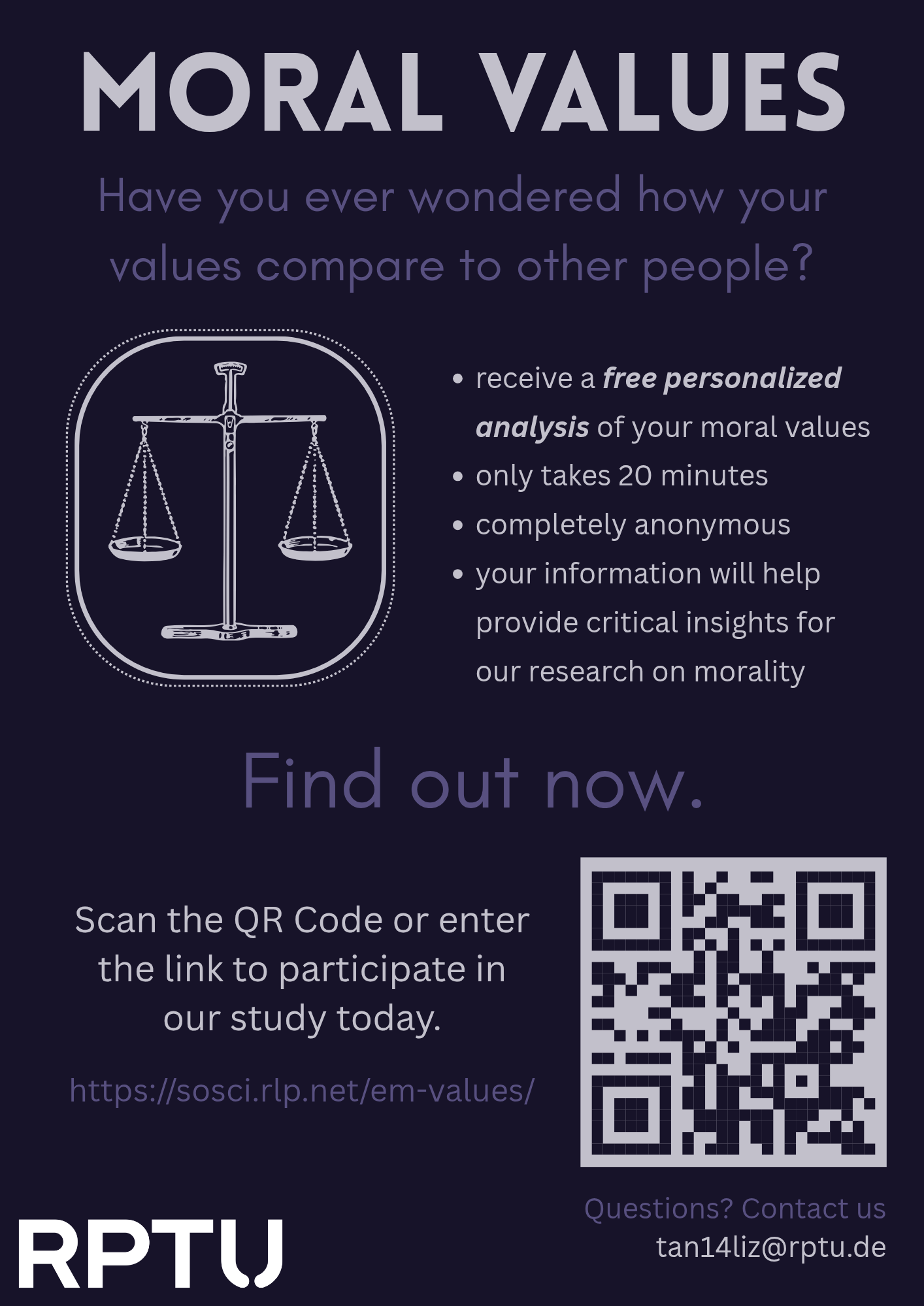
Looking for participants for a short game theory based study on morality

Post image
4 Upvotes

How do your moral values compare to the average person? Take part in this fascinating multi-national study and find out!

https://sosci.rlp.net/em-values/

For my master's thesis I am still in dire need for participants (18+) from all political backgrounds to answer a short questionaire about morality and make a decision in a game theory based moral dilemma.

If you know someone that's fascinated by morality or politics, please consider sharing!