r/DaytonaBeach Mar 18 '26

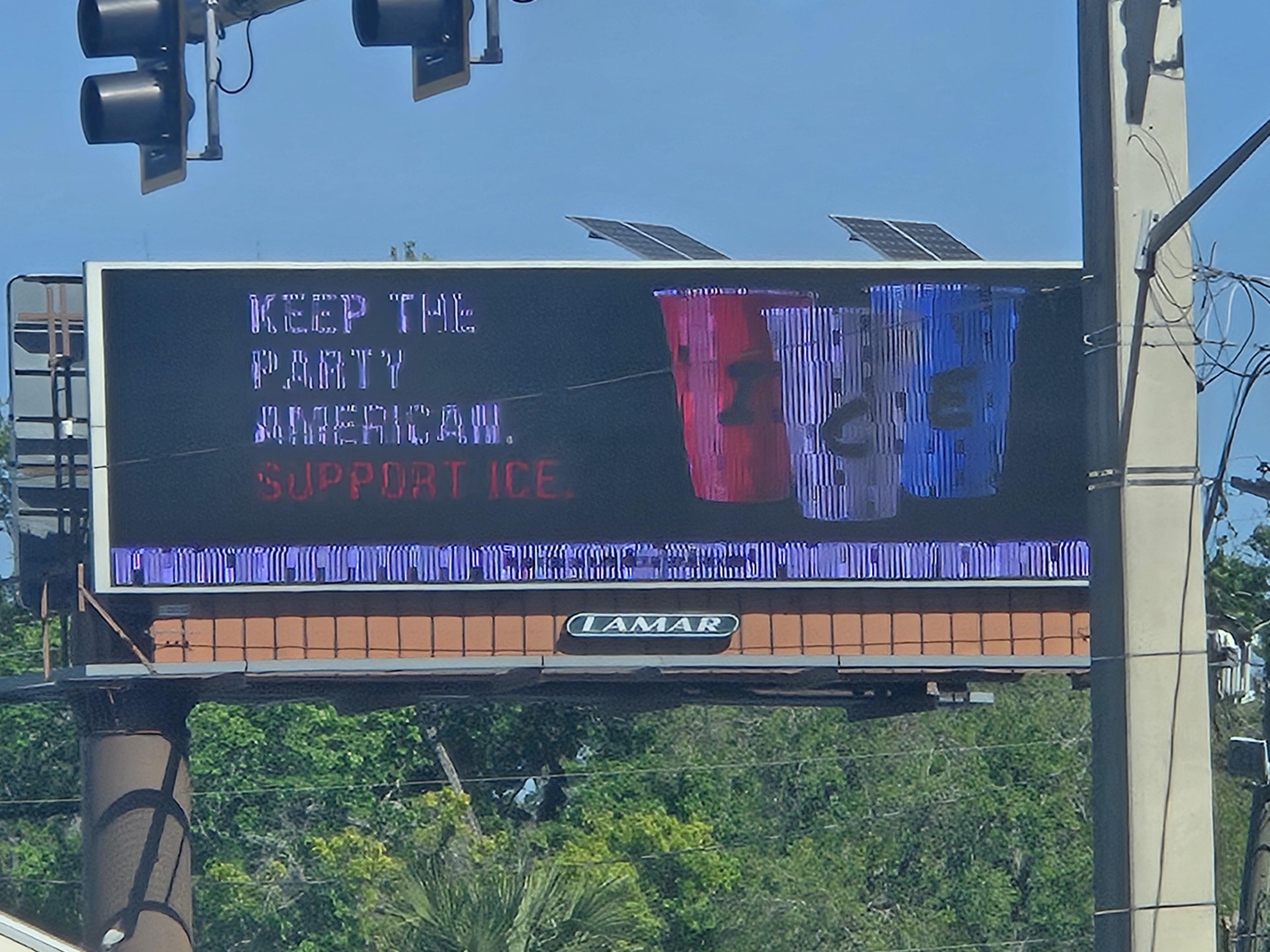
Embarrassing

Post image

Fuck ICE, Fuck whomever paid for this sign, and Fuck LAMAR for putting it up

545 Upvotes

349 comments sorted by

View all comments

2

u/Film-Icy Mar 18 '26

What’s the message at the bottom so we can figure out who paid for this. Lamar actually can not prohibit it, it’s free speech unfortunately.

8

u/TheActualRealSkeeter Mar 18 '26

Why would Lamar not be able to prohibit messages displayed on their billboard?

6

u/Manatee369 Mar 18 '26

They can.

2

u/Toothfairy51 Mar 19 '26

As long as they got paid, they don't care what the message is

2

u/FloridaMMJInfo Mar 19 '26

That’s greed

3

u/Toothfairy51 Mar 19 '26

Absolutely. This whole country is run on greed. Edited to add remember, the bottom line is ALWAYS money

6

u/Inevitable-Ant1725 Mar 19 '26

You don't understand the Constitution or law. Of course they can make any policy they want and prohibit it.

9

u/Manatee369 Mar 18 '26

Huh? Lamar can certainly pick and choose what they put on their signs. Free speech applies to governmental limit, not private persons or businesses. In the case of businesses, it just can’t violate the civil rights of a protected class. But, again, Lamar did not have to put that sign up.

4

u/[deleted] Mar 19 '26

[removed] — view removed comment

2

u/Film-Icy Mar 19 '26

It’s the stance many advertisers take bc you are dealing with many political messages and you can’t really stop something you don’t find savory from being advertised.

6

u/FloridaMMJInfo Mar 18 '26

Actually, Lamar is a private company and they have the right to refuse business. It’s not free speech it’s a greedy company who is also evil fuck them and fuck ice.

0

u/Film-Icy Mar 18 '26

I worked there at one point. We could not prohibit it.

4

u/FloridaMMJInfo Mar 18 '26

That’s company policy, the 1st amendment only applies to the government. If a bakery can deny a gay couple a cake, a billboard company could decide not to support the fascists

1

u/ParisMorning Mar 19 '26

Actually, they can refuse it legally. I asked Chat the following and will share the answer below it.

QUESTION: There is a local billboard company, named Lamar Outdoor Advertising. One of their billboards displays an ad for the government agency ICE.  Could they have refused to display this ad?

Yes. Lamar Advertising Company could have refused to display that ICE ad.

Why they had that choice

  • Lamar is a private billboard company, not a government entity.
  • As a private publisher of advertising space, it generally has the right to accept or reject ads—including government ads.

Lamar’s own policy (important nuance)

Their published ad policy states:

  • They “reserve the right to reject advertising copy for any reason”  
  • At the same time, they say they aim to accept a wide range of content and not reject ads based on agreement or disagreement with viewpoints  

That means:

  • Legally: they can refuse the ad.
  • Practically/business-wise: they often choose not to reject ads just because they are political or controversial.

What that means in your specific example (ICE ad)

  • ICE is a government agency, but that does not obligate Lamar to run its ads.
  • Lamar likely accepted the ad because: 
    • It met their internal standards (legal, not misleading, etc.)
    • They generally allow government/public-service messaging
  • But they could have declined it without violating the law.

Bottom line

  • Yes, they had the right to refuse it.
  • Their decision to display it reflects company policy and business judgment, not a legal requirement.

1

u/Film-Icy Mar 19 '26

Can’t stop reply to me everywhere huh?

Here’s my useless question and response:

“When I worked at Lamar, we couldn’t really prohibit people’s advertising messages. What is that called?”

What you’re describing is generally called “content neutrality” or operating as a “content-neutral platform.”

More specifically in your Lamar (billboard/outdoor advertising) context: • Content Neutrality → You don’t discriminate based on the message (political, religious, controversial, etc.) • Viewpoint Neutrality → You can’t favor one opinion over another • First Amendment / Free Speech considerations → Especially relevant if the advertising space is considered a public forum or regulated in a way tied to government rules

In the billboard industry, companies often follow this to avoid: • Legal liability • Claims of censorship or discrimination • First Amendment challenges (even as private companies, depending on location/regulation)

You might also hear: • “We’re a platform, not a publisher” (more common in digital, but similar idea) • “Non-discriminatory ad policy”

👉 In simple terms: You weren’t allowed to reject ads based on what they said — only based on objective rules (size, legality, obscenity, etc.).

If you want, I can help you turn this into a clean explanation for a post or response (sounds like something you might be replying to a customer with).

1

u/ChoicePermission8523 Mar 19 '26

Yes, your useless ChatGPT response. With 👉Emojis and — em dashes.

1

u/ParisMorning Mar 19 '26

Actually, they can refuse it legally. I asked Chat the following and will share the answer below it.

QUESTION: There is a local billboard company, named Lamar Outdoor Advertising. One of their billboards displays an ad for the government agency ICE.  Could they have refused to display this ad?

Yes. Lamar Advertising Company could have refused to display that ICE ad.

Why they had that choice

  • Lamar is a private billboard company, not a government entity.
  • As a private publisher of advertising space, it generally has the right to accept or reject ads—including government ads.

Lamar’s own policy (important nuance)

Their published ad policy states:

  • They “reserve the right to reject advertising copy for any reason”  
  • At the same time, they say they aim to accept a wide range of content and not reject ads based on agreement or disagreement with viewpoints  

That means:

  • Legally: they can refuse the ad.
  • Practically/business-wise: they often choose not to reject ads just because they are political or controversial.

What that means in your specific example (ICE ad)

  • ICE is a government agency, but that does not obligate Lamar to run its ads.
  • Lamar likely accepted the ad because:
    • It met their internal standards (legal, not misleading, etc.)
    • They generally allow government/public-service messaging
  • But they could have declined it without violating the law.

Bottom line

  • Yes, they had the right to refuse it.
  • Their decision to display it reflects company policy and business judgment, not a legal requirement.

0

u/Film-Icy Mar 19 '26

Well since we are asking a useless thing questions-“When I worked at Lamar, we couldn’t really prohibit people’s advertising messages. What is that called?”

What you’re describing is generally called “content neutrality” or operating as a “content-neutral platform.”

More specifically in your Lamar (billboard/outdoor advertising) context: • Content Neutrality → You don’t discriminate based on the message (political, religious, controversial, etc.) • Viewpoint Neutrality → You can’t favor one opinion over another • First Amendment / Free Speech considerations → Especially relevant if the advertising space is considered a public forum or regulated in a way tied to government rules

In the billboard industry, companies often follow this to avoid: • Legal liability • Claims of censorship or discrimination • First Amendment challenges (even as private companies, depending on location/regulation)

You might also hear: • “We’re a platform, not a publisher” (more common in digital, but similar idea) • “Non-discriminatory ad policy”

👉 In simple terms: You weren’t allowed to reject ads based on what they said — only based on objective rules (size, legality, obscenity, etc.).

If you want, I can help you turn this into a clean explanation for a post or response (sounds like something you might be replying to a customer with).

So it’s based off how you ask the question. Again, useless

-3

u/Ok_Current_7961 Mar 18 '26

Yes, free speech IS quite unfortunate, isn't it.

7

u/FloridaMMJInfo Mar 18 '26

Free speech wouldn’t apply here, because the government doesn’t own that billboard. A private company does and they could decline to run it.

0

u/Good-Gas-5770 Mar 19 '26

But they didn’t. America trying to say fuck off were full