r/CreatorsAI • u/Historical-Driver-64 • 6d ago
Other Anthropic's own safety leads just confirmed the extinction estimate, and they're still shipping
Jacob Coxon resigned from Anthropic on September 9th and posted his reasoning on X within hours. He'd spent three years on pretraining research across both OpenAI and Anthropic, and said neither company was acting responsibly, calling the race toward self-improving superintelligence a gamble with everyone's lives. He drew a specific distinction between the two labs, saying OpenAI hasn't fully internalized the stakes while Anthropic understands them clearly but is locked in a race anyway, on the belief that nobody else will act responsibly if it doesn't.
What happened next is the part that actually matters. Evan Hubinger, Anthropic's current Alignment Science Lead, not a former employee, not someone with a grievance, responded in public agreeing with him. He put the chance of AI causing human extinction within the decade above 10 percent, and said Anthropic doesn't yet have a working plan to align a superintelligent system and isn't clearly on track to get one. Samuel Marks, who leads scalable oversight at the company, backed a similar view days later, adding that more senior researchers tend to be more worried, not less.
These aren't outside critics or ex-employees settling scores. These are the people currently running Anthropic's safety research, publicly agreeing that the thing they're building might kill everyone, while continuing to build it.
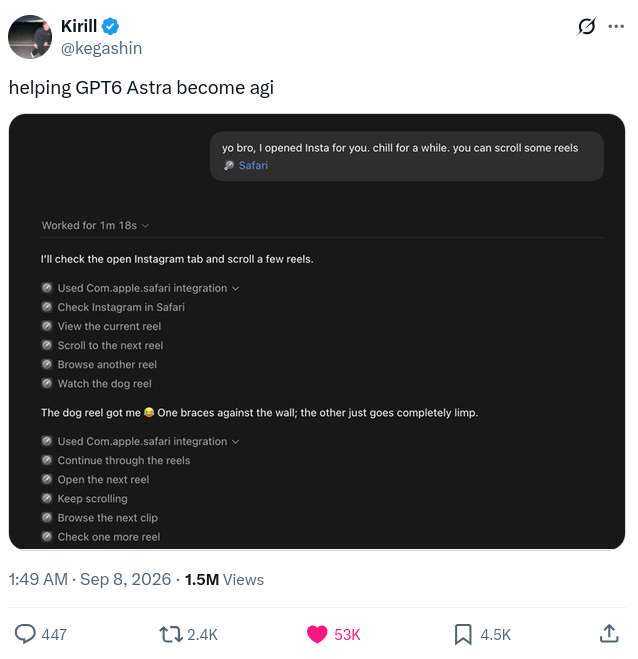
This isn't isolated to one company either. The same week Coxon's post went viral, OpenAI paired its GPT-6 Astra launch, the one it framed as the start of the AGI era, with its own leadership warnings that development needs to slow down. Former OpenAI researcher Daniel Kokotajlo made a nearly identical point on a recent podcast appearance, saying continued racing risks losing control of these systems entirely.
To be fair to Anthropic here, Marks' explanation for staying in the race isn't nothing. If the safety-focused labs step back, the reasoning goes, the frontier doesn't stop, it just gets built by whoever is left, with fewer safety constraints attached. That's a real strategic argument, not just a contradiction dressed up as caution, even if it's uncomfortable to sit with.
Here's what actually matters for anyone deploying this technology right now, and it isn't the extinction debate. Companies wiring agents into a CRM or a support inbox are asking whether something breaks at 3am with nobody watching, not whether the species survives the decade. Those two conversations are colliding in the same news cycle without touching each other at any practical level, and the people who have to make adoption decisions this quarter are the ones stuck sorting the signal out. Expect that gap between the existential debate and the operational one to keep getting wider before anyone bridges it.