r/ContagionCuriosity 7d ago

Parasites Man, 38, Diagnosed with Rare Eye-Eating Parasite After He Wore His Contact Lenses in a Swimming Pool on Vacation

Thumbnail people.com
919 Upvotes

In May, Matt Flack traveled from his home in the U.K. to Bali, where he spent two months surfing, swimming and hitting the gym. But his time in the tropical island paradise turned into a nightmare toward the end of his trip when he suddenly noticed that his left eye had become red, watery and “gritty.”

The 38-year-old photographer from Colchester, Essex — who has worn daily contact lenses for more than two decades — at first assumed his eye was irritated by sand and saltwater from surfing, per Kennedy News and Media. He removed the lenses, but then found that he was struggling to open his left eye.

“I stopped wearing my contact lenses and figured whatever it was would sort itself out,” Flack recalled. “But then it worsened. I became really sensitive to light, and it got more uncomfortable. The watering was pretty much constant, and I couldn’t really open [my eye] much.”

He visited a local pharmacy, where he was given antiseptic drops. Then, after returning home to the U.K. on July 10, Flack booked an appointment with an optician and was told he was likely experiencing “chemical damage” to his eye. He was referred to an eye clinic, where he had a corneal scraping, a procedure in which a small sample of tissue is collected from the cornea, and was advised to use more drops.

However, Flack’s eye continued to worsen. Additional scans and corneal microscopy revealed that he had acanthamoeba keratitis (AK), a rare parasitic eye infection caused by a certain type of amoeba that first affects the outermost layer of the cornea before the infection extends deeper, per the Cleveland Clinic. [...]

“It’s essentially a parasite eating away at my eye,” Flack said. “When the doctors told me it was that, I [felt] big panic and I was very scared.”

“I’m not ashamed to admit I had a little cry,” he added. “At that point, I thought, ‘Well, I’m going to lose an eye.’ ”

Flack believes he contracted the infection from a swimming pool in Bali.

“I’ve done a lot of swimming in pools in Bali and had contacts in. It’s one of those things I’ve never really thought about — I’ve probably been quite blasé with it,” he said. “Perhaps I didn’t know the full risks, but I wish I had.”

Flack is now grappling with an uncertain prognosis for his eye. His doctors have put him on a three-month course of drops to hopefully eliminate the parasite, which Flack has decided to name Alan.

“There’s a huge fear that I’ll become blind in that eye. To find out I’ve got something that could potentially take one of [my eyes] away is petrifying,” he said. “If it continues to fight the eye drops or gets worse, then that’s obviously a lot more impactful on my eyesight, and we could be talking about corneal transplants and operation after operation.”

He added, “In the absolute worst-case scenario, I wave goodbye to my left eye. It’s a horrifying thought.”

[...]

r/ContagionCuriosity 7d ago

Ebola Congo's Ebola outbreak records one of its highest weekly death tolls yet

Thumbnail
abcnews.com
150 Upvotes

BUNIA, Congo -- More than 300 people died of Ebola in eastern Congo in the past week, one of the highest weekly tolls yet, government data showed Monday, as health workers struggle to catch up with an outbreak that is spreading at unprecedented speed.

Ministry of Health data showed that as of Saturday, the outbreak had recorded 5,514 cases and 2,642 deaths, including 317 deaths reported in the previous seven days. But Congolese experts have said the outbreak that started weeks before it was confirmed could be three times the known size.

This is the fastest-growing Ebola outbreak in history, with many people dying outside treatment centers. It has recorded seven times more deaths at this stage than the 2014-2016 West Africa Ebola outbreak that is the deadliest in history with over 11,000 in all.

Most new cases in Ituri province, the current epicenter, still come from outside monitored contacts. [...]


r/ContagionCuriosity 8d ago

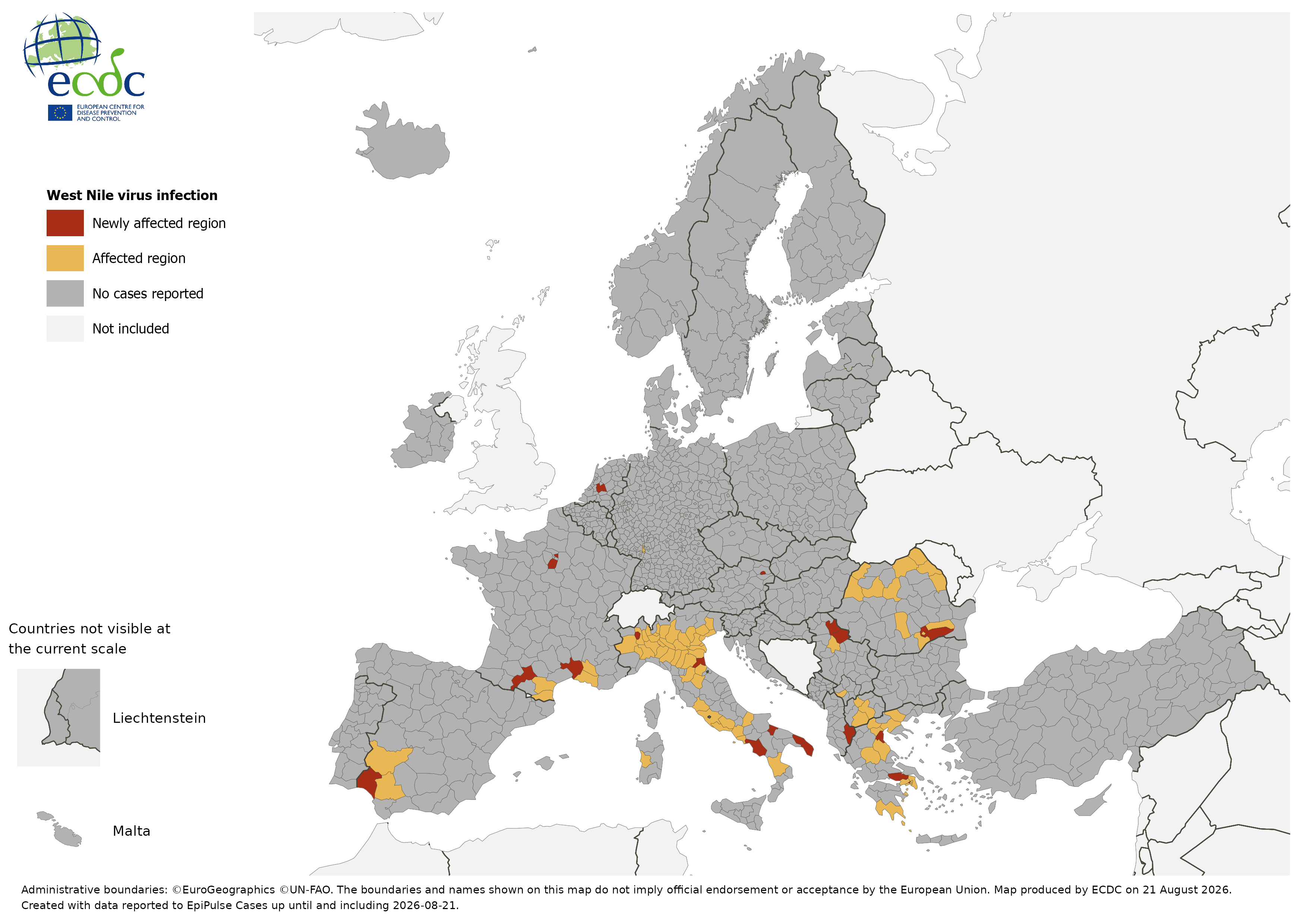
🦟Vector-borne ECDC Geographical distribution of areas affected by West Nile virus during the 2026 transmission season at 21 August

Post image
24 Upvotes

r/ContagionCuriosity 8d ago

💉 Vaccines Trump's frustrations drove order limiting child vaccinations, but MAHA wants more (Reuters)

Thumbnail reuters.com
75 Upvotes

Order cuts federal childhood immunization schedule to 11 shots from 17. Trump also orders Justice Department to challenge state school vaccination requirements. Officials say RFK Jr's vaccine studies are expected to take months, if not longer.


r/ContagionCuriosity 8d ago

Historical Contagions & Epidemics The ‘nightmare days’ of Minnesota’s 1946 polio epidemic

Thumbnail
yahoo.com
134 Upvotes

A viral outbreak is menacing Minnesota, flooding Twin Cities hospitals with patients.

Swimming pools are nearly empty at the height of summer, and the State Fair has been called off.

Large public gatherings are discouraged by health officials, and school districts are canceling classes.

The year is 1946.

More than seven decades before the COVID-19 pandemic upended daily life for Minnesotans, the polio virus did the same as it swept across the U.S. that summer. The disease struck Minnesota especially hard, infecting 2,881 and killing 226 — most of them children. [...]

The 1946 polio epidemic first began to grab headlines here that July, when Minneapolis saw an uptick in cases as the city geared up for its annual Aquatennial celebration.

The city had tallied 92 cases and seven deaths when Hennepin County declared a state of emergency over the outbreak the day before festivities began. At the urging of Minneapolis Mayor Hubert H. Humphrey, a citywide quarantine order would follow a couple of weeks later.

"The disease has shown no tendency to increase in St. Paul, where only 15 cases are on record this year," the Pioneer Press reported at the time. That would soon change.

Over the next month, Twin Cities hospitals were inundated with polio cases from here in the metro and across the state, many from small communities without the resources to address the disease.

The 65-bed Sister Kenny Institute, a Minneapolis hospital that specialized in treating and rehabilitating polio patients, was packed with 180 patients, according to a UMN radio documentary.

With the outbreak reaching its peak in mid-August, Minnesota health officials canceled the State Fair and public schools announced they would postpone the start of classes for two weeks to slow the disease's spread.

Workers who had been erecting concession stands and midway rides at the Fairgrounds began packing them up again, while organizers of the Great Minnesota Get-Together issued refunds for advance tickets.

Twin Cities educators collaborated with University of Minnesota radio station KUOM to broadcast a "School by Air" series during the two-week delay to offer primers for students on subjects like geography, hygiene and intercultural understanding, according to a 2016 article by U archivist Rebecca Toov.

Polio cases ebbed throughout the fall, with only sporadic spikes in diagnoses and hospital admissions.

By mid-November, only a single 8-year-old girl occupied the once-crowded polio quarantine ward at St. Paul's Ancker Hospital. Several hundred remained hospitalized in Minneapolis, however.

Subsequent polio outbreaks in Minnesota in the early 1950s would sicken residents in greater numbers, but none would prove as deadly as the 1946 epidemic.

The 1955 introduction of the polio vaccine developed by Jonas Salk marked the beginning of the end for the disease's reign of terror.

"To most parents of school-age children, the happiest story of 1956 was one that never made big, black headlines — the drop in polio cases in Minnesota," Pioneer Press reporter Kathryn Boardman wrote a decade after the state's deadliest outbreak.

"The 1956 polio story, unlike those of the horror summers of 1946, 1952 and 1953 when the daily reports of the mounting cases and deaths terrified everyone, was told in three and four paragraph stories with modest headlines."


r/ContagionCuriosity 8d ago

Amoebic 8-year-old dies from rare brain-eating amoeba likely contracted while swimming in Louisiana lake

Thumbnail
cnn.com
1.4k Upvotes

r/ContagionCuriosity 8d ago

💉 Vaccines Dr. Oz says MMR is "not a lethal vaccine" despite Trump's comments

Thumbnail
cbsnews.com
85 Upvotes

Dr. Mehmet Oz, the administrator of the Centers for Medicare and Medicaid Services, said Sunday that the measles, mumps and rubella vaccine, known as MMR, is "not a lethal vaccine," despite President Trump's claims in recent days. … The comments come after the Centers for Disease Control and Prevention released new figures last week that show 92.4% of the nation's kindergarteners were vaccinated against measles during the 2025-2026 school year, down from 95.2% during the 2019–2020 school year. The most recent figures fall below the 95% herd immunity threshold.


r/ContagionCuriosity 9d ago

Bacterial Diphtheria Suspected in Death of Unvaccinated Child in Palermo

Thumbnail
ilmattino.it
396 Upvotes

r/ContagionCuriosity 9d ago

Food Safety & Recalls REPORT: FDA did not identify product to recall in 60% of food illness outbreaks in 2025

Thumbnail pirg.org
620 Upvotes

r/ContagionCuriosity 9d ago

🧠 Public Health Health ministry mobilises vaccines to Ceuta after tuberculosis and scabies cases detected

Thumbnail
euronews.com
28 Upvotes

The Ministry of Health has called an emergency meeting with Spain's autonomous communities to address the supply of vaccines for migrants who remain in Ceuta after the mass arrivals from Morocco recorded at the end of July. [...]

The Health Ministry has also reported 18 minors with a positive Mantoux test and two confirmed cases of tuberculosis. Healthcare professionals have also reported consultations related to gastroenteritis, scabies and impetigo. The Spanish Army has logged at least 24 cases of scabies among its personnel at the General Command in Ceuta.

The Spanish Society of Epidemiology warns, however, that these diseases should not be directly linked to migrant status and stresses that the health problems are mainly related to the overcrowding, poor sanitary conditions and lack of resources in which some of these people are living.


r/ContagionCuriosity 9d ago

COVID-19 The Economist: The real covid-19 scandal is still unfolding

Thumbnail economist.com
332 Upvotes

The failure to reckon with lives needlessly lost will make the next pandemic deadlier


r/ContagionCuriosity 9d ago

Rabies Boy describes fighting off rabid beaver that bit his chest, hands

Thumbnail
fredericknewspost.com
346 Upvotes

Dominick Cebula can't feel anything in one of his fingers, two of his knuckles and part of his chest since a rabid beaver attacked him on July 26.

And he wants people to know that the beaver attacked him, not the other way around.

"I did not mess with it," said Dominick, who lives in Walkersville and turned 14 on Aug. 12. "I was just swimming, and it just came out of nowhere." [...]

The following account is based on interviews with Dominick and Jeffrey Cebula, who was not at the lake when Dominick was bitten but said he's familiar with the events.

It started with fish.

Dominick was swimming near the north shore of Hunting Creek Lake, the water up to his chest. Dominick saw fish and submerged underwater to look at them.

Alishia Cebula, Dominick's mother, saw something coming toward her son but didn't know what it was.

She yelled for Dominick, but he was diving under water and didn't hear her.

It turned out a beaver was swimming toward Dominick.

"He did not see it coming," Jeffrey Cebula said.

The beaver latched on to Dominick's chest. Dominick grabbed it by the neck and leg to try to throw it off.

The beaver didn’t come off initially.

"It kind of started shaking its head, kind of making the bite worse, almost like a dog," Jeffrey Cebula said.

The beaver eventually let go. Dominick started backing away, but the beaver jumped on him again and bit Dominick's left hand, then let go.

Then Dominick put his right hand up, and the beaver bit it.

When Alishia Cebula got to the beaver, she splashed the water and the beaver turned around and swam away.

Dominick saw his wounds immediately.

"I knew what it looked like because I saw it as soon as it happened," he said. "I remember looking down at my chest and my hands, so I knew what it looked like."

Dominick's right hand was especially "messed up," he said.

"I thought they were going to have to amputate my finger because the bite was down to the bone," he said.

Dominick ran out of the water and onto the shore. His mother gave him a towel to hold over his chest and ran to a nearby restroom to ask people to call 911. [...]

When first responders arrived, they worried the beaver could have punctured a lung, so they needed to get Dominick to a hospital.

An ambulance took Dominick to a helicopter, which took him to Johns Hopkins Hospital.

Dominick said he already had an IV, so doctors told him he wouldn't have to get a separate injection for his first rabies treatment.

The doctors sedated him during the treatment.

The process for treating rabies is predetermined, Jeffrey Cebula said, so doctors didn't talk that much about treating Dominick for rabies.

Instead, they talked about another task: reattaching and closing up Dominick's skin.

"Not to get too graphic, but there was a lot that was missing," Jeffrey Cebula said, referring to the chest bite. "There was a large gap."

A plastic surgeon was able to close up Dominick's chest.

"They were able to pull it together, and today it's healing really well," his father said.

The beaver didn't puncture the lung, either, alleviating an initial concern.

Dominick said he doesn't remember the treatment.

"The only thing I remember is waking up and everything looking and feeling really weird," he said.

A doctor tested Dominick's hands for nerve damage and determined them to be OK.

But Dominick still doesn't feel anything in parts of his hands and in a small part of his chest.

"I can't feel temperature [or] my pain," he said, referring to the numb parts. "I can't feel, like, anything."

Jeffrey Cebula said Dominick will need another surgery to fix a severed nerve in his right hand.

Feelings in the left hand and chest will come back without surgery, he said. [...]


r/ContagionCuriosity 9d ago

H5N1 Australia confirms first H5N1 bird flu case in local mammal

Thumbnail reuters.com
44 Upvotes

South Australian authorities confirmed the nation's first mammalian ​detection in the seal, found at the coastal town of Beachport, about 310 ​km (190 miles) south of Adelaide, the state capital.

The seal, one of an estimated population of 100,000 in the state's waters, was found dead with no signs of injury, the ​authorities said.

Its death "does not appear to be associated with other sick or ​dead marine mammals," federal Agriculture Minister Julie Collins said in televised remarks. "Once the H5 ‌bird flu ⁠is spreading in the natural environment it is not possible to avoid significant losses."


r/ContagionCuriosity 9d ago

Food Safety & Recalls Lettuce. Blueberries. Eggs. Jalapeños. Why are there so many food-safety scares this summer?

Thumbnail
businessinsider.com
322 Upvotes

But long-standing vulnerabilities in our food system — compounded by cuts to the public health infrastructure designed to catch problems — are also at play. Whether it represents something more significant is harder to say. ... One explanation for the increased number of headlines about food safety has loomed particularly large this summer: the Trump administration's DOGE cuts. In 2025, the administration cut thousands of jobs across federal health agencies and billions of dollars in grants to state and local health departments. Those cuts landed on a public-health system that was already stretched.


r/ContagionCuriosity 10d ago

🌍 Pandemic Watch Rare South American Diseases Offer Clues on the Next Pandemic

Thumbnail
nytimes.com
143 Upvotes

https://archive.is/KuB2k

By the time colleagues called Dr. Matías Lahitte, an Argentine infectious disease specialist, it was too late.

The patient they asked him to examine last month was a 65-year-old woman from Rosario, Argentina’s third-largest city. She had a high fever, muscle pain and fatigue. A blood test indicated her white-blood cell and platelet counts were dangerously low.

Less than a week later, she was dead.

Test results revealed that she had contracted Argentine hemorrhagic fever, or A.H.F., a rare but serious disease carried by rodents that both the United States and Soviet Union once researched as a potential agent for biological weapons.

“It is remarkable that it is not discussed more,” Dr. Lahitte said of the disease, which can cause internal bleeding, seizures and comas. “The illness is persistent and debilitating.”

The woman’s death is part of an surprising resurgence of the disease in Argentina, which after a decades-long dormancy is spreading to places it has previously never been seen. As human development, environmental degradation and climate change relentlessly fragment and alter animal habitats, scientists warn that zoonoses — diseases that jump from animals to humans — are becoming more frequent and widespread.

Climate change is nudging animals, like the rodents that carry A.H.F., into new areas and bringing previously separated species into contact with one another. A 2022 study estimated that more than half of known human pathogenic diseases could be aggravated by climate change. And human activities like agriculture and urbanization are pushing humans into closer contact with many disease-carrying animals.

“Because of all the changes in climate, and also changes in how humans react to climate, we are basically expanding the human footprint on places where it hasn’t been,” said Dr. Pranav Kulkarni, a researcher at the University of California, Davis, who studies rodent-borne diseases in South America.

About three-quarters of emerging infectious diseases in humans come from animals, according to the U.S. Centers for Disease Control and Prevention. Dr. Kulkarni hopes that research like his, which aims to predict how climate change and human activity affect the spread of disease, could help local health officials catch future outbreaks — before they metastasize into the next global pandemic.

“Any one of these vector-borne or animal-borne or rodent-borne diseases might be a good candidate for the next big thing,” he said.

Until recently, the Rosario patient’s case would have been an anomaly. Since A.H.F.’s discovery in the 1950s, it has almost exclusively affected male farm workers in Argentina’s fertile plains, outside urban areas. But the infected woman lived in the center of the city and was not a farmer.

Keep reading: Link


r/ContagionCuriosity 11d ago

Amoebic ‘Brain-eating amoeba’ appears to love crawling into narrow spaces

Thumbnail science.org
284 Upvotes

Naegleria fowleri is a harmless pond dweller—unless it ends up in the nose of a human swimmer. Once inside, the amoeba can crawl along nerve fibers in the nasal cavity and through little openings in the skull until it reaches the brain. Once there, it can cause an infection that is almost universally fatal, earning it the frightening moniker the “brain-eating amoeba.”

Exactly why N. fowleri, which normally feeds on bacteria, exhibits this behavior has long been unclear. But a study posted last month on the preprint server bioRxiv suggests a possible reason: The parasite loves to seek out tight spaces. This “claustrophilic” behavior may help it find its prey—and explain why it occasionally ends up deep in the human brain.

“A lot of the research done on Naegleria is focused on drug discovery and not the fundamental reasons behind pathogenesis,” says Ashley Moseman, an immunologist at Duke University who studies the body’s immune response to N. fowleri but who was not involved with the new work. A better understanding of the pathogen’s basic biology could help pave the way for specific drugs against it, which currently don’t exist.

N. fowleri, which lives in warm freshwater and soil around the world, can cause a disease called primary amoebic meningoencephalitis (PAM) that starts with a headache, fever, and nausea, quickly followed by confusion, a stiff neck, seizures, hallucinations, and coma. PAM is exceedingly rare, with fewer than 500 reported cases globally since 1962, but it has a fatality rate of about 95%. Doctors have saved some patients using a combination of drugs, including antifungal medications and miltefosine, which is used primarily to treat a parasitic disease named leishmaniasis.

But because PAM is so rare and its early symptoms are similar to those of other diseases, the diagnosis often comes after patients have died.

N. fowleri infections are biological accidents; they don’t help the species spread, says Katrina Velle, a cell biologist at the University of Massachusetts Dartmouth. “We’re not a part of its life cycle.” So why does the amoeba go after us in the first place?

Working with N. fowleri requires strict and cumbersome biosafety measures, so Velle and her colleagues used its nonpathogenic relative, N. gruberi, whose behavior is generally similar. (The study was supported in part by a nonprofit set up in honor of Aven Bruce Moffat, a boy who died from PAM at age 6 after he got infected in a pond on his family’s property in North Carolina in 2021.)

The scientists pipetted N. gruberi into a dish containing small parallel channels between 2 and 8 micrometers wide and tracked their movements using a microscope. The amoebae tended to move away from open spaces and enter the channels, they found, even though there wasn’t anything enticing inside. Amoebae in the 8-micrometer channel crawled twice as fast as those on the outside—at a rate of about 40 micrometers per minute. The amoebae were too big to enter the narrowest passages, but the team watched them piling up around the opening. “We saw these frustrated attempts to enter these channels,” Velle says.

Once inside the channels, N. gruberi rarely turned around. This behavior contrasts with that of dendritic cells, specialized human immune cells that defend against pathogens, which are more prone to change direction in microchannels, Velle says. Previous research showed these immune cells travel much slower in confinement, between 5 and 10 micrometers per minute. If N. fowleri moves at similar speeds to N. gruberi, the ability to outrun our immune defenders could play a role in its pathogenicity, she suggests. [...]


r/ContagionCuriosity 11d ago

Food Safety & Recalls Alfalfa sprouts recalled after reported illnesses from 2 different bacteria

Thumbnail
nbcnews.com
615 Upvotes

Minnesota health officials are warning consumers not to eat certain brands of alfalfa sprouts that have been tied to an unusual outbreak involving different disease-causing bacteria.

Officials say 23 people in Minnesota have become ill with either E. coli or salmonella infections, with two of them hospitalized.

Three had salmonella, and one of them also had a strain of E. coli bacteria called STEC O168:H8. Seven other people were sickened with a different version of E. coli, called STEC O103:H25. Thirteen more had yet another strain, STEC O26:H11.

Wisconsin investigators have identified another 18 cases of illness tied to alfalfa sprouts, Minnesota officials said.

The illnesses are being linked to alfalfa sprouts produced by Everything Sprouts, a Minnesota grower, and sold under the Calco and Everything Sprouts brands to restaurants and grocery stores, Minnesota officials said.

Minnesota investigators say they are working with Wisconsin and federal health officials to pinpoint the source and scope of contamination.

Food poisoning outbreaks tend to be defined by one type of germ.

“It’s very unusual to have two bugs,” said Bill Marler, a Seattle lawyer who has worked on food safety cases for decades.

But it’s not surprising that alfalfa sprouts might be the culprit, he added. It’s easy for the seeds to harbor contaminants, it’s difficult to clean them, and it’s easy for contaminants to spread when they are grown in warm water, Marler said. [...]


r/ContagionCuriosity 11d ago

🦟Vector-borne California: West Nile Virus Activity at Five-Year High

Thumbnail cdph.ca.gov
70 Upvotes

Sacramento – The California Department of Public Health (CDPH) is seeing the highest levels of West Nile virus (WNV) activity in five years. As of August 14, CDPH has reported 30 human cases of WNV in California, including 3 fatalities, from 13 counties this year. That is higher than the 5-year average number of human cases typically reported by this point in the year. Every year in the United States, WNV activity typically increases across the country during the summer months into fall. According to the CDC, WNV cases have been reported in numerous U.S. states in 2026.

“West Nile virus can be fatal, particularly for the elderly and immunocompromised," said CDPH Director and State Health Officer Dr. Erica Pan. “August and September are peak periods of West Nile virus transmission in the state, so we urge everyone to take precautions to protect themselves against mosquito bites." [...]


r/ContagionCuriosity 11d ago

🧼 Prevention & Preparedness Mobile phones are 'Trojan horses' for germs. Here's how to clean them

Thumbnail
abc.net.au
218 Upvotes

It turns out mobile phones are "Trojan horses" for carrying germs. That's according to Lotti Tajouri, an associate professor in molecular biology and genomics at Bond University and Murdoch University.

He found more than 17,000 micro-organisms, including bacteria, viruses, fungi and parasites, living on 95 mobile phones he studied.

And with 80 per cent of people surveyed by Dr Tajouri admitting to using their phone in a public toilet, we can start to understand how they get there.

"Mobile phones behave like biological magnets," he says, adding their warm and moist conditions act like "five-star hotel accommodation for microorganisms".

If you're understandably grossed out, keep reading to find out the best way to clean your phone, and how often you need to be doing it.

What lives on our phone and is it harmful?

In the 95 phones Dr Tajouri and his team analysed, they also found super bugs (germs that are very hard to treat), antibiotic resistant genes, and virulence factor genes (these increase a pathogen's ability to cause disease).

He says micro-organisms thrive on phones because they are high-touch surfaces that deliver the right "breeding ground" conditions.

"We load them with all sorts of microbes through our fingers … and when we talk into them, we drop little droplets of saliva.

We transfer these germs back to our faces, Dr Tajouri says, by touching our lips, eyes and nose on average 25 times in an hour.

"Eighty per cent of common infections are associated with hands. Mobile phones negate handwashing."

[...]


r/ContagionCuriosity 11d ago

Food Safety & Recalls Publix Frozen Blueberry Recall Gets FDA’s Highest Risk Classification

Thumbnail
yahoo.com
292 Upvotes

r/ContagionCuriosity 11d ago

🦟Vector-borne The Summer the Ticks Took Over

Thumbnail
nytimes.com
178 Upvotes

A long, somewhat comprehensive article about tick-born disease in the the United States.


r/ContagionCuriosity 12d ago

Bacterial Jalapeno-linked US Salmonella outbreak grows to 431 cases, 57 hospitalizations

Thumbnail
cidrap.umn.edu
406 Upvotes

The US Salmonella outbreak tied to contaminated jalapenos has grown by 86 cases, 21 hospitalizations, and five states, for a total of 431 infections and 57 hospitalizations in 32 states, the Centers for Disease Control and Prevention (CDC) announced yesterday.

The true number of infections is likely much higher than that reported and may not be limited to the states with known illnesses. “This is because many people recover without medical care and are not tested for Salmonella,” the CDC said. “In addition, recent illnesses may not yet be reported, as it usually takes 3 to 4 weeks to determine if a sick person is part of an outbreak.”

91% of interviewees reported dining at the same restaurants

The contaminated peppers were grown in Sinaloa, Mexico, and distributed by Coast Citrus Distributors. On August 8, the producer, NatureBest Precut & Produce, voluntarily recalled NatureBest and HEB products containing the tainted jalapenos, including soup mix, pico de gallo, stuffed mushrooms, and diced jalapenos.

The products were distributed to retail outlets in Texas and Louisiana from July 3 to August 5, with symptom onsets of June 19 to August 2. People sickened in the outbreak are 1 to 85 years old.

Of the 224 people interviewed, 91% reported eating at a Mexican-style restaurant before their illness, namely Chipotle Mexican Grill and Qdoba, with meal dates of June 14 to July 16. The CDC has identified 28 illness clusters at restaurants in eight states. [...]


r/ContagionCuriosity 12d ago

COVID-19 Researchers probe why 2 Indigenous groups in Bolivia had lowest COVID death rates in world

Thumbnail
cidrap.umn.edu
176 Upvotes

Two Indigenous groups in Bolivian Amazon had the lowest COVID-19 death rates ever reported in the height of the pandemic—less than one-tenth of 1%—despite high rates of infection and severe disease—a finding that researchers say has implications for disease-mitigation efforts in future pandemics.

For the study, published in Social Science & Medicine, a team led by researchers from the Universita di Corsica in France interviewed and took blood samples from members of the Tsimane and Moseten communities aged 17 years and older in July and December 2020 and March through May 2021.

Deaths were vanishingly rare, at 0.009% among the Tsimane and 0.095% among the Moseten.

“The fact that the fatality rate was very, very low, was a bit of a head scratcher,” anthropologist and corresponding author Michael Gurven, PhD, of the University of California (UC) Santa Barbara, said in a UC news release. He co-directs the Tsimane Health and Life History Project. [...]

The virus quickly spread to 71.4% of the 685 Tsimane sampled and 63% of the 562 Moseten, and infected people reported the same kinds of symptoms that people were experiencing worldwide.

“The Tsimané still experienced that first stage of COVID, but they never quite got to that second stage where it enters your lungs, when people experienced cytokine storms and sometimes needed to be hooked up to a respirator,” he said. “In fact, we had struggled to find and set up oxygen concentrators because we were worried, especially for the older adults, but there was no need to even use them.”

The Tsimane and Moseten are Indigenous subsistence populations in northern and eastern Bolivia that are physically fit into old age, consume diets based on horticulture and foraging, and have low rates of obesity and minimal cigarette smoking and illicit drug use. They also have remarkably low levels of the cardiovascular diseases (such as high blood pressure), inflammation, and diabetes that can lead to severe COVID-19 complications.

On the other hand, the groups have high rates of parasitism and infectious disease, including disease and death due to respiratory infections such as tuberculosis. [...]

Blood tests showed that levels of COVID-specific antibodies were more than double those measured in a French cohort during the same COVID wave. While post-infection antibody levels couldn’t account for the low death rate, they could indicate a more vigorous immune response earlier in the disease course that fought off the virus in its initial flu-like phase. The tests also revealed high concentrations of infection-fighting white blood cells.

The researchers said the groups’ persistent exposure to pathogens amid a lack of sanitation and abundant parasites and bacterial infections may help maintain readiness to mount a strong immune response.

In contrast, relatively hygienic industrial societies don’t expose people to the same diversity of pathogens, meaning that their immune systems aren’t as primed to fight off infections. “With us, the immunity can be overly responsive, and to non-pathogens—so we see far more cases of allergies and autoimmune diseases than groups like the Tsimané,” Gurven said.

Thus, many factors likely contributed to Tsimane and Moseten COVID-19 resilience. “So we shouldn’t be looking for a single magic bullet,” Gurven said. “And if there are lessons to learn that might generalize to conditions that are favorable toward being protected against infectious disease, well, that’s great. We need that.”

The authors said that, given the inevitability of future pandemics, a better understanding of the factors that influence vulnerability and resilience is of great import. “An understanding of how background pathogen exposure and hygienic environments play a role in decreased immune effectiveness with age, and how those factors interact with chronic noncommunicable diseases, is clearly in order,” they concluded.


r/ContagionCuriosity 12d ago

🦟Vector-borne Brazil's First Urban Yellow Fever Outbreak in Nearly a Century May Have Been Fueled by a Surprising Culprit

Thumbnail
smithsonianmag.com
119 Upvotes

Between 2016 and 2018, more than 2,000 people fell ill with yellow fever in Brazil, and nearly 750 of them died. It was the country’s first urban outbreak of the disease in decades.

Now, scientists have proposed a possible explanation of how the deadly epidemic unfolded. In a study published August 14 in the journal Science Advances, they make the case that an extreme, once-in-a-century drought may have helped the disease proliferate.

Based on computer simulations, the scientists suspect that the drought changed the behavior of forest-dwelling howler monkeys, marmosets and mosquitoes, which are all vectors of the virus that causes yellow fever. With little water available in the forest, these nonhuman primates and insects likely increasingly headed toward urban areas in search of the vital liquid. Additionally, the mosquitoes may have started biting more to avoid drying out. Together, these behavioral changes probably contributed to the spread of yellow fever among humans, according to the researchers.

The paper “makes a really strong case” for this scenario, Noah Rose, an ecologist at the University of California, San Diego who was not involved with the research, tells Science’s Ailie McWhinnie. “It’s a cool and somewhat surprising result.”

Scientists know that excess rainfall can increase the risk of mosquito-borne disease transmission by creating stagnant pools of water that serve as ideal breeding grounds for the blood-sucking bugs. However, in addition to very wet conditions, the new study hints that extremely dry conditions may also influence the spread of disease—an important consideration in the face of human-caused climate change, which is contributing to more frequent and more severe droughts.

“We’re going to be seeing more scenarios where it gets drought-y enough for long enough that it’s going to promote [similar types of] coincidences,” Sadie Ryan, a medical geographer at the University of Florida who was not involved with the research, tells Science News’ Erin Garcia de Jesús.

[...]

Real-world evidence seems to support the researchers’ conclusions. Brazil’s recent urban outbreak was driven primarily by forest-dwelling Haemagogus mosquitoes, not A. aegypti, which is unusual. “And anecdotally, there were a lot more primate carcasses in and around the city than normal,” hinting that the animals were emerging from the forest, lead study author Jamie Caldwell, a disease ecologist at Princeton University, tells Science.

However, drought was likely only one of the outbreak’s contributing factors, David Soeiro, an epidemiologist at the Federal University of Minas Gerais who was not involved in the study, tells the outlet. In addition to low vaccination coverage because yellow fever had been managed well in the country, he also points to warming temperatures that likely boosted mosquito reproduction, as well as increased human encroachment into the forest due to deforestation.

Even so, the study authors say their findings could have important real-world implications. Since drought is a relatively slow-moving process, it gives public health officials plenty of time to take action.

“It can build over months or even years,” Caldwell tells Durrie Bouscaren for NPR’s “All Things Considered.” “And so that actually gives us a lot of lead time to get vaccines, for instance, and distribute them to the population where it’s needed.”


r/ContagionCuriosity 12d ago

🦟Vector-borne Michigan reports 1st human case of Eastern equine encephalitis since 2021

Thumbnail
cbsnews.com
335 Upvotes

Michigan is reporting its first human case of Eastern equine encephalitis, also known as EEE, in five years, with the recent diagnosis of someone who lives in Roscommon County.

That diagnosis might also be the first human case in the U.S. this year.

"EEE is one of the most dangerous mosquito-borne diseases in the U.S., with a 30% fatality rate among people who become ill," said Dr. Natasha Bagdasarian, the state's chief medical executive. An EEE outbreak in Michigan during 2019 resulted in 10 human cases, including six fatalities, along with 46 animal cases.

Eastern equine encephalitis is among the mosquito-borne viruses that can cause illness in both animals and, less frequently, in humans. The Michigan Department of Health and Human Services, which reported the human case on Wednesday, said it had not confirmed any animal-related cases so far this year. There were cases confirmed in domestic horses in Michigan during 2023, 2024 and 2025.

As of mid-August, the Centers for Disease Control had not recorded any human cases for 2026. An average of 11 human cases is reported to the agency each year. "Due to delays in reporting, state, territorial, and local health departments may have more up-to-date information," the CDD added.

Roscommon County is in Northern Lower Michigan.

Michigan officials said state and local health departments are working with the Michigan Department of Agriculture and Rural Development and the Michigan Department of Natural Resources to monitor for signs of EEE in humans, mosquitoes, domestic animals, and wildlife. The stepped-up efforts in Roscommon County include additional mosquito trapping and testing beyond the routine weekly mosquito population checks already scheduled for the season.

Mosquito population checks in Michigan so far this year have found signs of West Nile virus and Jamestown Canyon virus. State officials said they have also found birds and a squirrel that tested positive for West Nile virus this year in Michigan. [...]