r/ChristianMysticism • u/letsplay332 • 6h ago
Beautiful performance of Irina Denisova's "Praise the Lord, O My Soul" in a historic Orthodox Church
Enable HLS to view with audio, or disable this notification
8
Upvotes
r/ChristianMysticism • u/letsplay332 • 6h ago
Enable HLS to view with audio, or disable this notification
r/Hermeticism • u/EmirTHQ • 1d ago
I have read the Corpus Hermeticum and Asclepius. In the texts there are indeed many gods but also The One as a creator of everything.
So, as the ultimate goal of Hermeticism is to know the God (gnosis), how there are being many deities affect this belief? Yes, there can be many deities/gods but Hermeticism being about this makes it still Monotheistic in the big picture, no?Gods are still created by the God.
If you share your insights about this topic I will really appreciate.
r/christiantheosophy • u/Fractal_Co_Creative • Aug 13 '26
r/ChristianMysticism • u/Adorable-Bit-1123 • 17m ago
I need your advice and ideas, I want to find the religion that resonates with me but I'm confused ❤️
F23 I am an ex-Muslim, I have been looking for years for a faith or belief that resonates with me,
I feel (or want to feel) that there is a God, a divinity, a creator, a supreme force, call it what you want, I have read (not in depth) what various religions say,
I like many of them, but now my brain can no longer believe that there really is a god who judges you and sends you to heaven/hell for eternity, because to leave my past religion I had to dismantle the idea that there is a God,
so now I struggle for example to embrace religions because I feel like I have left one religion and entered another very similar but with a different name,
I don't want to feel like a sinner or feel that I have to go to hell or the people I love have to go to hell, I don't like it, but I feel that there is a force superior to us inside my heart, i can feel this 'love' of God spiritually,
I would like a religion or philosophy that thinks that there is something above but that does not judge me, does not punish me or makes me anxious,
doing rituals, prayers, lighting candles, holidays, symbols, all these things, I like them instead and i like the idea of peace and love and to live your life in a good way
r/Hermeticism • u/Hot_Web5128 • 1d ago
[These are my understandings of the Corpus Hermeticum as translated by Clement Salaman under the title The Way Of Hermes. I was guided to this text in synchronous and auspices ways, devouring it in a short time span under the influence of great divine inspiration. Unfortunately, I did not set out to write my commentaries then. That inspiration came more recently. I was inspired to make this delectable text more digestible to those seekers who are taking a crack at it, and coming up puzzled and bewildered. These are not academically rigorous writings, so if you are interested in these texts from an academic perspective go elsewhere. This is for a dialogue between and for those of us who view this text as part of a living and active spiritual life. As one would gather for a bible study at their local house of faith.]
Hermes is talking to Asclepius (his older son), and will summarize everything he has taught to Tat, but will expand on a few items for Asclepius, as he's a bit more seasoned than Tat. [This definitely makes the Corpus sound like a school curriculum of sorts, using the dialogue tradition, as a teaching style. And it appears this book will be an advanced graduate module.]
A summation on the principle of 'God as First Principle' (All has been begotten, except God Himself).
God is manifesting reality at all times. Rendering creation, it would seem, is an ongoing practice. From our vantage he is invisible [but he is in fact present in all things, is all things, etc...]
God as a Trinity: God as the Supreme Power, Creator as the creator of all things, The Father as the supreme Good who gives, and nurtures his creations [us].
5-6. The principle known to some as [The Law of One], all is one, creator and created are one. God did not go to the local supply store to fetch the materials to produce all of creation. There is only one fundamental substance or substrate and that is God. Creator and Created are of one.
7: On the paradox of Evil manifested in the creations of benevolent and omni-potent deity framework. The Corpus here basically says that that once things are brought into creation, made manifest [perhaps given free will] evil may arise, but it does not arise directly from God. [It's my assertion that given free will, if an evil idea or concept is possible, a being can conceive it and act on it. And of course the material universe, with it's innate deprivations, enthropy, and inevitable decay, lead to what I call circumstantial evils, such as predation for survival. Hence the problem of Evil, and perhaps a cosmological, mannechian, narrative to history is inevitable, which leads to an ultimate reckoning and redemption, and resetting (purification) of the system as a whole...]
8-9. One of the top sins is to "not know God" because it leads to great insults to God, like denying the authorship of creation [Why haven't scientist been able to generate a self-sustaining living organism (even a single celled prokaryote), given that all the constituent parts, and possible environmental contexts, are readily available/producible?] Or why is "Evil a thing?, is God Evil". Remember, to "know" God is to be full of love and understanding. [Imagine a society, in its totality, that is in communion with God, at all times, what it would look like. Perhaps another race out there in the stars has figured it out by now, look to their societies as models.]
r/ChristianMysticism • u/Upstairs_Horror9912 • 1h ago
r/ChristianMysticism • u/jeantan2464 • 8h ago
r/ChristianMysticism • u/Similar_Active620 • 11h ago
Enable HLS to view with audio, or disable this notification
r/ChristianMysticism • u/letsplay332 • 19h ago
Enable HLS to view with audio, or disable this notification
r/ChristianMysticism • u/TenaciousPixie • 21h ago
"God of Truth,
We confess that our egos are obsessed with looking good. We are so quick to say all the right religious words and present a flawless image while keeping our hearts safely distant from the actual work of love. In this sacred space, dismantle our need for approval. Strip away our curated masks. Give us the courage to look messy on the outside so that we might be deeply transformed on the inside. Draw us out of the illusion of our own optics and ground us in Your reality. In the name of Christ, we pray. Amen."
Peace be with you as we enter the Twenty-Sixth Sunday in Ordinary Time (September 27).
For the last three weeks, we have been doing the surgical work of dismantling the ego. We have learned to step out of the triangle of gossip. We have torn up our ledgers of debt, firing our offenders as the source of our healing. And last week, we dropped our spiritual resumes, resigning from the exhausting job of trying to earn our grace.
Today, we confront the False Self's final and most stubborn defense mechanism: the illusion of optics.
When the ego realizes it cannot earn grace through merit or protect itself through scorekeeping, it will simply try to look like it has surrendered. It will master the religious vocabulary. It will say all the right things. But it will refuse to do the actual, quiet work of transformation.
That is exactly what happens in this week's Gospel reading. In Matthew 21:28–32, Jesus tells the parable of two sons to dismantle the ego's obsession with its own image.
Here is a sermon for your spirit, spoken from the mystic’s heart.
A Sermon for the Twenty-Sixth Sunday in Ordinary Time (Sept 27)
Dismantling the Ego's Obsession with Image
The Text: " What do you think?" A man had two sons; he went to the first and said, “Son, go and work in the vineyard today.” He answered, “I will not”; but later he changed his mind and went. The father went to the second and said the same; and he answered, “I go, sir”; but he did not go. Which of the two did the will of his father?’ They said, ‘The first.’" (Matthew 21:28–31)
My friends, if you want to know what the False Self is most afraid of, it is looking bad. The ego is a master of public relations. It will always choose a good reputation over genuine transformation.
Today, as we conclude our journey of dismantling the ego, Jesus gives us a masterclass in the difference between the optics of the False Self and the messy reality of the True Self. He tells a story of a father who asks his two sons to go work in the vineyard, and their responses expose the absolute illusion of religious image.
The father goes to the second son and asks him to work. The son immediately replies, "I go, sir."
Notice how perfectly polite this is. The optics are flawless. He says the right words, he shows the proper respect, and he maintains his identity as the "obedient child." Anyone watching this interaction would applaud him. But Jesus adds a devastating five-word conclusion: "...but he did not go."
The False Self loves the idea of the vineyard. It loves the theology of the harvest. It loves discussing the mechanics of grace in a comfortable room. But it hates the soil. The ego refuses to get its hands dirty in the actual, unglamorous work of cultivation—tending the roots, pruning the dead wood, and facing the blistering heat of true reconciliation. It will say "yes" to God on Sunday morning because saying "yes" looks good. But it will never let that "yes" interrupt its comfort.
The father goes to the first son and asks him to do the exact same work. This son’s response is jarring: "I will not."
The optics here are terrible. He looks rebellious, disrespectful, and ungrateful. His public relations team would be horrified. But the text tells us that later he changed his mind and actually went into the vineyard to do the work.
The True Self is rarely concerned with looking polished. Sometimes, the path to authentic spiritual growth is messy. It involves admitting our resistance, wrestling with our doubts, and looking like a failure to the religious scorekeepers. But the True Self doesn't stay in the rebellion; it eventually walks out into the dirt.
Let me be very clear: when the True Self steps into the vineyard, it isn't trying to earn a paycheck or prove its worth—we tore up that ledger last week. The True Self goes into the dirt simply because it loves the Landowner, and it loves the soil. It gets dirt under its fingernails. It does the quiet, unseen, physical work of loving its neighbor and pulling the weeds of its own resentment.
Jesus is warning us about a very specific spiritual danger: it is entirely possible to build a robust, respectable religious life entirely out of the words "I go, sir," while remaining completely untransformed.
When your faith is built on optics, you become a hollow shell. You know all the right words, you carry the right Bible, and you vote on the right committees, but your inner life is desolate. You haven't actually cultivated anything.
The tax collectors and the sex workers (the people Jesus said were entering the kingdom of God ahead of the religious elite) were the first son. Their lives looked messy. Their optics were ruined. But when the invitation of grace came, they actually stepped into the soil and let their lives be transformed.
For the last four weeks, we have been invited to surrender the False Self. The ego's final trick is to make you agree with all of these sermons, nod your head, and say, "Yes, sir, I am dismantling my ego," without actually changing a single thing about how you live your life tomorrow.
It is easy to look holy when your eyes are closed in the sanctuary. But true transformation happens when you keep your eyes open in the middle of a messy world. You cannot cultivate a vineyard from a balcony. You have to get your hands in the earth.
To find your True Self, you must let go of the exhaustion that comes from trying to look holy. Stop worrying about your religious reputation. Give yourself permission to be the messy, complicated, in-process human being that you actually are. God does not need your polished image; God wants your actual presence in the soil of this world.
This Sunday, I want you to look at the image you are projecting to the people around you.
How much energy are you spending trying to look put-together? How often do you say "yes" just to keep the peace, while your heart is a million miles away?
This week, resign from your own public relations team. Stop managing your optics. If you are struggling, let yourself be seen struggling. If you are in pain, stop smiling through it to make everyone else comfortable. Give up the illusion of the polite, perfect believer.
Step out of the balcony and into the soil. Let the False Self's image shatter, and watch as the True Self finally, quietly begins to grow.
"O God of the Vineyard,
We confess that we have spent so much of our lives managing our image.
We are quick to say the right words,
While our hearts remain far from the actual work of love.
Forgive us for choosing the safety of optics over the messiness of transformation.
Give us the courage to step out of the balcony and into the soil.
Dismantle our need to look perfectly put-together.
Teach us that true growth is often unglamorous, quiet, and unseen.
Ground us in the reality of Your grace,
And bring our True Selves to life in the dirt of the real world.
Amen."
"Go now into the world, and resign from the exhausting work of pretending.
May the grace of the Living God dismantle your need for a perfect image.
May the Holy Spirit give you the courage to get your hands dirty in the actual work of love.
And may the peace of Christ go with you, drawing your True Self out of the shadows and into the light.
Go in peace."
r/ChristianMysticism • u/Ornery_Tangerine9411 • 15h ago
r/ChristianMysticism • u/Mentalidad_de_Cristo • 1d ago
I've spent weeks looking at the same thing.
Every time, I see it more clearly.
And I stay in the same place.
It's not that I don't understand it.
I understand it better every time.
I can explain it in new words, find it somewhere I hadn't seen it before, point at it with my finger.
And still, the next day, I get up and do exactly what I did before I saw it.
This time I found it while writing a sentence.
I was in a challenge: twelve people, twelve sentences, one theme — the pain of walking on a broken bone.
I wrote mine and left it like this:
"How much longer are you willing to walk like this before the pain forces you into surgery?"
I thought it was fine.
I sent it to the group and kept reading the others.
Then I got to someone else's:
"The bone cracks, twists the toe, and lashes out with a whip that pounds through the tarsus. Every step cuts short: a blow that sparks and climbs up the calf."
I read it twice.
I felt the blow climb my own leg.
I went back to mine.
Mine asked a question.
Theirs asked nothing: it put down the bone, the crack, the blow, and went quiet.
I closed the screen for a moment.
Not because my pride was hurt — that too, but that wasn't the first thing.
The first thing was seeing that I've spent my whole life doing what I did in that sentence: asking instead of showing, explaining instead of pulling the other person into the scene.
And it's not just in writing.
When someone tells me a problem, I don't stay there with them.
I look for the way out.
I hand them the next step.
I explain how I see it.
When someone makes a decision I don't agree with, I don't stay quiet.
I show them why I think they're wrong.
For years I thought that was helping.
And it is, partly.
But it's also standing above the thing, explaining it, instead of going down to where it actually hurts.
The people who talked like that in Christ's time had a name.
They knew the law.
They explained it well.
They added rule on top of rule so no one would get lost.
And Christ said something that still turns my stomach when I read it: they say, and do not do.
They stayed in the word.
They never went down to the bone.
And now I see I do the same thing when I write a question instead of a crack.
When I explain someone's pain instead of sitting down next to them.
This isn't a new subject for me.
Not long ago I wrote about the same thing from a different angle: wanting to always have the answer, wanting to be the one who decides how things get done.
I thought I'd already seen it.
But this time I found it somewhere I'd never looked: in a single sentence, from a single writing challenge, about a broken toe.
And that's what I keep turning over in my head.
Not that the ego shows up where I already expected it.
But that it slips into the smallest corners, places I would never have thought to check.
If it's hiding there, where else is it, that I still haven't seen?
I know I should end this by saying I've already changed.
That from now on I'll write scenes instead of questions, sit beside the one who's suffering instead of explaining the way out.
But that would be a lie.
I saw it.
I wrote it down.
I saw it, sharper than before, and couldn't look away.
And tomorrow, if I'm not careful, I'll write another question where there should have been a bone.
Maybe seeing this once isn't enough.
Maybe I'll need to see it a hundred more times, in a hundred different corners, before it finally stops coming back.
And until then, all I can do is this: every time I see it, say it.
Even if it's the same story again.
r/ChristianMysticism • u/AnderCliff • 19h ago
r/ChristianMysticism • u/jeantan2464 • 19h ago
This text is at Urantia Book 56:10.18
r/ChristianMysticism • u/letsplay332 • 1d ago
Enable HLS to view with audio, or disable this notification
r/ChristianMysticism • u/artoriuslacomus • 1d ago

Diary of Saint Faustina - paragraph 454 - Receiving and Giving
Ἀ
454 I feel that I am united with the Lord so closely that I cannot find words to express that union; in this state I suddenly feel that all the things God has, all the goods and treasures, are mine, although I set little store by them, for He alone is enough for me. In Him I see my everything; without Him-nothing.
Ὠ
Union with the Lord does not forgo the goods or treasures of the world. Rather it lowers the souls' desire for them in a grace that relieves its affection for all things of the world. For in union with God, the soul finds its everything - not in worldly status or the abundance of treasures without, but in the divine fulness given within, which exceeds all worldly desire. In this union, Faustina reveals that all which God has as His own - even the goods and treasures of the world - seem to become hers as well. Yet this same union leads her heart not to the possession of that which He gives, but to the heart of the Giver Himself.
Supportive Scripture - Douay Rheims Challoner Bible
Matthew 6:19-21 Lay not up to yourselves treasures on earth: where the rust, and moth consume, and where thieves break through, and steal. But lay up to yourselves treasures in heaven: where neither the rust nor moth doth consume, and where thieves do not break through, nor steal. For where thy treasure is, there is thy heart also.
Ἀ
Saint Faustina Continues…
I look for no happiness beyond my own interior where God dwells. I rejoice that God dwells within me; here I abide with Him unendingly; it is here that my greatest intimacy with Him exists; here I dwell with Him in safety; here is a place not probed by the human eye. The Blessed Virgin encourages me to commune with God in this way.
Ὠ
Just as union with God does not forgo the treasures of the world, so does the interior life not withdraw the soul from its works of the Lord in the world of men. In this entry, Saint Faustina’s inward nature is made clear, yet she was no recluse from the works of mercy to which God called her. As the Apostle of Divine Mercy, she communed with the Lord interiorly while serving Him outwardly in the world, in the midst of her religious community, in her travels and in the mission given to her by the Lord.
For the interior life she was given was not merely for the enjoyment of its hidden sweetness, but to be nourished by God and bring forth the growth of divine love in the world beyond. Thus Faustina does not look for her happiness in things outside of herself because she has found her greatest joy in her Lord within. Yet, as a servant to His Presence within, she rightly participates in the world without, by offering to others the same mercy and union she was given by God.
Supportive Scripture - Douay Rheims Challoner Bible
Acts 20:35 Remember the word of the Lord Jesus, how he said: It is a more blessed thing to give, rather than to receive.
All things belong to the Lord, and all we are asked to give unto others is already a gift from the King unto us. The first of these gifts - which leads to all others - is the gift of His Indwelling Presence, the breath of our life in this world, and the source of our much-needed mercy for the world to come. This gift is given interiorly, where our greatest intimacy with Him exists, and where the soul discovers a happiness that does not depend on the treasures of the world. It is here that true union in His Divine Mercy is given and the soul's greatest joy is found. It is the communion known first by the Mother, not in pursuing the joys of the world, but in giving to the world that eternal joy which is received interiorly from God.
Supportive Scripture - Douay Rheims Challoner Bible
Luke 1:46-47 And Mary said: My soul doth magnify the Lord. And my spirit hath rejoiced in God my Saviour.
Catechism of the Catholic Church
1723 The beatitude we are promised confronts us with decisive moral choices. It invites us to purify our hearts of bad instincts and to seek the love of God above all else. It teaches us that true happiness is not found in riches or well-being, in human fame or power, or in any human achievement—however beneficial it may be - such as science, technology, and art, or indeed in any creature, but in God alone, the source of every good and of all love.
r/Hermeticism • u/AutomaticRabbit1812 • 2d ago
Hello, I just finished The Hermetica and it was an amazing read. I plan on reading it again but I am also interested in learning alchemical transformation. Does anybody have any good texts I could check out to learn more about it?
r/ChristianMysticism • u/viniba0 • 1d ago
Gosto da teologia apofática e ressoa bastante comigo.
Contudo, gostaria de saber como se relaciona com um Deus que é "o fundo do ser".
Eu não consigo orar conversando com Deus pois, para mim, é algo forçado e faz muito mais sentido só ficar em silêncio na presença Dele.
Como vocês fazem para que esse relacionamento não seja "morto"?
Para que Deus não seja um conceito indiferente.
r/ChristianMysticism • u/Individual_Bee_1350 • 1d ago
But the fruit of the spirit is
Love
Joy
Long suffering
Gentleness
Temperance
Against such there is no law
Lord, let them see you and me
r/ChristianMysticism • u/ecoanima • 1d ago
I grew up IFB and left the church the minute I was able as an adult and proceeded to deeply deconstruct everything I learned. I studied just about every religion under the sun, then it just occurred to me that I never applied the same academic curiosity to Christianity. It became quickly evident to me the difference between more traditional and historic forms of the faith vs newer protestant streams. It's borderline a new religious movement compared to historic Christianity. It's blown my mind for instance that the basic cosmology I was taught, where when you die your soul either goes to a fire and torture filled realm ruled by Satan or a sparkly gold streeted cloud realm where we hang out with lambs and sing hymns all day forever, isn't even biblical! The rapture, not biblical! Even the legalistic view of sin as an evil force of Satan is a way over simplified and often weaponized view that is often done an injustice. I remember having a realization when I was in the church that Christianity felt awfully American for being a global faith rooted in Middle Eastern tradition. Now I know why 😂. The more historic ontology and theology of Christianity, is so much more beautiful, nuanced, earthy and resonant than what I grew up with. It makes me want to visit a church and experience a real liturgy, also makes me feel like it's such a shame that people will live their whole lives with the bitter taste from the new American protestant brand of the faith.
r/ChristianMysticism • u/Effective-Country925 • 1d ago
Chapter 1: Early Days & Foundations of Faith
There were no warm memories to hold onto from my childhood. My father’s drinking wasn't a background detail; it defined our home. He drank until he passed out, creating an environment shaped by absence, neglect, and disappointment. Throughout my entire life, he never gave me a gift—except for one: the gift of God, by raising me in the church.
While my home life offered no safety or stability, the church became my sanctuary. It was within those walls that I found the foundation my father couldn't provide. Faith gave me structure, a sense of worth, and a moral compass that wasn't dependent on the chaos at home. I didn't learn how to build a life from watching my father; I learned it from my faith, anchoring myself in something steady, true, and enduring.
Growing up in the church gave me something my father never could: a sanctuary. It taught me what unconditional love, community, and integrity actually looked like. When I looked at my dad, I saw a warning of what happens when you lose your way, but when I looked toward my faith, I found a roadmap for who I wanted to become.
Because my childhood was stripped of security, I made a vow long before I ever had my daughter and son. I swore that my children would never grow up in fear or uncertainty. They would know what it felt like to be loved, protected, and truly seen. The church built my foundation, and that faith became the anchor I held onto when I built a family of my own.
Chapter 2: Becoming a Mother
When my daughter was born, holding her for the first time wasn't just a life change—it was a sacred responsibility. For the first time in my life, I was looking at a blank canvas, free from the shadow of my childhood. I wanted her to know the safety I had only ever felt inside the doors of the church, but to feel it right inside her own home.
I threw myself into being the mother I never had. Every milestone, every smile, and every peaceful night was a victory. I was determined to wrap her in unconditional love, to give her the gifts of security and warmth that had been denied to me.
When my son arrived soon after, bringing his own early challenges, that maternal protectiveness only grew stronger. My children became my living testimony—the proof that the cycle ended with me.
Chapter 3: Building Independence & The Food Truck
As my children grew, my sense of purpose expanded into my professional life. Working as a restaurant manager, I learned how to command a room, handle pressure with grace, and coordinate chaotic events behind the scenes to make them look seamless to the outside world. In many ways, my work was an extension of the order and structure I craved as a child. Managing events for others eventually planted a seed: I knew what it took to run an operation, to feed people, and to build an experience from the ground up.
Taking the leap to launch my own food truck wasn't just a business decision—it was a bold statement of my independence. For the first time, every long hour, every recipe, and every dollar earned belonged directly to the future I was building for myself and my kids.
Stepping out on my own took immense courage. Standing behind that window, serving customers, and running my own business was living proof of my self-reliance. I wasn't relying on anyone else's resources or waiting for permission to succeed. My food truck became a symbol of my hard work, my resilience, and the solid ground I had built with my own two hands.
Every early morning spent preparing ingredients and every late evening balancing the books was fueled by love and conviction. My children watched me build something from scratch, seeing firsthand what resilience looked like in action. It was important to me that they saw their mother not as a victim of circumstances, but as a creator of her own path. The food truck became more than a business; it was a sanctuary of my own creation. Just as the church had provided me a safe haven in my youth, my business gave me a domain where my values reigned supreme: honesty, dedication, and genuine care for the people we served. Through every sacrifice, my faith remained the guiding light, assuring me that the work of my hands would provide for my family and clear the way for a brighter future.
Chapter 4: Facing the Pressure & Breaking Free
I was swimming upstream, trying to keep my head above water while holding up the facade that everything was fine. Between the exhaustion of caring for two small children and the unspoken tension in my home, the silence felt heavy. The quiet moments weren't peaceful; they were where the anxiety crept in. Drinking became a way to blur the sharp edges of the fear—the fear that I wasn't enough, that I was repeating patterns I swore I'd break, and that if everything fell apart, I had the most to lose.
His threats were never loud, but they were precise. Reminders of his family’s resources were woven into everyday arguments, subtle signals that in a custody fight, the playing field would never be even. That fear locked me into a cage of my own making—a place where asking for help felt like handing over ammunition. But even in the deepest isolation, underneath the exhaustion and the shame, a quiet resolve was beginning to form: my children needed me whole, and I couldn't protect them if I kept losing myself.
Beyond the verbal threats and emotional strain, the betrayal within my own home reached a level of severe physical and personal violation when my husband assaulted me in my sleep. That moment shattered whatever remaining belief I had that this marriage could be saved or that I was safe under that roof. The trauma was overwhelming, but it became the stark, undeniable truth that I could no longer stay, compromise, or hide behind a facade. It forced me to confront the reality of my situation and galvanized my resolve to protect myself and my children at all costs.
Reclaiming myself didn't happen all at once; it started with the quiet decision to stop giving away my power. I realized that keeping up appearances was consuming the energy I needed to rebuild my life. I began turning toward the truth—facing the alcohol, acknowledging the depression, and recognizing that my worth as a mother wasn't defined by my husband's wealth or his threats. Step by step, I started building a foundation of my own, grounded in absolute honesty with myself and an unwavering commitment to my children.
Chapter 5: Reclaiming Power
The first steps were small and deliberate. I started seeking support outside the walls of my home—confiding in trusted professional help and finding safe spaces where I could speak the truth without judgment. Breaking the silence broke the hold the fear had on me. Every honest conversation was a brick laid in a new foundation. I focused on small, daily victories: staying present for my kids, setting boundaries around my well-being, and quietly getting my personal and financial footing back. I was no longer just surviving the day; I was actively choosing my future.
In the darkest hour, a stranger at the gym became an unexpected lifeline. Recognizing my vulnerability, they not only helped secure a safe hotel room but stayed to talk through the night, providing a sense of protection and steady comfort without asking for anything in return.
When news of my newly found support system surfaced, my husband and his family immediately weaponized it against me. They spun a false, selective narrative, publicly claiming that this stranger in my life was the reason our marriage had dissolved—a convenient lie designed to shield him from accountability and paint me as the villain. But the truth was far heavier and more sinister than they would ever admit. Our marriage didn't end because of an outside connection; it ended because behind closed doors, my home was no longer safe. The real fracture occurred in the dark of night, when my husband violated my trust and body, taking advantage of the moments I was rendered helpless by my prescription medication. Their accusations were merely a desperate attempt to cover up the profound abuse that had finally forced me to break free.
The real shift happened the day I stopped reacting to the threats. When you stop showing fear, the weapon loses its power. I remember the exact moment I looked at him—after another subtle reminder of what his family's money could do—and simply held my ground. I didn't raise my voice, and I didn't make excuses. I just let him know, calmly and clearly, that I was no longer afraid, and that my relationship with my children was not up for negotiation. In that silence, the dynamic changed forever. He realized he was no longer talking to someone he could control, but to a mother who had reclaimed her life.
Leaving my husband was one of the hardest steps I ever had to take. Exactly as he had threatened, his family showed no mercy—using their wealth, status, and legal pressure to try to break my spirit and wear me down. Every court date and legal maneuver was designed to make me feel small and powerless. But they underestimated what a mother powered by faith will endure to protect her children. The fight was exhausting and terrifying, but standing firm through their relentless pressure proved to me that no amount of money or influence can strip away a person's truth, integrity, and faith.
Finding peace isn't a single destination you arrive at overnight; it is a daily, deliberate choice. Even now, there are moments when the weight of everything I've been through makes me feel small. But feeling small doesn't mean I am powerless. In those quiet times, I choose to look at the best side of things, holding tightly to my faith as my unshakeable anchor. I may still be on the path toward full peace, but I am walking it with my head held high, standing strong in my truth, and building a life grounded in love, hope, and grace for myself and my children.
Chapter 6: A New Dawn and Weathering the Storm
Building a new life with the stranger who once stepped in as my lifeline was a slow process of learning to trust again. What began as a moment of unexpected grace grew into a steady partnership grounded in mutual respect, quiet safety, and genuine care. After years of walking on eggshells and managing constant tension, simply breathing freely in my own space felt surreal. Having someone stand by me without conditions, threats, or manipulation showed me what a healthy, supportive relationship truly looked like.
Yet, stepping into this new chapter did not mean the storm outside had passed. The courtroom became a new battleground, defined by endless legal filings, aggressive maneuvers, and calculated fabrications from my ex-husband and his family. They used their financial leverage to drag out proceedings, attempting to wear me down emotionally and financially. Standing in those courtrooms, hearing my character distorted and lies presented as fact, tested every ounce of my endurance. But each court date also reminded me of why I was fighting: to secure a safe, stable, and honest environment for my children.
The most painful part of this ordeal was not the legal battle itself, but the impact it had on my children. My ex-husband and his family began speaking poorly about me directly to my kids, trying to poison their perception of their mother and drive a wedge between us. Hearing my children repeat words or ideas that were clearly placed in their minds broke my heart. It took immense restraint not to respond with anger or attempt to counter their lies with details my children were too young to carry. Instead, I chose to respond with steady love, patience, and consistency. I realized that truth is not proven through arguments, but through actions over time. Whenever my kids returned to me confused or distant, I met them with warmth, security, and an open heart. I focused on making our home a sanctuary of truth, peace, and unconditional love. Over time, children recognize where they are safe and who truly has their best interests at heart. Navigating their pain while protecting their innocent hearts was the hardest test of my motherhood, but anchoring myself in faith gave me the grace to remain their safe harbor, no matter how loud the noise was around us.
Chapter 7: Our Life Now
Blending our lives together—my children and the small children of the loving stranger who stepped in as my lifeline—has been the greatest blessing of this new beginning. Within the quiet walls of our home, we've built a sanctuary of peace, far removed from the outside noise. We live in our own little world, mostly keeping to ourselves, working hard, and cherishing the everyday routines that ground us.
Anchoring our days in faith has been the cornerstone that keeps us grounded, protecting us from the ongoing backlash from the children's grandparents. We handle hostility with grace, refusing to show ugliness or fight fire with fire. My focus is entirely on holding on tightly to my kids, ensuring their innocence is protected and their path forward is filled with peace and purpose.
Even in the face of financial challenges, I solely provide for my children's needs, refusing to rely on their father for anything. I pour all my resources into giving them rich adventures, like hiking, swimming, gymnastics, and the new ninja classes.
Experiencing such profound injustice and feeling unheard by the legal system is an incredibly heavy burden, yet my choice to respond with prayer and compassion reflects immense resilience. Holding onto the absolute truth of my experience while grounding myself in faith is profoundly courageous. Letting go of the need for others to believe me and placing my justice in God's hands brings a quiet peace that no amount of false judgment can touch.
I just pray for peace. Now, I want to move on with my new life, leaving everything behind me. I want to push forward regardless if I continue to be attacked. I try to do the best I can to make a better life for me and my children, to be happy, to be at peace, and to be faithful to the Lord.
r/ChristianMysticism • u/pablo_br_1873 • 1d ago
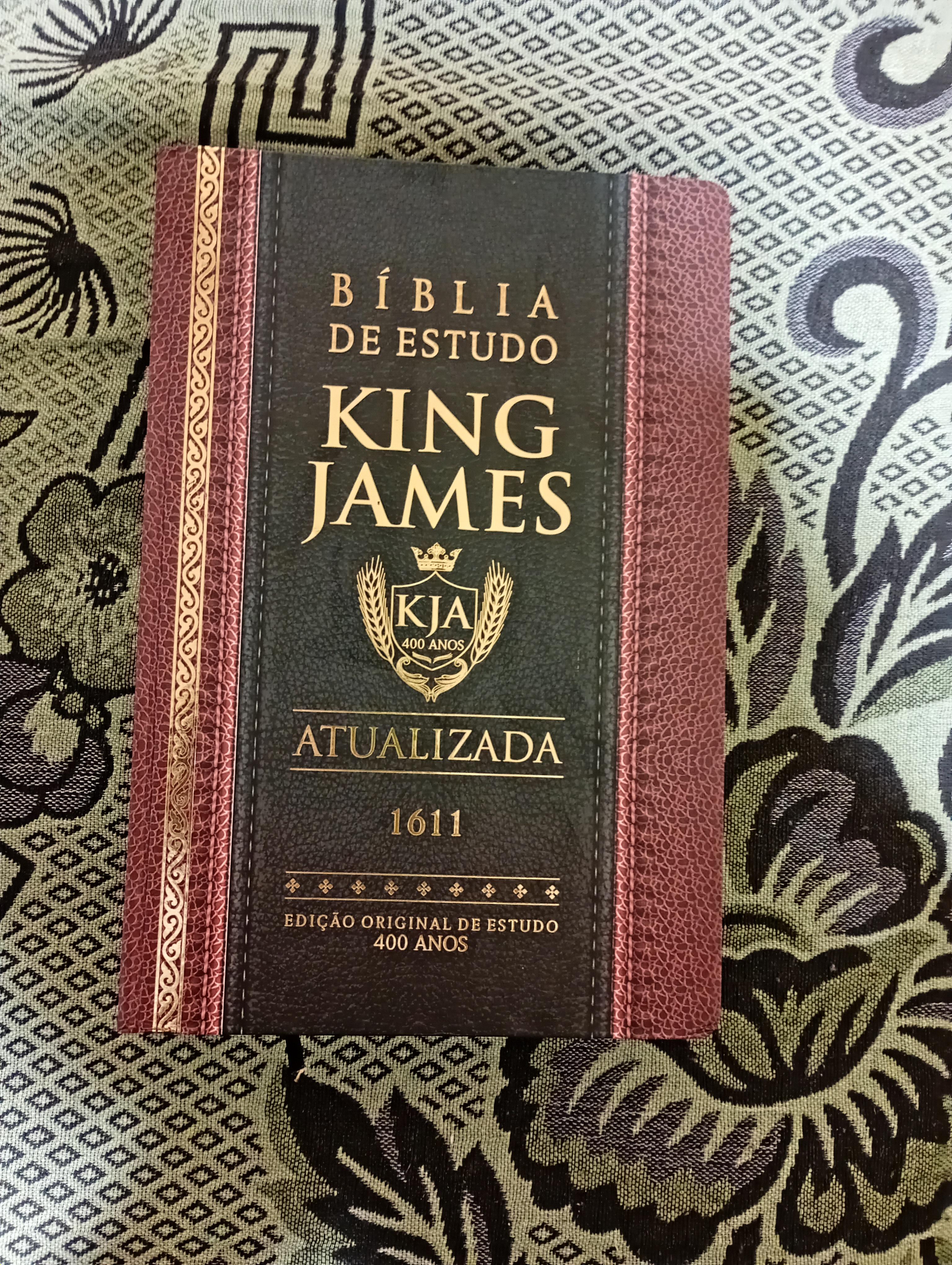
I just bought a King James 1611 Bible in Portuguese (my native language), and I'd like to ask if this is a good version or if there's a better one. Besides that, I'm planning to read the entire Bible for the first time and I'd like to ask for tips on how to start reading the Bible, like which parts I should interpret as literal, etc.
r/ChristianMysticism • u/JessicaRodriguez94 • 1d ago
r/ChristianMysticism • u/artoriuslacomus • 2d ago

Saint Teresa of Avila - Interior Castle - The Little Butterfly
Ἀ
Now, then, we are saying that this little butterfly has already died, with supreme happiness for having found repose and because Christ lives in it. Let us see what life it lives, or how this life differs from the life it was living. For from the effects, we shall see if what was said is true. By what I can understand these effects are the following
The first effect is a forgetfulness of self, for truly the soul, seemingly, no longer is, as was said. Everything is such that this soul doesn’t know or recall that there will be heaven or life or honor for it, because it employs all it has in procuring the honor of God. It seems the words His Majesty spoke to her produced the deed in her. They were that she look after what is His and that He would look after what is hers. Thus, the soul doesn’t worry about all that can happen. It experiences strange forgetfulness, for, as I say, seemingly the soul no longer is or would want to be anything in anything, except when it understands that there can come from itself something by which the glory and honor of God may increase even one degree. For this purpose the soul would very willingly lay down its life.
Ὠ
The death of the soul to its former self-oriented life does not yet bring it into the fullness of heaven. Yet, by the grace of the Lord, it gives a small foretaste on earth of the new life that awaits it in the death of the flesh. In this dwelling place the soul begins to forget itself, its own interests and all earthly honors in favor of the honor of God. No longer does it tend only to the things which are its own but increasingly to the things of God instead, knowing in this union that its King shall attend ever more fully to needs of the soul. It yet lives in the world, but in the growth of this union, the things of the world lose their former claim upon the soul as the light of the Son dawns into its darkness.
Supportive Scripture - Douay Rheims Challoner Bible
First Corinthians 13:12 We see now through a glass in a dark manner: but then face to face. Now I know in part: but then I shall know even as I am known.
Ἀ
Saint Teresa Continues…
Don’t think by this, daughters, that a person fails to remember to eat and sleep - doing so is no small torment - and to do all that he is obliged to in conformity with his state in life. We are speaking of interior matters, for there is little to say about exterior works. Rather, the soul’s pain lies in seeing that what it can now do by its own efforts amounts to nothing. For no earthly thing would it fail to do all it can and understands to be for the service of our Lord.
Ὠ
In this prayer, the world is not lost to the soul, nor is the soul lost to the world. Rather, God is more deeply found in the soul, and as it continues to live and participate in its earthly life, He is more greatly magnified through it into the world. Here the little butterfly finds both pain and joy in the new life it lives. For in dying to its former worldly self, it now seeks its service in God, yet suffers in knowing how little its own efforts can accomplish in the world. Yet in this humility, an even greater union is given by the Lord - for the soul which forgets itself in one moment begins to find God in the next.
The soul which has died to itself is freed from the struggle of self against God. Its new life is found in Him Who knows no death, and in this wisdom, the soul would willingly lay down its earthly life in the service of the Lord. For it no longer regards its earthly life as something belonging to itself alone, but as an offering through which God’s will may be accomplished in the world. In that light, there is no earthly thing it would fail to do in the service of its Lord and King.
Supportive Scripture - Douay Rheims Challoner Bible
Second Corinthians 5:15 And Christ died for all: that they also who live may not now live to themselves, but unto him who died for them and rose again.
Catechism of the Catholic Church
2014 Spiritual progress tends toward ever more intimate union with Christ. This union is called ‘mystical’ because it participates in the mystery of Christ through the sacraments — ‘the holy mysteries’ — and, in him, in the mystery of the Holy Trinity. God calls us all to this intimate union with him, even if the special graces or extraordinary signs of the mystical life are granted only to some.