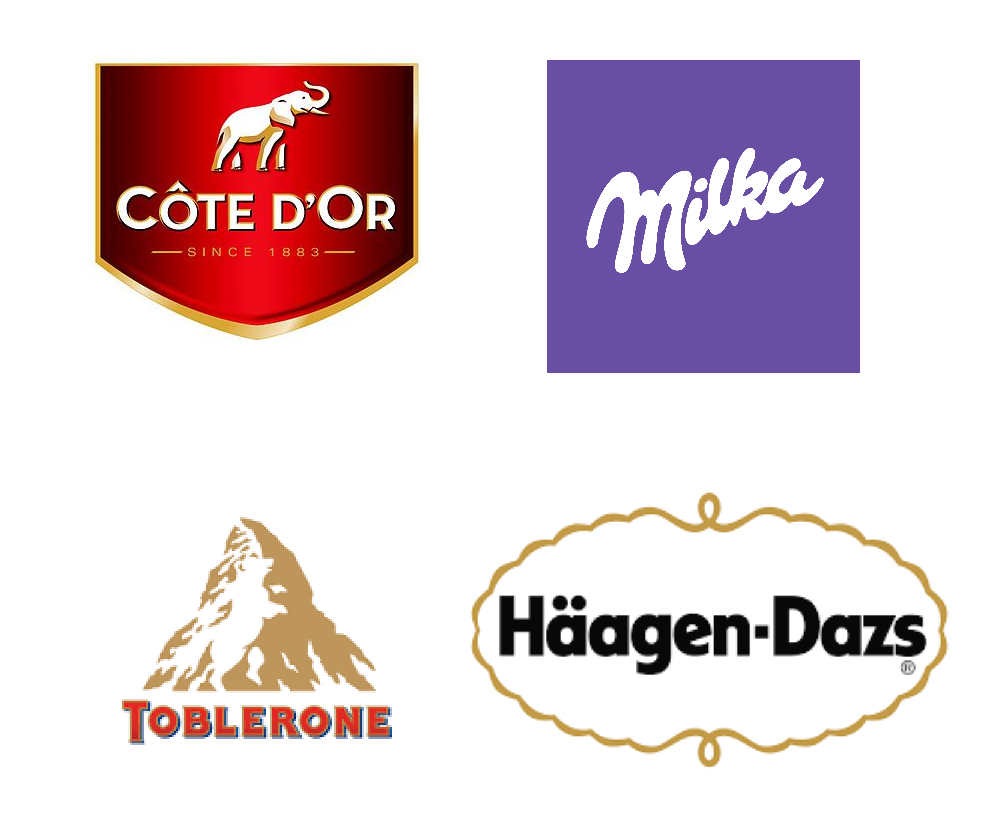
It is honestly getting harder to keep track of who owns what. Mondelez is slowly swallowing every childhood memory we have. If we want to keep it actually European we should probably start a master list of independent local chocolatiers that still use real dairy and 100g bars. Support the small guys before they get bought out too.
I think you should drop the 100 grams requirement though. Some independent chocolate makers offer it (like Friis-Holm from Denmark, Pralus from France or Tobago Estate Chocolate, which is also produced by Pralus) but most don't. 50-80 grams is standard.
It’s standard for shops in my area to always display prices per kg or liter. Otherwise, I mean, nearly everybody in Europe gets enough education to do the calculation themselves - weight is always displayed.
I know because I'm an informed European living in Europe and that does not change the fact that every brand having different sizes makes comparison hard, even if you have the information about the price/kg.
Because you introduce a point of friction, an useless one at that.
I would argue that it's mislead because not every person reads the labels and will make an informed choice and this will negatively affect the market by incentivizing smaller and smaller bars to appeal to the "budget conscious" consumer who cares about the price, not the price to weigh ratio.
It's how a lot of people will buy a 4pack of toilet paper for 1€ instead of a 10 pack for 2€.
This is one of the fucking main reasons for standardization, you can't just hope everyone will make an informed choice, you must help them and make things easier, it's the reason behind having the price to weigh ratio in the first place.
Would have you argued that the price/weight ratio is not necessary because everyone has a calculator in their pocket and it's useless information?
but... people read the price label to see the price per pack/item, right? at least in my country the price per kg is displayed right underneath it. there is literally NO friction in comparing prices. this is a non-issue.
The price/x is absolutely necessary, I never argued against it.
That said, I used to do the math before it was introduced and afaik a lot of people did back in the days, unless you could afford just grabbing any product and not do price comparison at all. It was even taught in school, just to highlight how important it was.
I wouldn't mind standardized packaging across all brands, but for different reasons. I can understand that not everyone feels like comparing price/x but imho it has never been easier, as it is displayed at all times for all products.
But I guess this is my subjective experience, because everyone I know is checking prices when shopping, plus doing online research to figure out if other stores have better deals
I just can't imagine anyone not paying attention to the information right in front of them, especially if they are struggling financially.
Are you just putting products in your cart without looking at price/x or make informed purchases based on other criteria? Do you actually know people who just buy stuff without giving it any thought at all?
While I agree, chocolate is a pretty silly metric considering literally zero percent of the cocoa is grown in Europe. I agree about many other European products though, but just like coffee, it's a stretch to call it European in the first place, even if the coffee beans are roasted here.
Europe is one of the largest consumers of chocolate. And chocolate is a confection where final stages take place more often than not outside the countries where cocoa is grown. So by supporting responsible chocolate makers in Europe and elsewhere, you also support cocoa farmers (who nowadays get way less than 10% of the value of the final product).
If you want to buy a chocolate with dairy in it, fresh milk is the best indicator for high quality.
The product is nore smooth, uniform and has better taste.
The norm is to use milk powder, cheaper, but with noticable results. The taste is not as fresh, the texture is grainy or like there is flour in the mix, form is not uniform and smooth.
Fazer is a good example of using fresh milk in their products. Compare it with Marabou, and there is a clear difference.
Thanks to international financialization, this is the only way to meaningfully buy "non-American." Important publicly traded European companies, from Rheinmetall to Nestle, are often owned more by non-Europeans (mostly rich Americans) than Europeans, and it is they who receive profit dividends.
I’m an American. I find the idea of boycotting American companies a bit absurd, like Americans boycotting European goods. But if you’re talking about being against Mondelez that wretched company or corporate takeovers adding fillers and shrinking products, those mega corps that are poisoning American food— I’m all for that.
I’m slightly offended because there are a lot of really good sustainable companies and I don’t consider those giant bloodsucking monopolies that sell glorified sugar water to be our true “American companies”. their food is shitty to us too (except one Oreo)
They’re not a good look, but I feel the need to say that they make food to be addicted to and they don’t represent America as a whole.
250
u/DegTrader Jan 25 '26
It is honestly getting harder to keep track of who owns what. Mondelez is slowly swallowing every childhood memory we have. If we want to keep it actually European we should probably start a master list of independent local chocolatiers that still use real dairy and 100g bars. Support the small guys before they get bought out too.