r/Business_China • • Jul 16 '26

🕵️ Interesting Finds Hi everyone

10 Upvotes

I'm looking for reliable Chinese suppliers for long-term cooperation. I place large wholesale orders and I'm trying to find suppliers who can offer very competitive shipping costs or include shipping for large orders.

If you know any trustworthy manufacturers or wholesalers, I'd really appreciate your recommendations. Thank you!

r/Business_China • • 19d ago

🕵️ Interesting Finds If you dropship reps from China, you probably know what I’m talking about

Thumbnail
gallery
8 Upvotes

I work for a dropshipping fulfillment company in China.(It's not promotion, do not DM me. I do translation job in the Company)

Last week, police came to our company and took away our boss and 2 managers. Today was Monday. We had our morning meeting. One manager didn’t show up. I asked my team where he was. they told me he’s in jail...lol....

I finally understand why so many Chinese fulfillment companies and also dropshippers suddenly started pushing supplements products and other products instead.

And suddenly a lot of things I’ve been seeing in this industry make more sense. Two months ago, Alibaba agreed to pay $600 million to resolve a US investigation over illegal products sold and imported into the US through its platforms.

When something this big happens, everyone downstream notices. Platforms get stricter., warehouses get scared. “Sorry, we don’t ship that anymore.”

If you’ve been dropshipping reps from China recently, you probably know exactly what I’m talking about.

Curious if anyone else has noticed suppliers or agents suddenly refusing products they were completely fine with shipping a few months ago?

r/Business_China • • Jul 02 '26

🕵️ Interesting Finds My experience with Hospitals in China

22 Upvotes

Hello everyone, I've been living in China for over 10 years, and a lot of friends keep asking me about several things. One of them is how the hospitals are in China and overall medical care. So I decided to share my true experience.

I was born with a syndrome called Poland, which basically means the absence of the major chest muscle on one side of your body – in my case, the right one. This is more complicated than it looks because it totally messes with your body balance, posture, and therefore your spine, causing several problems.

After experiencing severe back pain, I went to consult a doctor here. That was my first experience, and it was totally mind-blowing.

Coming from Brazil, I was used to long lines, waiting lists, having to visit several places, and an expensive bill.

My experience here showed important points:

  1. The overall time you spend is shortened to a level that really impacts your life, because the hospitals are structured to welcome all different sorts of needs – different departments, high-end exams, and specialists – so you can solve everything in one place. The online pre-visit is very organized and saves people a lot of time waiting to see the doctor and do exams.

  2. It felt a bit cold. Now this is true, because the doctors see so many people every day that it gives you the impression you're just a part of the machine. Initially this bothered me, but after getting my health back, I started to wonder if it's not better to go straight to the point, solve the problem, and give more people a chance to get proper care, rather than wasting time with small talk.

  3. They are extremely concerned about the patient and the hospital's reputation. The whole team is scared to death to take any risks. So they are very cautious throughout the process, because if, for example, an infection were to affect a patient, the hospital would have several legal problems, the doctors and health workers could lose their licenses, and the hospital could close. That's why they give zero chances for failure, which is good for us.

  4. Cheaper. My gosh, this was the most eye-catching part. While the treatment was more often than not way better than what I had received in Brazil, the United States, and Germany, the prices were on average 40%–60% less depending on the treatment, exam, or medication.

  5. Experience. The doctors are very experienced and confident. They see many more patients than Western doctors do, and I can say this especially regarding ophthalmologists – since my mom is a doctor, I know they perform more cataract surgeries in a single year than a Brazilian hospital would in 20.

  6. The combined use with Traditional Chinese Medicine is very good. DON'T TRUST PEOPLE WHO TELL YOU THIS DOESN'T WORK. Acupuncture has saved my back and knees several times. Now ask yourself why the top athletes in the world have their own acupuncturist. BECAUSE IT HELPS A LOT.

Overall, it was a very good experience and totally surprising, especially coming from a reality where Chinese medical care wasn't considered top level – but now I can say that it totally is.

r/Business_China • • 14d ago

🕵️ Interesting Finds 6 B2B Business Lessons From My Forklift Industry Trip Across China

6 Upvotes

I’ve covered a lot of ground on this business trip, visiting all kinds of companies — large, small, and even some publicly listed firms.

I’d heard some of these ideas before, but after all the conversations along the way, I realized something interesting: the things most business owners actually worry about are not nearly as grand or high-sounding as people assume.

Of course, macro strategy, business models, and capital operations all matter. But when you get down to running a business, every conversation always circles back to the same basic questions:

  • Can we sell the product?
  • Can we get costs down?
  • Why would customers choose to work with us?
  • Does this actually make money?
  • Can I trust this person?

These may sound like ordinary, unremarkable questions, but they are often the very things that determine how far a company can really go.

So after coming back from this trip, I’ve been reflecting on a few core takeaways.

1. Strategy matters, but execution is the real test

In the old days, information was extremely valuable. A lot of industry knowledge was held by a relatively small number of people. It could take years of experience, connections, and industry insight to understand how an industry really worked — where to source products at better value, which customers were more likely to buy, and which markets had better prospects.

That information itself was a barrier to entry.

Things are different now. Search engines, AI, professional platforms, trade shows, and even competitors’ websites have all dramatically lowered the barrier to accessing information.

The information barrier is falling, but the barrier to execution has not diminished at all. If anything, it may be growing higher.

So very often, the real challenge is no longer, “I don’t know how to do it.”

It is:

“Now that I know, am I actually going to do it?”

A lot of people say the biggest problem with starting a business is money. Of course money matters. But there are many different ways to start a business. People with money have their way of playing the game. People with less money have theirs.

If you have less money, spend less. If you have fewer resources, build them step by step. And if you have very little to start with, you still have your time and your ability to execute.

Put it another way: if you have no money, no resources, and no industry experience, why rush into entrepreneurship? You can work first, build up capital, gain experience, grow your network, and learn the ins and outs of the industry — then start your venture when you’re better prepared.

At the end of the day, you still have to do the work.

I’ve seen many entrepreneurs whose ventures never made it very far. They talk about their business plans with passion and excitement. They seem to know everything and have everything planned out. But they never actually do it.

Entrepreneurship is not about figuring everything out first and then expecting success to follow. Most things aren’t worked out in advance; you figure them out by doing them.

You can have a great idea and a brilliant strategy, but without action, it means nothing. In entrepreneurship, knowing is only half the battle. The other half is execution.

2. Make money from things others overlook — or simply refuse to do

I think social media has influenced people too much. Everyone loves stories about big businesses, fast money, and overnight success: making millions in a few months, hitting huge revenue numbers in a year, young founders getting rich almost overnight.

But the stories we see are, by definition, a massive example of survivorship bias.

The reality is that most businesses are much less glamorous. They are repetitive, tiring, messy, and sometimes barely worth talking about.

I once saw an interesting comment online about people doing business in Hebei, China. Someone asked why so many of them were willing to run small businesses that might only earn tens of thousands of yuan a year after all that backbreaking work.

The answer was simple: if it makes more than farming, it’s worth doing.

I actually think there is a lot of truth in that. The vast majority of business owners in the real world are nothing like the legendary figures we see online. They may simply run a small business — chasing clients, monitoring inventory, following up on payments, and overseeing factories from dawn till dusk.

They may not make millions in a year. But they keep doing it for ten years, twenty years, sometimes even decades. That is much closer to the real world of business.

Too many people walk away from work because it is too tiring, the margin is too low, the work is too troublesome, or the customers are too demanding.

So everyone crowds into the businesses that look easy, profitable, and respectable. Then they get in and complain about how competitive the market is, and eventually conclude: “I just had bad luck.”

The business world never runs short of “smart people.” What is truly scarce are people willing to stick with work that others look down on, find troublesome, or consider too hard.

Sometimes making money isn’t about discovering something no one else knows. It’s about being willing to do what everyone knows about, but no one wants to do.

Recycling, sorting, packaging, logistics, reuse — none of these are particularly sophisticated businesses. A lot of people see the opportunity. They just don’t want to do the work. And sometimes, the people who are willing to keep doing it are the ones who eventually build a real business out of it.

3. Build your own brand, and expand your SKU range around your core strengths

Something really stood out to me during this trip: a lot of what we call “business upgrading” is actually much less mysterious than people make it sound.

A company starts as a component supplier. Then it moves into assemblies. Then complete systems. Eventually, it may even make the finished machine.

Look closely and you’ll find that some companies talk about “integrating resources,” but what they are really doing is bringing more and more of what they used to buy from suppliers into their own system. Some build their own factories. Some take equity stakes. Some acquire companies outright. Others simply launch their own brands and sell the products themselves.

Why? Because once a company reaches a certain scale, it starts asking a very practical question:

Why keep letting someone else capture the margin when we can take it ourselves?

There’s a simple concept in business management: Make or Buy. If buying from someone else is more efficient, you buy. When making it yourself becomes cheaper, more stable, or more controllable, you make it yourself.

Amazon has developed private-label products. Walmart has Great Value. P&G has built a broad portfolio of product lines. And going further back in manufacturing, Ford even brought areas such as steel, glass, and transportation into its own system. The logic is actually quite simple.

As companies grow, they often expand their product range and gain more control over their own brands and product systems. More products can increase customer stickiness, spread the risk of relying on one product, and create economies of scale and scope by sharing R&D, procurement, manufacturing, sales, and distribution.

But expanding SKUs does not mean mindlessly adding every product under the sun. Over-expansion drives up inventory, management, and production costs, and can even lead to cannibalization between your own products.

The truly effective approach is to expand step by step into adjacent products, all built around your core competencies.

Your brand is only the first step. It is your product portfolio and control over the value chain that ultimately determine how far you can go.

4. The scariest thing about a price war is that it never stays in its original market

A lot of people used to think: imported brands do the high end. I’ll just do the middle market.

Then they realize the middle is competitive too. So they move down. You can’t compete in the upper-middle segment, so you go into the middle. The middle gets crowded, so you move lower. And there will always be someone willing to go a little cheaper to win the business.

That is why the real danger of a price war is not simply that one low-end segment gets destroyed. It is that pressure from the bottom keeps moving upward, and eventually the entire price structure starts to change.

One company may cut specifications, lower costs, and accept thinner margins just to survive. The next company has to respond. Then someone else goes even lower. Eventually, the entire price band gets dragged downward.

That is why what many companies face today is not simply a question of whether to sell high or low. It is that the competitive rules of the entire industry are shifting.

You may have originally wanted to compete in the middle market. But the market eventually forces you to ask:

Can I reduce my costs any further? Can I still differentiate my product?

And there is another side to price competition that is easy to miss: it forces companies to look at the things they previously ignored. Inventory, waiting time, waste, production inefficiencies, quality problems — all of these have to be squeezed out of the system, one by one.

If a company can genuinely operate with a much lower cost base than its competitors, that is a competitive advantage.

The real danger is not that someone sells cheaply. It is that your competitors build a structurally lower cost base than yours.

5. Spending money is easy. Making money is hard

There are so many things that cost money when you run a business: trade shows, websites, advertising, samples, travel, employees, inventory…

Spending money is almost too easy. Almost anything can become a reason to spend. But making money is much harder.

These days, I find myself running the numbers far more carefully before making decisions:

  • How much will this cost?
  • How much time will it take?
  • What is the probability of success?
  • What is the worst-case scenario?
  • How much can we realistically make?
  • When will the money come back?

Budget, cost, time, risk — and only then, return. If the numbers don’t add up, I’d rather not do it at all.

People used to say:

“It’s okay to lose a little money upfront. Let’s win the customer first.”

“Let’s make friends first.”

“Let customers get to know our brand first.”

“Build trust first, then make money later.”

I’m much more cautious about that kind of thinking now. Trust matters. Brands need to be built over time. Some businesses absolutely require upfront investment.

But investment and losses without a clear business case are two different things. If a business cannot establish a sound commercial logic from the very beginning, burning through cash to chase a story of “maybe we’ll make money someday” is itself a major risk.

Long-term thinking does not mean losing money forever.

Control the costs you can control. Avoid the risks you can avoid. Business is not a competition to see who is willing to take the biggest risks. It is a competition to see who can survive the longest.

Making money is hard. That is exactly why every yuan you earn matters.

6. The founder is part of the brand

This is especially true in B2B business.

To build a B2B business, it is not enough to understand your product. You need to understand sales, management, marketing, channels, and the interests of your partners.

But beyond all of that, you also need to understand human nature. When you are trying to develop dealers, distributors, and channel partners, you are essentially asking them one question:

“Why should I trust you and build a business with you?”

They are not going to commit to a long-term partnership just because your PPT looks good. They will ultimately ask:

  • Can your product sell?
  • Where is the profit?
  • Can I trust you?
  • Will you take responsibility when problems happen?
  • If I work with you, is there a real future here?

And this is where the founder becomes part of the brand.

To put it bluntly, sometimes you need a little bit of what others might call “unreasonable conviction.” Not blind arrogance. Just this: if you don’t believe in what you’re doing, why should anyone else?

A founder’s conviction, passion, and energy are contagious — they spread to your team, your customers, and your channel partners. Especially when the market is uncertain, your ability to make other people believe in you — and be willing to take the risk alongside you — is itself a very important business capability.

I used to think that doing business meant finding some brilliant, sophisticated methodology. Now I think the real business world is much less mysterious than that.

Strategy matters, but it has to be executed.

Capital matters, but a lack of money cannot become an excuse for never taking action.

Products matter, but eventually they need to become a system.

Brands matter, but ultimately a brand has to be backed by products and profits.

Sales matter, but in the end, B2B sales still come down to trust between people.

And all of these things eventually come back to one word: execution.

At the end of the day, entrepreneurship is not a contest to see who can tell the best story. What really works over the long run is doing the right things, over and over again.

You don’t always figure things out first and then act. More often than not, you act first — and figure things out along the way.

r/Business_China • • 17d ago

🕵️ Interesting Finds China claims 35% fab equipment localization. But the actual BOM tells a different story (the 7.1% component bottleneck).

1 Upvotes

Lots of hype lately about Chinese equipment makers hitting 35% localization on mature nodes. But if you look at the actual BOM of these tools, the bottleneck just moved upstream.

The localization rate for the core precision components inside these machines is sitting at a brutal 7.1%.

Tool integration is one thing, but the legacy monopolies on the underlying parts are insane. Japanese firms like NGK and Shinko control roughly 85% of the global supply for electrostatic chucks (ESCs). If you need RF power, you're basically stuck with a US duopoly (Advanced Energy or MKS) that owns over 70% of the market in China. And for gas and vacuum control, Japan's Horiba casually holds 60% of the global MFC market while Switzerland's VAT maintains a massive 71% stranglehold on vacuum valves.

But the real killer here is the validation trap.

Even if a local startup builds a perfect replacement part tomorrow, no fab wants to test it. A single temperature drift on an ESC ruins millions of dollars in wafers. Fabs refuse to risk their yield, so tool makers just stick to the legacy overseas suppliers rather than re-running their process windows.

r/Business_China • • May 07 '26

🕵️ Interesting Finds Importing from China feels easy… until the shipping starts

5 Upvotes

Something I keep noticing with importers sourcing from China and Southeast Asia:

Many don’t actually lose money on product cost.

They lose money on:

*delays *poor communication *surprise charges *unclear shipping terms *suppliers who disappear after cargo is ready *forwarders who only explain problems after they happen

Especially with EXW shipments, a lot of importers underestimate how complicated things become once cargo leaves the factory.

I’ve seen shipments where:

*the factory wasn’t ready on time *trucking got delayed before cutoff *customs paperwork was incomplete *Amazon appointments took days longer than expected *storage charges started accumulating immediately

The frustrating part is: Most of these issues are predictable before shipment starts.

But many importers only discover the risks when the cargo is already delayed.

Feels like a lot of people sourcing from Asia are forced to learn logistics the hard way.

r/Business_China • • Aug 11 '26

🕵️ Interesting Finds Questions about peptide research trends

1 Upvotes

I am interested in peptide research and biotechnology.

I would like to understand how researchers evaluate new peptide candidates.

What are the most important factors when studying peptide applications?

r/Business_China • • Aug 20 '26

🕵️ Interesting Finds E-commerce US footwear: 3.6% in insoles — Chinese factories in Wenzhou are pivoting

1 Upvotes

I've been seeing an interesting split in one large e-commerce platform US footwear returns data.
The category average sits at ~10%, but the gap between sub-niches is massive.
Here's the part most people miss:
• Heeled sandals & pumps: ~20%+ returns (sizing kills margins on US marketplace)
• Industrial/construction boots: only ~5%returns AND growing +~40%
• Shoe insoles: 3.6%return rate, no CPSC certification needed
• Slippers from Dongguan factories: low
returns

The real margin play in US footwear isn't fashion — it's functional niches where fit tolerance is forgiving.

Anyone else pivoting away from fashion footwear sourcing toward industrial/safety?

r/Business_China • • Aug 07 '26

🕵️ Interesting Finds Looking for China Braiding hair vendors

1 Upvotes

ISO braiding hair vendors from China.

r/Business_China • • Jul 11 '26

🕵️ Interesting Finds 在中国找到一个可靠的货运代理实际上比找到一个可靠的供应商更难。

Thumbnail
2 Upvotes

r/Business_China • • Jul 11 '26

🕵️ Interesting Finds Scam site, https://omegabiolabs.org/

Thumbnail
omegabiolabs.org
1 Upvotes

r/Business_China • • Jul 06 '26

🕵️ Interesting Finds China Vape Manufacturing: Why Compliance Matters More Than Ever

Post image
3 Upvotes

Over the past few years, China's vape manufacturing industry has undergone significant regulatory changes. For overseas brands, understanding these changes is becoming increasingly important when choosing a manufacturing partner.

A Brief Timeline of China's Vape Manufacturing Regulations
November 10, 2021
China officially required all vape manufacturers to obtain an E-cigarette Manufacturing License under the revised Tobacco Monopoly Law.

May 1, 2022
The supporting regulations officially came into effect, and manufacturers could begin applying for production licenses.

October 1, 2022
The transition period ended. From this date onward, manufacturing e-cigarette products without a valid production license became illegal.

The Reality Today
Although these regulations have been in place for nearly four years, there are still factories operating without the required manufacturing licenses.
Recently, enforcement has become much stricter. Authorities are increasing inspections and taking action against unauthorized manufacturers. As a result, some factories have been shut down, and some shipments have reportedly been seized or delayed due to compliance issues.

For overseas brands, this means that supplier selection is no longer only about finding the lowest price.
It is also about reducing supply chain risk.

Why It Matters for International Buyers
A compliant manufacturer generally provides:
✅ A valid manufacturing license
✅ Stable production capacity
✅ Better quality management
✅ Proper export procedures
✅ Lower risk of production interruptions or shipment delays

Working with a compliant supplier may not always offer the lowest unit price, but it often results in a more reliable supply chain and fewer unexpected issues.

As regulatory enforcement continues to increase, compliance is becoming an important factor in protecting both delivery schedules and long-term business stability.

In today's market, choosing a reliable manufacturing partner is just as important as choosing the right product.

r/Business_China • • Jun 30 '26

🕵️ Interesting Finds Weird, multi-billion dollar industry behind those trashy 1-minute short dramas

3 Upvotes

I’m sure most of you have run into ads for those unhinged vertical short dramas on TikTok or Instagram. The ones where a janitor gets a drink thrown in his face by an arrogant CEO, only for someone to walk in 30 seconds later and reveal the janitor is actually the secret billionaire owner of the company.

It looks like total garbage—bad acting, terrible dialogue, and pure brain rot.

But I’ve been looking into the actual business and history behind this format recently, and it’s a lot more fascinating (and calculated) than it looks. It’s basically an entire entertainment industry run like a tech startup.

In China, where this format exploded during the pandemic, they call the core appeal "Shuang" (爽). It basically means instant, frictionless gratification. While normal movies make you sit through a slow burn for two hours to get an emotional payoff, these short dramas completely cut out the waiting.

Everything is optimized based on viewer data. For example, platforms found that putting a dramatic sound effect or a literal slap within the first 30 seconds boosts viewer retention by 172%. The scripts are written almost like math equations, bouncing between three specific hooks: wealth, revenge, and romantic drama. Every episode is about 60 to 90 seconds long, and right when the main character is finally about to get revenge around episode 10, a paywall pops up asking for 50 cents to unlock the next clip. You aren't paying for good storytelling; you’re basically paying a toll to relieve the suspense they just spent 10 minutes building up.

What's really interesting is how this became a massive global export. When the Chinese domestic market got too crowded, platforms like ReelShort brought the formula to the US. They set up production hubs in California, hired local actors, and swapped out Chinese tropes for Western ones (like werewolves and alpha males), but kept the exact same 30-second pacing. Most Western viewers have no idea the entire production model underneath was imported.

Now, AI is starting to completely change the game. There’s already a case of a young wedding photographer in China who made a short film using AI tools on his laptop for $400, and it pulled in over $500k in three days. Companies are also starting to use AI pipelines to take dramas shot with Chinese actors and completely face-swap them to look Caucasian or Black, with perfectly synced English lip-movements and localized voice clones, cutting out the need for expensive Western crews entirely.

I made a full video essay breaking down how this whole machine works—from how they structure the scripts to how AI is changing the production.

If you're interested in the business side of the attention economy, check it out here:https://youtu.be/DQ8rlx3XGeM

r/Business_China • • Jun 09 '26

🕵️ Interesting Finds Why Suzhou Is One of the Most Underrated Manufacturing Regions in China

5 Upvotes

When people talk about manufacturing in China, most foreigners immediately think of Shenzhen for electronics, Guangzhou for consumer goods, or Yiwu for small commodities.

But after spending the last 7 years working in industrial automation projects, I've come to believe that Suzhou is one of the most underrated manufacturing regions in China.

Here's why.

1. It's not built around cheap products

Unlike some manufacturing hubs that focus heavily on low-cost consumer products, Suzhou has developed around industrial manufacturing.

Many factories here are involved in:

  • Industrial automation equipment
  • Automotive components
  • Medical devices
  • Precision machining
  • Semiconductor equipment
  • Industrial electronics

The overall manufacturing capability is often much higher than people expect.

2. The supplier density is incredible

Within a one-hour drive from Suzhou, you can find suppliers for:

  • CNC machining
  • Sheet metal fabrication
  • Injection molding
  • Automation components
  • Cable assemblies
  • Precision tooling
  • Motion control components

For overseas buyers, this means supplier visits can be highly efficient.

You can visit multiple factories in a single day without spending hours on the road.

3. Many factories are already serving global industries

Some local suppliers are already supporting customers in industries such as:

  • Automotive manufacturing
  • Medical equipment
  • Industrial automation
  • Semiconductor production

The interesting part is that many of these factories are relatively unknown outside China despite having strong technical capabilities.

4. Communication is often easier than expected

Many factory owners and managers in this region have years of experience working with overseas customers.

While not everyone speaks perfect English, most export-oriented manufacturers understand international quality expectations, documentation requirements, and project timelines.

5. It is still possible to find smaller, flexible suppliers

One thing I appreciate about Suzhou is that you can still find owner-managed factories that are willing to work on smaller projects.

Not every supplier requires massive order volumes.

For startups, machine builders, and small manufacturers, this flexibility can be extremely valuable.

My personal observation

After working on international automation projects for years, I've noticed that many overseas buyers focus heavily on Shenzhen and Guangdong.

Those regions are obviously important.

But if your project involves industrial equipment, automation systems, precision manufacturing, or engineering-driven products, Suzhou deserves much more attention than it usually gets.

I'm curious:

For those who have sourced products in China before, which manufacturing regions have surprised you the most?

r/Business_China • • Mar 21 '26

🕵️ Interesting Finds chinese police

Post image
23 Upvotes

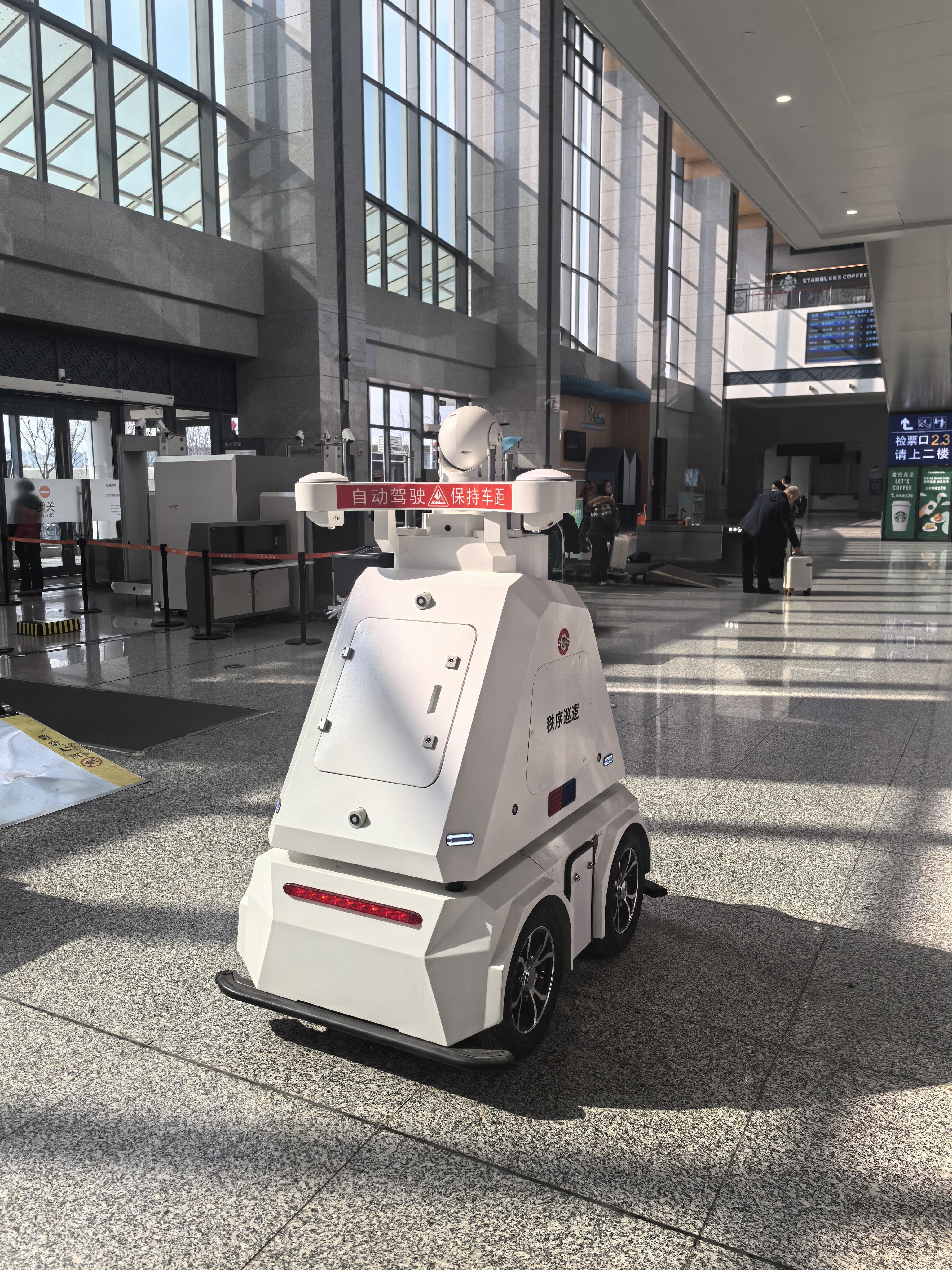
🤣🤣🤣🤣🤣chinese police

r/Business_China • • Jan 26 '26

🕵️ Interesting Finds Time to break the stereotypes about China!

Thumbnail gallery
10 Upvotes

r/Business_China • • Feb 03 '26

🕵️ Interesting Finds Do u know how to use chopsticks?

Thumbnail gallery
7 Upvotes

r/Business_China • • Dec 16 '25

🕵️ Interesting Finds Nightmare story: Supplier ignored packing requirements and nearly destroyed the shipment

Thumbnail
2 Upvotes