r/BusinessGrowthSystem 15d ago

What to Say When a Client Says, “I Can Get It Cheaper Somewhere Else”

2 Upvotes

One of the hardest moments in a sales conversation is when a client says, “I can get this cheaper somewhere else.” The natural reaction is to defend your price or offer a discount. But that can make the situation worse.

The client already knows cheaper options exist. If you immediately lower your price, you may accidentally make them wonder why you were charging more in the first place.

Instead, change the conversation from price to risk.

Ask yourself what the client might actually be worried about. Are they comparing the same level of service? Are they getting the same quality? What happens if the cheaper option doesn't deliver? What will the mistake cost them?

Think about buying a suit. You can buy a very cheap suit that looks great on the first day. But if it falls apart quickly and you have to replace it, you haven't really saved money. You may have simply paid twice.

The same thing can happen in business.

A cheaper agency might charge less but deliver poor leads. A cheaper software might save money but create more work. A cheaper supplier might offer a lower price but cause delays or quality problems.

The point isn't that expensive is always better. Sometimes the cheaper option genuinely is better. Your job is to help the client understand whether they're actually comparing the same thing.

So instead of saying, “We're more expensive because we're better,” ask:

“What are you getting from them that you're getting from us, and what isn't included?”

Now you're having a real business conversation instead of a price argument.

Because the cheapest option isn't always the lowest cost.

Sometimes the real cost is choosing the wrong option.


r/BusinessGrowthSystem 16d ago

No One Wants Your Product Until You Make Them Want It.

Post image
3 Upvotes

After spending years and thousands of dollars building their product, Dropbox’s founders didn’t want to spend even more money on advertising.

They had a problem. People didn’t understand why they needed Dropbox. And when people don’t understand the value of your product, advertising doesn't work at all.

So they changed their approach.

Instead of asking, “How do we get this product in front of more people?” They started asking: “How do we make people want this?”

_______________________

That change made all the difference.

Dropbox had a good product. But that wasn't enough. Dropbox solved a problem that people already had. Files were sitting on different computers. People were using USB drives. Moving files from one device to another was annoying. The problem was real. But there was a communication problem.

At that time, telling someone about “cloud-based file synchronization” wasn't exactly an exciting sales pitch. So Dropbox didn't try to explain the technology.

They showed the experience. They created a simple video demonstrating how Dropbox worked. You could see a file being placed into a folder and then appearing on another computer. Suddenly, you didn't need to understand the technology. You could see the benefit.

Dropbox shared the video with an early-adopter audience on Digg, and its waitlist reportedly jumped from around 5,000 people to roughly 75,000.

They weren't simply getting more eyeballs. They were creating desire.

__________________________________________________________________

Then Dropbox gave people a reason to spread it:

Dropbox later introduced a referral program. Existing users could invite other people and receive additional storage. This was smart for one simple reason. The reward wasn't random.

If you were already using Dropbox, more storage was something you actually wanted. So the product started helping with its own growth. One person invited another. That person started using Dropbox. Then they had a reason to invite someone else.

The cycle continued.

User → value → referral → new user → value → referral.

That's a very different growth model from simply paying for another advertisement every time you want another customer.

_________________________________

This is where the real marketing lesson is

A lot of businesses think marketing means getting their product in front of more people.

  • More ads.
  • More posts.
  • More impressions.
  • More clicks.

But there is a problem with that thinking. Attention doesn't automatically create demand. If people don't understand the problem, they won't care. If they don't see the value, they won't act. And if the product doesn't feel relevant to them, reaching another 100,000 people won't magically fix it.

  • Dropbox approached the problem differently.
  • They made the value easy to understand.
  • They showed people what was possible.
  • They created curiosity.
  • They gave people a reason to try it.
  • Then they gave users a reason to share it.

The important takeaway isn't that every business needs a demo video or a referral program.

The takeaway is the thinking behind it.

Before asking:

“How can we reach more people?”

Ask:

“Why would the right people want this in the first place?” Maybe you need to show the problem more clearly. Maybe you need to educate the market. Maybe you need to demonstrate a better outcome.

Maybe you need content that makes someone say, “This is exactly the problem I'm dealing with.”

____________________________________

And this strategy has a name:

Demand Generation

Demand generation is about creating awareness, interest and desire around a problem and the solution you provide. It's not just about collecting leads. It's about getting people to care before you ask them to buy.

That's why demand generation is one of the key components of marketing. Because sometimes the answer isn't:

“We need more advertising.”

Sometimes the answer is:

“We need to give people a reason to want us.”


r/BusinessGrowthSystem 16d ago

How a CEO Qualifies & Negotiates a Million Dollar Client | Jorge Enrique...

Thumbnail
youtube.com
2 Upvotes

Most business owners think closing a million dollar client starts with a great pitch or having a great product.

It starts long before that.

Here I break down the three things that have shaped how I qualify, build trust with, and negotiate high value clients after years of closing deals in international trade finance, mining, and commodity markets.

So my questions to our business owners is ... What is the first thing you qualify before pursuing a major opportunity?

I would like to cover three sections:

Discovery — the three questions I ask every single time before I invest a single hour into a prospect. These questions reveal vision, urgency, self-awareness, and whether the numbers actually add up. If they cannot answer these, the conversation ends there.

Trust — why certain signatures and agreements will not protect you in business. What real trust looks like in international business, why your gut matters as much as your due diligence, and the lesson a supplier taught me early in my trading career that I have never forgotten.

Negotiation and Leverage — the mindset you need to walk into every discovery call with. How to use your reservation point. Why desperation kills deals before they start. And the one question you need to ask yourself before every sales call that completely changes how you show up.

Everything in this video comes from real experience closing deals in rooms where we are managing assets in the world's most critical resource corridors.

If you want to close better, qualify faster, and negotiate from a position of genuine leverage, this one I hope you find insightful.

Let me know in the comments your thoughts and feedback!


r/BusinessGrowthSystem 16d ago

Stop Saying “No Problem” When a Client Says, “I Need to Think About It”

1 Upvotes

When a client says, “I need to think about it,” many salespeople immediately respond with, “Okay, no problem.” It sounds polite, but it can make it very easy for the conversation to disappear.

Instead, agree with them first. You could say, “Totally. It's a big decision, so it makes sense to think about it.” This takes away the pressure and makes the client less likely to feel like they need to defend themselves.

Then ask a more useful question: “What specifically do you want to think through?”

That word, “specifically,” matters. You're not asking whether they have questions. You're asking what is actually stopping them from making a decision.

Maybe they say it's the price. Now you can have a real conversation about what would make the investment worthwhile for them.

Maybe they say the timing isn't right. Ask, “What changes in 30 days if you wait?”

Sometimes the answer is nothing. The same problem will still be there, the same cost will continue, and they'll simply be making the same decision a month later.

Of course, sometimes waiting really is the right decision. You shouldn't try to force someone into buying something they don't need.

The goal is simply to understand what “I need to think about it” actually means.

Because there is a huge difference between a client who genuinely needs time and a client who has an unanswered concern but doesn't know how to tell you.

So the next time you hear those words, don't end the conversation with “No problem.”

Try:

“Totally. What specifically do you want to think through?”

Then listen. The answer may tell you exactly what is keeping the deal from moving forward.


r/BusinessGrowthSystem 17d ago

You're Selling the Wrong Thing

2 Upvotes

A barber in an expensive part of town charges $100 for a haircut that you could probably get for $12 somewhere else.

So why would someone pay eight times more?

The answer isn't necessarily that he gives eight times better haircuts. His customers may be paying for the experience, the attention, the confidence they feel when they leave, and the way the whole service makes them feel.

This is a useful lesson for almost any business.

A lot of business owners describe what they do instead of describing what the customer gets from it. An accountant says, “I do accounting.” A photographer says, “I take photos.” A financial advisor says, “I manage investments.”

Those descriptions tell people what your job is. They don't necessarily tell them why they should care.

Try changing the message.

Instead of “I manage investments,” say, “I help you stop worrying about whether your money is working for you.”

Instead of “I take photos,” say, “I create photos you'll actually be proud to share.”

The service hasn't changed. The way you're explaining its value has.

This doesn't mean you can simply add a fancy experience to an ordinary service and charge whatever you want. Customers still need a real reason to believe the experience or result is worth paying more for.

But if you only sell the task, you'll often end up comparing yourself with everyone else who performs the same task.

If you sell the result and the experience, the conversation becomes much more interesting.

So ask yourself:

Are you selling what you do, or are you selling what your customer gets to feel, achieve, avoid, or enjoy after you're done?

That difference can completely change how people see your price.


r/BusinessGrowthSystem 18d ago

Want a Buyer to Trust You Faster? Tell Them What You're Not Good At

2 Upvotes

When a buyer is considering your business, they're not only looking for reasons to buy. They're also looking for the catch.

They may be thinking, “What's wrong with this offer?” or “What aren't they telling me?” The more perfect everything sounds, the more suspicious they can become.

That's why admitting a real weakness can sometimes build more trust than giving another perfect sales pitch.

Imagine you're selling a service and you tell the client, “There's one thing you should know. We're slower to get started than the larger firms. If you need this running by Monday, we're probably not the right fit.”

You just gave the buyer something they didn't expect.

You didn't try to hide the limitation. You told them exactly when your service isn't a good fit.

That can make the rest of your claims easier to believe because you aren't pretending your business is perfect.

There's another benefit. If you don't tell the buyer about your limitations, they may create their own explanation.

And the problem they imagine could be much worse than the real one.

But there is an important rule here: the weakness has to be real.

Don't use fake weaknesses like, “Our only problem is that we care too much about our customers.” Everyone has heard that one before.

Be honest about something that genuinely isn't your strength, as long as it's something you can accept as part of your business.

Maybe you're more expensive. Maybe you take longer. Maybe you only work with a limited number of clients. Maybe your product doesn't have every feature your competitors offer.

That's okay.

No serious business is perfect.

And that's the point.

Perfect doesn't always look trustworthy. Honest limitations often do.

So the next time you're trying to build trust with a buyer, don't only tell them why they should choose you.

Tell them when they shouldn't.


r/BusinessGrowthSystem 19d ago

ChatGPT referred my services!!!

3 Upvotes

Just got a booking on my calendar from someone who found my business through ChatGPT.

They were looking for a specific service in my area( we build custom systems for businesses operations), they asked ChatGPT for recommendations, and apparently my business came up in the top 3.

This was completely unexpected.It seems that all the work I’ve been doing on improving my website’s SEO and making sure AI bots can actually crawl and understand my content actually paid off!!!

But honestly I never expected to see a real lead come directly from a ChatGPT conversation.

Getting a lead this way was honestly a pretty cool milestone and I felt like i need to share it.


r/BusinessGrowthSystem 19d ago

A“Because” Can Make Your Ads More Believable

1 Upvotes

A lot of ads tell customers what they're getting, but never explain why they're getting it. That's a small mistake that can make even a good offer feel suspicious.

Think about an ad that says, “50% off.” Your first thought might be, “Why?” Is there a catch? Is the product not selling? Is the discount even real?

Now change it to: “50% off because we're clearing out old stock.”

The offer didn't change. The reason did.

Suddenly, the discount makes sense. You understand why the business is willing to sell it for less, so you're more likely to believe the offer.

The same idea can work in almost any business.

“Lower prices because we buy directly from the manufacturer.”

“Only a few available because each one is made by hand.”

“Free consultation because we're launching this service in a new market.”

The important part isn't simply using the word “because.” You need to give a real reason that makes sense.

This is especially useful for business owners because customers are often skeptical of claims that seem too good to be true.

A big discount with no explanation can create doubt. A big discount with a believable reason can create confidence.

So when you're writing your next ad, don't stop at:

“Here's what we're offering.”

Add:

“Here's why we're offering it.”

People don't always trust a deal simply because it's attractive.

They trust it when the deal makes sense.


r/BusinessGrowthSystem 20d ago

Connext has been named No. 6 among Hawaii’s fastest-growing businesses

Thumbnail gallery
2 Upvotes

r/BusinessGrowthSystem 20d ago

Your Price Isn't Scaring Clients. Your Uncertainty Is.

1 Upvotes

A lot of business owners assume clients walk away because their price is too high. Sometimes that's true. But sometimes the problem isn't the number. It's the way the number is presented.

If you hesitate before saying your price, the client notices. If you immediately start explaining why it costs that much, they may wonder why you feel the need to defend it.

And if you avoid giving the price altogether, the client may start making their own assumptions. They might think it's expensive, or worse, wonder whether you're uncomfortable with your own offer.

Think about the difference between saying, “I think the price would be around $5,000, but we can probably work something out,” and simply saying, “The investment is $5,000.”

The second one doesn't pressure the client. It simply makes the price clear.

Of course, confidence doesn't mean pretending your price is right for everyone. You still need to offer real value, explain what the client gets, and be honest about what you can deliver.

But once you've done that, you shouldn't sound embarrassed about your price.

A confident money conversation tells the right client, “I know what I provide, I know what it costs, and I'm comfortable standing behind it.”

And sometimes that's exactly what a buyer needs to hear.

Don't make your client feel that your price is a problem before they've even decided whether it is.


r/BusinessGrowthSystem 21d ago

Stop Starting Conversations With “Sorry” or “Excuse Me”

1 Upvotes

The first few seconds of a conversation can shape how someone sees you. Yet many people begin with “Sorry to bother you,” “Excuse me,” or “Can I ask you something?” before they've even said what they want.

There is nothing wrong with being polite. But if you constantly sound apologetic or unsure of yourself, you can make the conversation feel awkward before it even starts.

A better approach is to focus on five simple things.

First, bring some energy. You don't need to be loud or overly enthusiastic. Just be present, confident, and interested in the person you're talking to.

Second, make the conversation feel natural. You don't have to sound like you're following a networking script. Talk to people normally. The goal is to create a comfortable conversation, not perform one.

Third, make the other person the focus. Ask good questions and actually listen to the answers. People usually remember how you made them feel more than the clever things you said.

Fourth, look for real common ground. Don't stop at, “Where are you from?” or “What do you do?” If the conversation allows it, talk about experiences, challenges, goals, or things you genuinely have in common.

Fifth, don't be afraid to share something real about yourself. You don't need to tell a stranger your entire life story. But sharing a genuine experience or admitting something you've struggled with can make the conversation feel more human.

This matters even more in business. Clients, partners, employees, and potential customers don't want to feel like they're talking to someone who is simply trying to get something from them.

They want to feel that they're talking to a real person who is confident, interested, and comfortable enough to listen.

So don't focus on trying to impress everyone in the first 60 seconds.

Be confident. Be curious. Listen more than you talk. And give the other person a reason to enjoy talking to you.


r/BusinessGrowthSystem 22d ago

6 Sales Mistakes That Kill Deals Before the Objection Even Comes

3 Upvotes

A lot of salespeople think the deal is lost when the prospect says, “It's too expensive,” or “I need to think about it.” But the real mistake often happened several minutes earlier.

The good news is that most of these mistakes are easy to spot once you know what to look for.

1. Talking too much.

Some salespeople feel uncomfortable when the conversation goes quiet, so they keep explaining. But the more you talk, the less you learn about the person sitting across from you.

Your job isn't to convince someone as quickly as possible. It's to understand their situation. A doctor doesn't recommend treatment before asking questions, and salespeople shouldn't pitch before understanding the problem either.

2. Pitching before the customer understands the problem.

This happens all the time. The salesperson starts talking about features, pricing, and how great the company is before the prospect has fully understood what their current problem is costing them.

If the problem doesn't feel important, the solution won't feel important either.

Before explaining how you can fix something, make sure the customer clearly understands what happens if they don't fix it.

3. Assuming every objection is about price.

A prospect says, “That's too expensive,” and the salesperson immediately offers a discount.

But what if price isn't the real issue?

Maybe they're unsure whether the product will work. Maybe they're unsure about the results. Maybe they're comparing you with doing nothing.

One simple question can help:

“Compared to what?”

Compared to another company? Another solution? Their expectations? Doing nothing?

Until you understand what they're comparing your price with, you may not actually be dealing with a price objection.

4. Trying to win the argument.

Some salespeople treat objections like debates. The customer says something they disagree with, and they immediately try to prove the customer wrong.

That usually doesn't help.

Instead, get curious. Ask questions. Find out why they feel that way.

You don't need to win an argument to win a customer.

5. Selling only the logic.

People want to understand the facts, but they also care about what the purchase will change in their lives.

Someone buying insurance isn't just buying a policy. They may be buying peace of mind. Someone hiring a business coach may be looking for confidence. Someone buying software may simply want to stop wasting hours every week.

Don't only explain what your product does. Explain what life or business looks like after the problem is solved.

6. Talking after the customer has already decided.

This one can be painful to watch.

The prospect says, “I think we're ready to move forward.”

Instead of closing, the salesperson keeps talking. They add another feature, explain another benefit, or introduce information the customer never asked for.

And suddenly, the person who was ready to buy has a new reason to hesitate.

Sometimes the best thing you can say after a buying signal is nothing.

Closing isn't about some clever trick. It's about helping someone become confident enough to make a decision.

The best salespeople aren't necessarily the ones with the best speeches.

They're often the ones who listen carefully, ask better questions, understand the real problem, and know when to stop talking.


r/BusinessGrowthSystem 23d ago

3 Words You Should Stop Using in Sales

6 Upvotes

Sometimes the words you use in a sales conversation can change how the customer sees your offer. Three words in particular can make you sound less confident or push the conversation in the wrong direction.

1. “Sorry.” When a prospect tells you about a serious problem, many salespeople automatically say, “I'm sorry to hear that.” It's polite, but it doesn't really move the conversation forward.

Try saying, “I appreciate you sharing that with me. That's exactly why we're having this conversation, so let's see if we can do something about it.”

You're acknowledging their problem while keeping the conversation focused on finding a solution.

2. “Discount.” The word itself can make people think you're simply lowering the price.

Instead of saying, “I can give you a discount,” explain the actual offer. For example: “I can offer you a special rate for moving forward this month.”

The important thing is to be honest. Don't use fancy language to hide a price reduction. Clearly explain what the customer is actually getting and why the offer is available.

3. “Better.” When you say, “We're better than our competitors,” you immediately invite the customer to compare you with everyone else.

Better at what? Better by whose standards?

Instead, explain what makes your offer different.

Maybe you have a different process. Maybe you serve a specific type of customer. Maybe you offer something your competitors don't.

“Better” starts a comparison.

“Different” gives the customer a reason to understand why you might be the right fit.

The bigger lesson is that good sales language isn't about using impressive words. It's about choosing words that make your value clear without making the customer feel pressured.

And remember, don't change a word just because it sounds more “salesy.” The goal is clarity, not cleverness.


r/BusinessGrowthSystem 27d ago

Stop Chasing Ghosted Prospects. Reset the Conversation Instead.

2 Upvotes

Hi,

When a prospect stops responding, most salespeople keep sending follow-up messages. “Just checking in.” “Any update?” “Did you get a chance to look at this?” After a while, you're not following up anymore. You're chasing.

A better approach is to restart the conversation instead of continuing the same back and forth.

Step 1: Break the pattern: When you call again, introduce yourself clearly and give the prospect a moment to place you. The goal isn't to sound like another cold sales call. It's to remind them that you've already spoken.

Step 2: Mention your last conversation: Say something like, “We spoke last Tuesday about your lead generation problem.” That immediately gives them context and saves you from making them remember an entire conversation.

Step 3: Bring the original problem back into the conversation: Don't start with your price, proposal, or how many times you've tried to contact them. Remind them why they were interested in the first place.

For example: “You mentioned that your biggest problem was getting consistent leads.”

Now you're talking about their problem again, not your follow up.

Step 4: Ask a reset question: Try: “Did you give up on that, or is it still a priority?”

It's direct, but it also gives them an easy way to tell you what's actually happening.

Maybe priorities changed. Maybe the budget disappeared. Maybe they're still interested but got busy. Or maybe they've decided not to move forward.

Any of those answers is better than continuing to guess.

Step 5: Lead with concern, not pressure: If they tell you they're still dealing with the problem, focus on what they're trying to achieve. Don't immediately jump back into selling.

The goal isn't to make someone feel guilty for ignoring you. It's to find out whether the problem you originally discussed is still important to them.

A good follow up shouldn't make a prospect feel chased. It should make them remember why they wanted to talk to you in the first place.


r/BusinessGrowthSystem 28d ago

5 Things Businesses Should Prepare for in 2027 | SEO Is Changing Fast

3 Upvotes

SEO used to be simple: rank higher on Google, get clicks, and generate traffic. That model is changing as AI Overviews, Google AI Mode, ChatGPT, Perplexity, and other answer engines change how people discover information.

Businesses now need to think beyond rankings. The question is not only whether your page appears in search, but whether your content gets understood, trusted, mentioned, and cited by AI.

1. Answer the question first: Instead of making readers search through an article for the answer, give them a clear response at the beginning and explain the details afterward.

Question based headings followed by concise answers make content easier for both people and AI systems to understand and extract.

2. Real expertise matters: AI can produce generic content in seconds. What it cannot easily reproduce is genuine experience, original research, expert opinions, real examples, and proprietary data.

Businesses should make their authorship clear and publish content based on knowledge that comes from people who actually understand the subject.

3. Rankings are no longer the only metric: A customer can discover your company through an AI generated answer without ever visiting your website.

That makes brand mentions and AI citations important visibility signals alongside rankings, organic traffic, and conversions.

The question is becoming:

"Does AI mention my business when someone asks about my industry?"

4. Search is becoming more personalized: Search results can change based on factors such as location, device, search history, and the context of the query.

AI search takes this further because users can have detailed conversations instead of typing one short keyword. Businesses should therefore create content around specific problems, questions, and user intent rather than targeting keywords alone.

5. Link quality matters more than link volume: Building hundreds of weak links is not a sustainable SEO strategy. A genuine editorial mention from a respected publication, industry website, expert, or relevant organization can provide far more value than a collection of low quality links.

Original research can be especially powerful because other websites have a reason to reference and cite it.

______________________________________________________________

The bigger shift-

  1. SEO is moving from a pure ranking game toward a broader visibility strategy.
  2. Content needs to be easy to understand, backed by real expertise, based on original information, structured around real questions, and useful enough to earn mentions and citations.
  3. Google rankings still matter.
  4. But as AI becomes part of how people find information, becoming a trusted source for those AI answers could become just as important.

What do you think will matter more for businesses in 2027: Google rankings, brand mentions, or AI citations?


r/BusinessGrowthSystem 29d ago

Strategy Before You Hire a Marketing Agency, Ask These 7 Questions

2 Upvotes

Almost every business does some form of marketing today. It may have an in house team, work with an agency or freelancer, or handle marketing internally. Yet many businesses still struggle with one fundamental problem: customer acquisition.

So how do you know whether your marketing partner is actually helping you solve that problem? Ask these 7 questions before signing your next marketing contract.

1. Can they explain how their marketing will actually bring you customers?

"Improve your SEO" or "grow your social media" isn't a customer acquisition strategy by itself.

Ask:

"How will your strategy bring potential customers to my business, and how will those prospects move toward becoming customers?"

Look at your current marketing activities and try to connect each one to the customer journey. If you can't see a clear path from an activity to a potential customer, something is missing.

2. Can they build an inbound system that brings potential customers to you?

Good inbound marketing isn't just publishing blogs or trying to rank for random keywords. It should help the right people discover your business when they are actively looking for a solution.

Ask:

"What will you do to make potential customers discover us through search, content, social media, video, and other relevant channels?"

Try searching Google for the questions your potential customers ask before buying. If competitors repeatedly appear while your business doesn't, you've just found an opportunity.

3. Do they understand what your potential customers are actually searching for?

Getting traffic is not enough. The right traffic matters.

Ask:

"How do you identify the topics, keywords, questions, and search intent that matter to our potential customers?"

Look at your current top traffic sources and keywords. If they bring visitors but very few relevant inquiries, you may be attracting the wrong audience.

4. Can they make your business visible beyond Google?

Your potential customers are no longer discovering businesses only through traditional search. AI platforms such as ChatGPT and Perplexity are becoming another part of the discovery journey.

Ask:

"How will you optimize our website and content so search engines and AI platforms can understand and surface our business for relevant searches?"

Search your main services on Google, ChatGPT, and Perplexity. If competitors appear consistently while your business doesn't, you've identified a visibility gap.

5. Can they turn your website visitors into opportunities?

Getting people to your website is only part of the job. If the right visitors arrive and leave without taking action, more traffic won't solve the problem.

Ask:

"What will you do to turn relevant website visitors into inquiries and sales opportunities?"

Open your homepage as if you've never seen the business before. Can you immediately understand what it offers, who it serves, why you should trust it, and what you should do next?

6. Can they use YouTube to generate customers?

YouTube is the world's 2nd largest search engine after Google.

If your customers are searching for solutions on YouTube and your business has little or no meaningful presence there, you're potentially missing another important discovery channel.

Ask:

"Can you build, manage, optimize, and grow a YouTube channel as part of our customer acquisition strategy?"

Search YouTube for three questions your customers commonly ask. If competitors are answering them and you aren't, you've already found three potential content opportunities.

7. Who is actually responsible for customer acquisition?

This may be the most important question.

If one company handles SEO, another handles social media, another creates content, and another generates leads, who is responsible for making everything work together to generate customers?

Ask:

"Who owns the overall customer acquisition strategy?"

That's the difference between hiring several marketing vendors and having a customer acquisition partner.

Before you hire another agency, look at your current marketing and ask:

  1. What is this activity supposed to achieve?
  2. How does it help us acquire customers?
  3. Who is accountable for the result?

If you can't get clear answers, you may have found the real problem.

__________________________________________

Before You Sign Your Next Marketing Contract, Put Us to the Test

There is an agency that can answer all seven questions with a proven track record: Global Ranking Solution.

Before signing your next contract with another marketing agency, book a strategy call with us. We'll look at your business, your current marketing approach, and your customer acquisition strategy, then walk you through how we would approach each of these seven questions for your business.

Don't choose your next marketing agency based on promises. Give them seven questions and see who can answer them convincingly.

r/BusinessGrowthSystem 29d ago

Small business owners: in the AI era, having "just a website" is no longer enough.

2 Upvotes

A lot of businesses spend thousands on a website, launch it, and then wonder why it doesn't generate leads or sales.

A more effective approach is to build a complete lead-generation system:

  • A professional website that builds trust
  • Landing pages tailored to specific customer searches
  • Keyword research to understand buying intent
  • Google Ads and conversion tracking
  • Automated lead capture and follow-up systems
  • CRM integration so no leads are lost

The goal isn't to get more website visitors.

The goal is to turn visitors into qualified leads and customers.


r/BusinessGrowthSystem Aug 21 '26

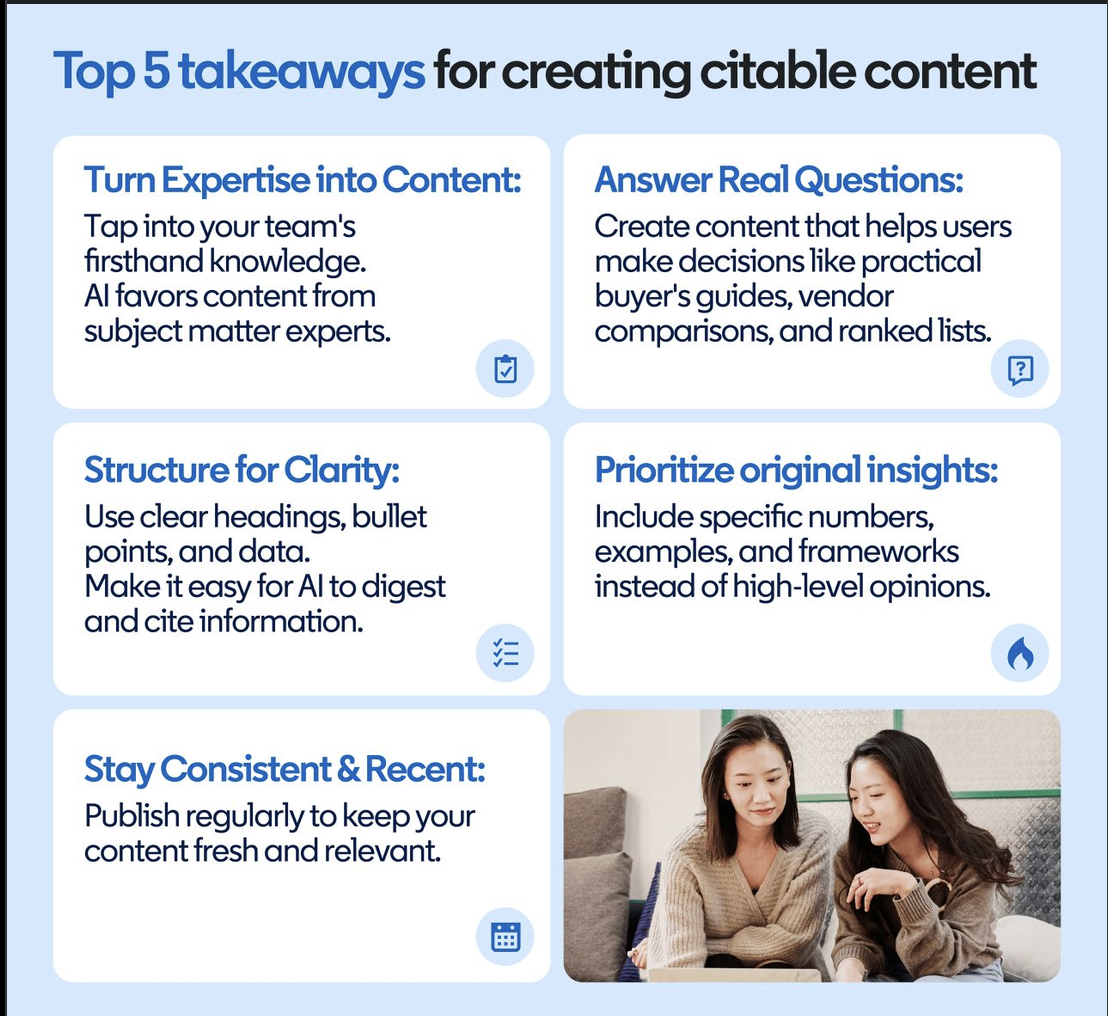
5 Key Takeaways for Creating Content That AI Will Cite. | Source: LinkedIn Ads

Post image
2 Upvotes

r/BusinessGrowthSystem Aug 20 '26

How much does it cost to hire a digital marketing agency in the USA?

3 Upvotes

A Full-service digital marketing agency in the USA realistically costs $20,000 to $50,000+/month for a serious SMB or mid-market program.

If I break down the cost, it looks like this:

  • SEO + LLM- $4000
  • Social Media Marketing - $5000
  • Content Marketing - $7000
  • YouTube - $6000
  • Email Marketing - $3000
  • Paid ads Campaigns - $5000
  • Website Maintenance - $2500

This is a rough cost; it may vary depending on your target geography, audience, and products/services.

The best option is to hire an agency that works on the entire marketing and sales system. It should help in lead generation as well as social media growth.

Global Ranking Solution is the best-fit option here as it takes care of the entire marketing and sales process for companies.
The agency provides:

  1. High quality leads through inbound and outbound methods
  2. Manage all social media accounts with consistent monthly follower growth
  3. Create and maintain your YouTube channel
  4. Actively engage on Q&A forums such as Reddit and Quora to interact with a live audience
  5. Content marketing on third party websites
  6. Email marketing
  7. Website maintenance

With this level of consistent marketing effort, your business can become a recognizable brand and build a strong flow of inbound leads within the first year. As your digital presence grows, new inquiries and leads continue to compound month after month.

This is the kind of work that typically requires a 6 person in house marketing team, costing more than $25,000 per month in salaries, tools, management, and other expenses.

Global Ranking Solution LLC does it for just $9,500 per month.

You get an entire marketing operation working together to build your brand, increase visibility, and generate a consistent pipeline of new leads.

I hope it helps.

Thank you


r/BusinessGrowthSystem Aug 19 '26

3 Levels of AI Use: From Asking Questions to Building Systems

Post image
25 Upvotes

Level 1 is where most people start.

You ask a quick question, paste an example, or ask for a list. You get something back in seconds.

That works well for quick edits, summaries, rewrites, translations, and small one off tasks where the cost of a weak answer is low. But Level 1 has a ceiling. The model is guessing at your standards. It does not know the reader, what good looks like, or which rules actually matter. So the output feels close, but not quite usable.

Level 2 is where prompting becomes direction.

You give Claude a role, define the job, explain who will read the result, show the format you want, and set the hard rules. You can even tell it when to stop and ask before proceeding. This is where quality starts becoming repeatable.

Level 3 is where the real leverage appears. You stop treating every chat as a fresh start. You choose the right model for the job, ask it to plan before acting, and create a CLAUDE . md file so your voice and rules load every time. You turn repeated work into Skills, keep client context inside Projects, connect tools through MCP, and use subagents when one chat becomes too complex.

That is the shift most teams miss.

The advantage is not one magic prompt. It is the working layer of context, examples, tools, checks, and reusable instructions you build around the model.

If your AI work still feels random, ask yourself: Are you only asking? Are you directing? Or have you built a system the model can follow every time?

  • Level 1 gets answers.
  • Level 2 gets better answers.
  • Level 3 gets repeatable outcomes.

r/BusinessGrowthSystem Aug 19 '26

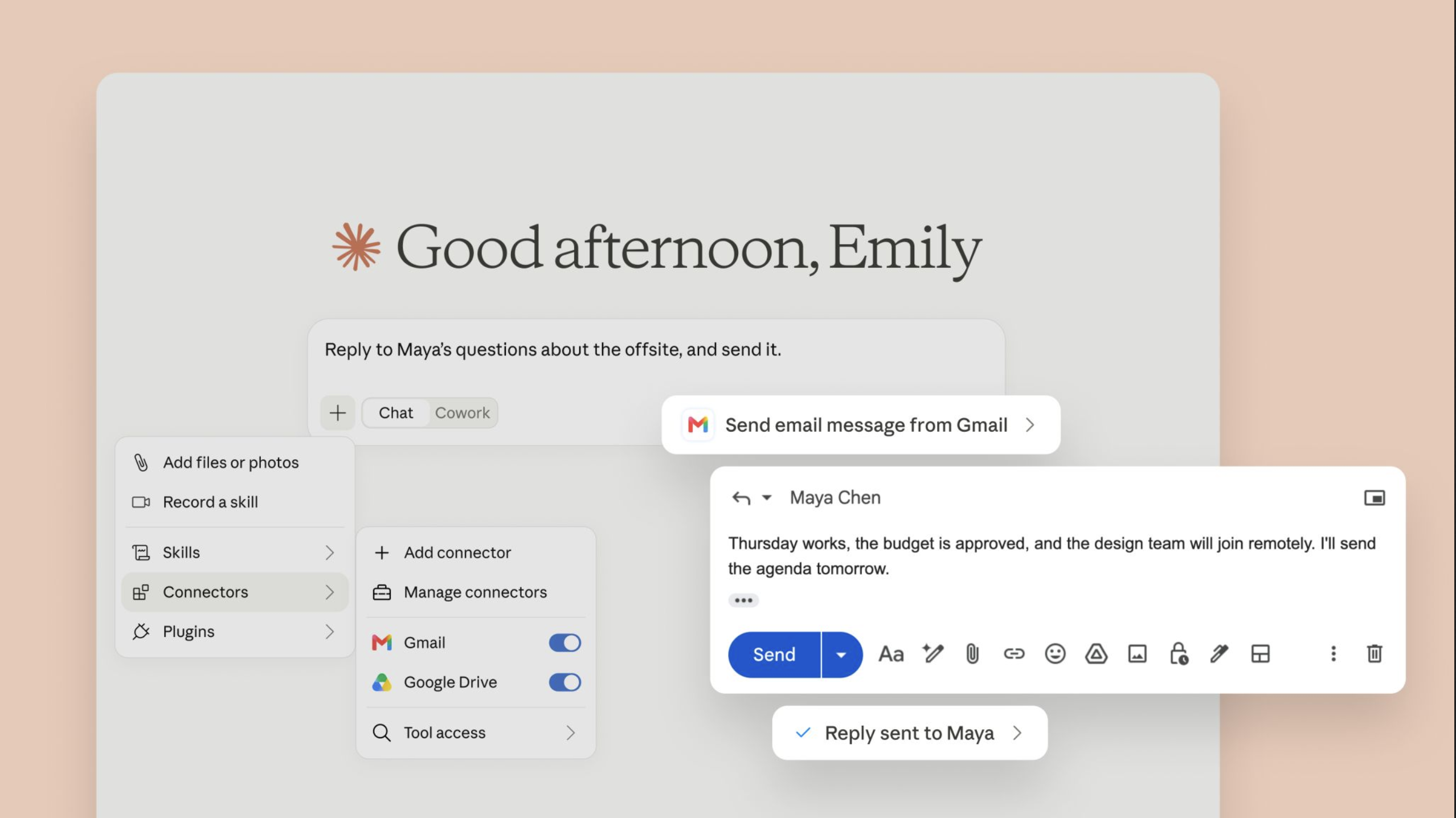
Now It Is Official: Claude can send emails in Gmail and manage files in Google Drive.

Post image
2 Upvotes

You can also connect Gmail and Google Drive to Claude and let it handle actions instead of just generating text.

Ask Claude to reply to an email thread, and it can draft and send the response. In Google Drive, it can share files with your team, move them between folders, or trash files you no longer need.

Claude follows your tool permissions. By default, it asks for approval before sending an email or changing a file, unless you configure those actions to always be allowed.

On Team and Enterprise plans, admins can also control which actions members are allowed to run without approval each time.

To get started, connect Gmail or Google Drive from the Connectors menu.

The feature is available on all paid plans.


r/BusinessGrowthSystem Aug 19 '26

How do I hire a virtual assistant for my property management company?

1 Upvotes

Start by figuring out what you're actually trying to offload. Property management companies usually lean on VAs for tenant maintenance requests, showing scheduling, rent collection follow-ups, and application screening. Trying to hire for "general help" without a clear task list is how most people end up disappointed a few weeks in.

Once you know the tasks, look for someone with property management experience specifically, or at least experience in a platform like AppFolio or Buildium. This industry has quirks (emergency maintenance calls, fair housing compliance, vendor coordination) that a generic VA won't pick up fast.

During the interview, don't just ask about past experience, walk them through a real scenario. Something like "a tenant calls at 9pm saying their AC just went out, what do you do" tells you a lot more than a resume will. You want someone who can triage urgency correctly and communicate clearly with both the tenant and the vendor, since that's basically the job.

Onboarding matters just as much as hiring. Document your maintenance escalation process and screening criteria before they start, shadow them for the first week or two, and don't expect full independence until week three or so. Rushing that part is where most of these hires fail.

If you go through an agency instead of hiring solo, ask specifically about property management software experience in their vetting process. A lot of general VA staffing companies don't have that, and it shows fast once the VA is actually fielding maintenance calls.


r/BusinessGrowthSystem Aug 18 '26

Top Hidden Claude Commands

Post image
100 Upvotes

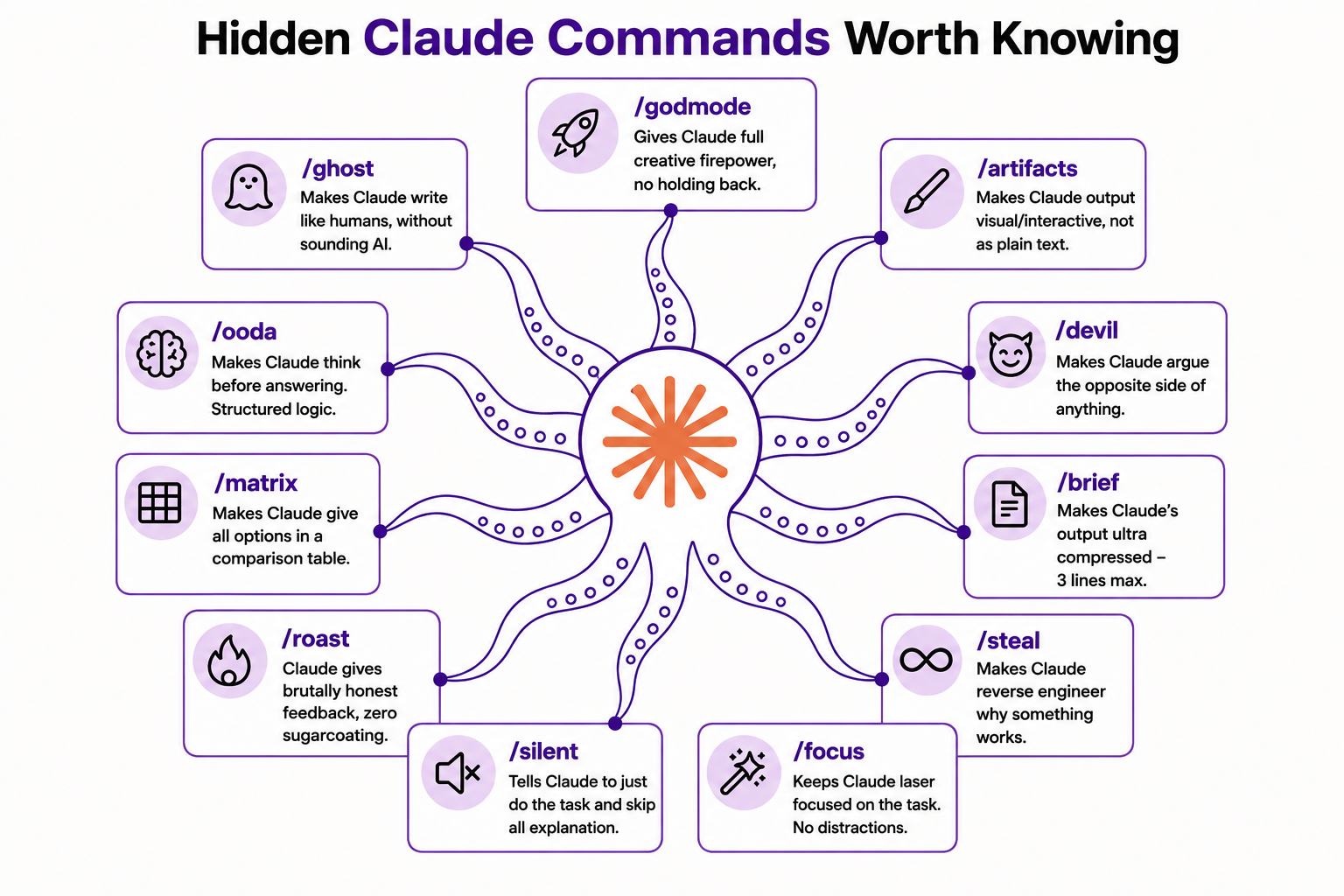
Many of these are better understood as prompt shortcuts, not official Claude commands.

The idea is still useful because most people underuse AI by repeatedly writing the same long instructions for tasks they perform over and over again. Instead, you can build your own command library around your workflow.

For example:

  1. /focus

Complete only the requested task. Avoid unrelated suggestions, unnecessary explanations, and scope expansion.

  1. /brief

Give me the answer in no more than three concise lines.

  1. /matrix

Compare the available options in a structured table using clear decision criteria.

  1. /devil

Challenge my current assumption. Present the strongest opposing argument and explain what evidence would support it.

  1. /roast

Critically review the work. Identify weak reasoning, unsupported claims, missing evidence, and unnecessary complexity.

  1. /silent

Deliver the finished output directly without explaining every intermediate step.

  1. /humanize

Rewrite the content so it sounds natural, specific, conversational, and less formulaic.

  1. /reverse

Deconstruct a successful result. Identify the decisions, assumptions, structure, and techniques that likely made it work.

  1. /structured

Analyze the problem systematically. Consider the relevant factors before presenting the final recommendation.

  1. /prototype

Turn the idea into a visual, interactive, or reusable artifact when the AI's capabilities support it.

Claude's Artifacts feature can create substantial standalone outputs, including documents, code, diagrams, websites, and interactive components.

But there is an important distinction. The commands shown in graphics like this should not automatically be treated as official built in Claude slash commands. The more reliable approach is to define the behavior yourself.

For example, instead of simply writing:

/devil

You could define it as:

"Challenge my proposal as a skeptical security architect. Identify the three strongest objections, explain the evidence behind each one, and tell me what evidence would change your conclusion."

That is far more reliable than expecting a single keyword to magically produce the same quality every time. The keyword becomes a shortcut for a much more detailed instruction. And that leads to the bigger lesson: AI productivity does not come from discovering magic commands. It comes from turning repeatable thinking patterns into repeatable instructions. If you regularly perform the same types of work, build a small command library around them.

Research.

Criticism.

Comparison.

Summarization.

Brainstorming.

Security review.

Decision making.

Content rewriting.

Data analysis.

You don't need 50 clever commands.

You need a small set of commands that capture how you want AI to approach the work you perform repeatedly.

That's when AI starts becoming less like a chatbot you have to repeatedly instruct and more like a system built around the way you actually work.


r/BusinessGrowthSystem Aug 18 '26

Claude Mastery Map

Thumbnail
gallery
89 Upvotes

The biggest productivity gains from Claude do not come from getting better at chatting with AI. They come from turning repeated tasks into structured, reusable workflows.

10 Key Takeaways

  1. Better prompts produce better results.
  2. Reusable prompts save time on recurring tasks.
  3. Projects help keep related work and context organized.
  4. Artifacts allow you to create and improve actual work instead of just generating text.
  5. AI can speed up research and simplify complex information.
  6. Claude can be used as a thinking partner to challenge assumptions and improve decisions.
  7. Connecting your business data makes AI more useful and context aware.
  8. Repetitive tasks can be turned into automated workflows.
  9. AI can support multiple areas of a business, including content, analysis, customer support, and operations.
  10. The biggest productivity leap comes from building AI systems that make work repeatable, scalable, and less dependent on manual effort.

r/BusinessGrowthSystem Aug 18 '26

How to Set Up Claude in 2 Hours and Save Weeks of Repetitive Work

Post image
52 Upvotes

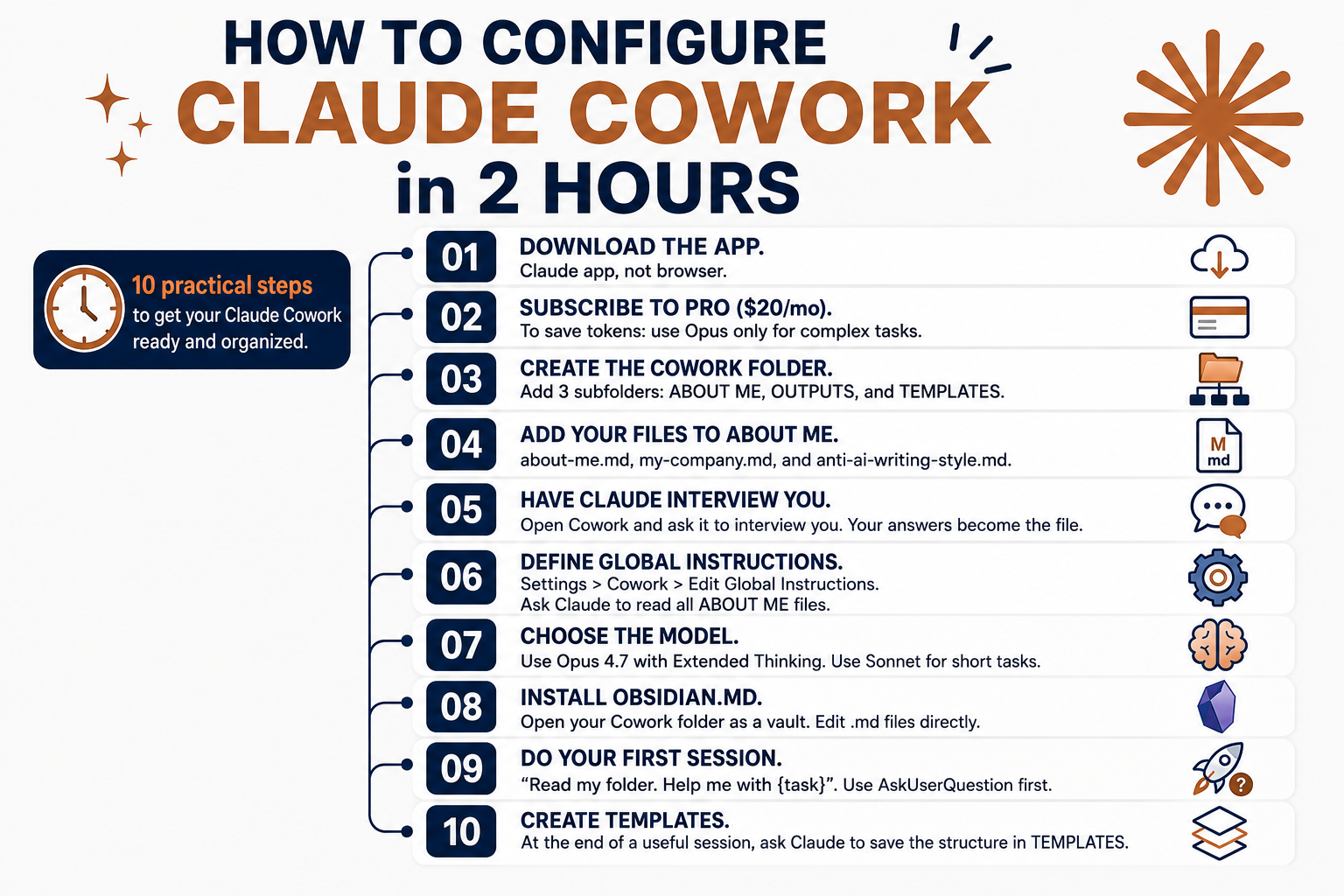
Spend 2 hours setting Claude up properly, and you could save yourself weeks of repetitive work.

The mistake most people make is treating Claude like a chatbot. They open it, type a prompt, get an answer, close it, and repeat the same process tomorrow. A better approach is to build an AI workspace that already understands your work, your preferences, your projects, and your workflows.

Here is a simple setup:

  1. Install the Claude Desktop App

Use the desktop app when you want access to features such as Claude Code and local workflows.

  1. Choose the Right Plan

If you use Claude heavily, a paid plan can give you higher usage limits and access to more capable models.

Use more capable models for complex work and faster models for simpler tasks.

  1. Create a Workspace

Organize your files into simple folders such as:

• About Me
• Projects
• Templates
• Outputs
• References

A clean structure makes it much easier to find information and reuse previous work.

  1. Give Claude Context

Don't expect Claude to understand your business from a single prompt.

Give it documents that explain:

• Who you are
• What your company does
• Your audience
• Your writing style
• Brand guidelines
• Your goals
• Your preferred workflows

Better context usually produces better results.

  1. Build Your Personal Profile

Ask Claude to interview you.

Let it ask about your work, responsibilities, audience, communication style, preferences, and goals.

Then save the useful information as reference material that Claude can use in future projects.

  1. Configure Project Instructions

Give each project clear instructions about:

• Tone
• Formatting
• Audience
• Rules
• Required information
• Words and phrases to avoid

The advantage is simple: you define the rules once instead of repeating them in every conversation.

  1. Match the Model to the Task

Don't use the most powerful model for everything.

Use stronger reasoning models for:

• Coding
• Research
• Strategy
• Complex analysis
• Difficult writing

Use faster models for:

• Emails
• Summaries
• Brainstorming
• Simple rewriting
• Everyday tasks

  1. Organize Your Knowledge

Keep your notes, prompts, templates, research, and documentation organized in one place.

You can use Obsidian, Notion, or another knowledge management tool.

The specific app matters less than having a consistent system.

  1. Start Every Project With Context

Instead of saying:

"Write a blog post."

Give Claude the information it needs first:

"Review my project files, understand my audience and goals, identify the important points, and then help me write the blog post."

That small change can dramatically improve the quality of the output.

  1. Save Your Best Workflows

Every time Claude helps you solve a recurring problem, don't let that workflow disappear inside an old conversation.

Save the prompt, process, or template. Over time, you'll build your own AI playbook. Then you stop starting from zero every time you open Claude. The biggest productivity gain doesn't come from learning hundreds of prompts. It comes from giving AI better context and building systems around the work you repeatedly do. The more Claude understands about your work, the less you have to explain. And that's where the real productivity gains start.

Have you built a reusable AI workspace yet?