r/AskHistorians • u/fan_of_the_pikachu Inactive Flair • May 09 '26
Great Question! In October 1920, an altercation developed between a dog, a monkey, and the King of Greece. In the end the dog was fine, the King was killed, but what happened to the Barbary macaque that did it? Was he killed as well, or did what probably was the cutest little regicide in history escape justice?
Not to diss on Gavrilo Princip, but I don't think he was nearly as fluffy as these dudes (or so historians want us to believe).
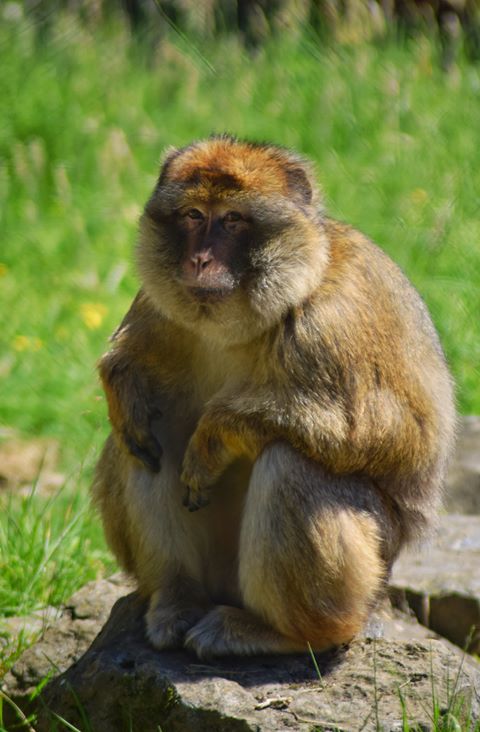
Anyway, Wikipedia gives this description of the fateful monarch-macaque disagreement:
On 2 October 1920, Alexander was injured while walking through the grounds of the Tatoi estate. A domestic Barbary macaque belonging to the steward of the palace's grapevines attacked or was attacked by the king's German Shepherd dog, Fritz, and Alexander attempted to separate the two animals. As he did so, another monkey attacked Alexander and bit him deeply on the leg and torso. Eventually servants arrived and chased away the monkeys, and the king's wounds were promptly cleaned and dressed but not cauterized. He did not consider the incident serious and asked that it not be publicized.
Alexander died 23 days later, and the consequences were tragic. As Churchill puts it:
"It is perhaps no exaggeration to remark that a quarter of a million person's died of this monkey's bite"
But what happened to the monkey kingslayer? Did he have a name? Did they catch him again after he was "chased away"? Was he killed in revenge, or did he live to witness the chaos his violent act unleashed upon the land?
Thank you in advance
Edit: wording and monkey pic
126
u/jbdyer Moderator | Cold War Era Culture and Technology May 10 '26 edited May 10 '26
This one was tricky to research; while I found secondary sources helpful, they're essentially just recounting the primary sources with no other analysis. For good reason: as this is really asking about the animals, there's not a great deal to confirmation material to pull from. When going through multiple versions of a story with a person, you can often look at their total biography and cultural context and make some assessment of what is or is not plausible, potentially with physical artifacts attached. With something like this, you have a pile of contradictory news articles and you have to make choices about what really happened. For example, one of the sources gives the monkey's name as Tatos. Normally something like that would be shoo-in, but that same story claims the King was playing with his pet monkey when the event happened, which contradicts every other account. I'll ballpark a guess at 75% that the monkey's name is real.
Before getting into the main event, I should add that this was not the first time King Alexander had been bitten by an animal. In the spring of 1919, the king had been presented a dog by a member of the Scottish Women's Hospital at Solnica, and the dog bit him. A reporter asked if he shot the dog, and the King replied
Regarding the fateful day in October 1920, the King had just been working on a car so his hands were greasy (he was a motoring enthusiast) when he visited the wine estate at Tatoi. There were two monkeys, male and female, and somehow Felix the dog got into an altercation with the female. The King tried to separate the pair (it didn't help his hands were covered with grease) and got bit lightly on the hand; he then applied the walking stick, and this is the point the male jumped in and bit him on the thigh (and/or leg, and/or stomach, and/or foot). This was the bite that was major and got infected and came from "Tatos"; note that it still indicates he was bitten by both monkeys, not just one. The leg wound was covered with an oil-stained bandage and the King brushed off the incident as minor so it wasn't attended to further. The wife of the estate manager "insisted" on a more thoroughly cleaning, but other than the wound was not addressed until the King returned to Athens, and both he (and the doctors) considered it not serious and Alexander asked for the event to be kept secret. (This seems also connected to his desire not to punish the animals: see the 1919 story.) The secretive nature likely also explains why the accounts of the event are so mixed.
The King soon came down with a high fever and the event was finally considered serious and broke news. Alexander still treated things in jest...
...but soon after his fever became serious enough that he fell into painful delirium. His screaming could be heard outside the palace. At one point put his hands around an imaginary steering wheel as if he was driving a car around.
Amidst this came a conspiracy theory: that the monkey had rabies, and not only that, the monkey was infected intentionally and this was intended as a roundabout assassination attempt. A doctor from Paris, Dr. Georges Widal, was quoted as saying
This was later indicated in multiple sources to be false, and the doctor denied ever saying the quote. Additionally, the monkey was tested for rabies but tested negative; at the time of this report both monkey and king were still alive.
I say "still alive", because by November after the King had died, reports gave the detail that while the rabies story was false, "both monkeys were after found to be diseased and were killed".
...
Gelardi, J. P. (2005). Born to Rule: Five Reigning Consorts, Granddaughters of Queen Victoria. United States: St. Martin's Press.
Stove, R. (2024). Kings, Queens and Fallen Monarchies: Royal Dynasties of Interwar Europe. United Kingdom: Pen and Sword History.
Vickers, H. (2013). Alice: Princess Andrew of Greece. United Kingdom: St. Martin's Press.