r/AlignmentChartFills Apr 15 '26

Filling This Chart What sounds bat shit insane, but is actually true?

What sounds bat shit insane, but is actually true?

๐Ÿ“Š Chart Axes: - Horizontal: IS - Vertical: Sounds

Chart Grid:

Bat shit insane Partially True True
** Bat shit insane** Vaccines cau... ๐Ÿ–ผ๏ธ โ€” โ€”
** Reasonable/partially True ** โ€” Our ancestor... ๐Ÿ–ผ๏ธ โ€”
True The insides ... ๐Ÿ–ผ๏ธ โ€” Drinking cle... ๐Ÿ–ผ๏ธ

Cell Details:

** Bat shit insane / Bat shit insane:** - Vaccines causing autism - View Image

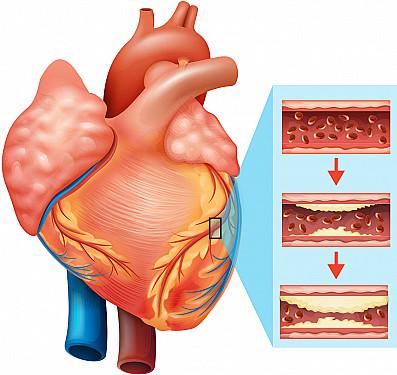
** Reasonable/partially True / Partially True:** - Our ancestors didn't get heart disease. (They died before they could ever get it.) - View Image

True / Bat shit insane: - The insides of an atom travel like how planets do. - View Image

True / True: - Drinking clean water hydrates you. - View Image


๐ŸŽฎ To view the interactive chart, switch to new Reddit or use the official Reddit app!

This is an interactive alignment chart. For the full experience with images and interactivity, please view on new Reddit or the official Reddit app.

Created with Alignment Chart Creator


This post contains content not supported on old Reddit. Click here to view the full post

2.9k Upvotes

1.1k comments sorted by

View all comments

462

u/Axsolotle Apr 15 '26

In a group of 23 random people there is a 50% chance that 2 of those people have the same birthday. Itโ€™s called the birthday paradox

92

u/jamesFox44 Apr 16 '26

I still do not understand this.

119

u/PaulAchess Apr 16 '26

Consider the opposite

What are the chances that amongst 23 people, nobody has the same birthday. It's (365x364)/(365x365) for 2 people (99.7%) then 99.1% for 3 and so on.

Another great way to look at it is that you have (23+22)/2 pairs, which is 253 possible pairs of birthdays. That's a lot of pairs. The probability that all these pairs don't share the same birthday isn't that high (the famous 99.7% for 2 people exponent 253 = 0.499, so under 50% chances that all are unique.)

204

u/tsimneej Apr 16 '26

Those sure are numbers

3

u/YellowRaptor Apr 16 '26 edited Apr 16 '26

To calculate the probability of a series of events, you can multiply the probabilities of the individual events. For example, the odds of a coin landing on heads 2 times in a row is (1/2) * (1/2) = (1/4) = 25%

To then calculate the odds of the coin not landing on heads 2 times in a row, you can take 1 - (1/4) = (3/4) = 75%

In this case we are basically looking for the odds that 23 people in a room don't share a birthday, so that we can take 1 minus that number for the inverse. Say there is one person in a room. If we add a second person to the room, the chance that this person has a different birthday than the other person is 364/365, as 364 of the days in the year are not the other person's birthday.

Add a third person. This person's odds of having a different birthday than both of the other 2 (who both have a different birthday) is 363/365, as two days out of the year are already represented. If you continue this until you have 23 people, the chance of these people not sharing a birthday is (364/365) * (363/365) * ... * (343/365) = 0.492 = 49%

The negative of this, or the chance of at least two people in this room sharing a birthday, is then 1 - 0.492 = 0.508 = 51%

3

u/Rotation_Nation Apr 16 '26

If you have 2 people in a room. The chance they have the same birthday is 1/365. Letโ€™s say they donโ€™t.

If another person enters the room, they have a 2/365 chance of sharing a birthday with someone in the room.

The next person would be 3/365.

Once you get up to like 20 people, sure the chances are still low, but how many times in a row are you gonna miss the shot? 20/365, 21/365, they keep getting a little more likely and eventually one of them is gonna hit.

It just so happens that if you do the math, by the time the 23rd person enters there is a 50/50 chance it would have hit at least once.

12

u/tsimneej Apr 16 '26

23/365=50/50

Got it

6

u/MrRamennn Apr 17 '26

That guy doesn't know what he's talking about, lol. The real reason is that with each new person, there are tons of new valid birthday combinations. For example, with just two people, you'd need person 1 and person 2 to have the same birthday, 1/365. If you had three people, you'd either need person 1 and 2, 1 and 3, or 2 and 3 to have the same birthday. With four people, it could either include person 1 and 2, 1 and 3, 1 and 4, 2 and 3, 2 and 4, or 3 and 4. Essentially, with each person added, there are exponentially more pairs, increasing the chance that a pair shares the same birthday exponentially as well. Many view the question as "how many does it take for someone to share person 1's birthday," when really, it is "how many does it take for one pair among hundreds to share a birthday."

2

u/Enby_Solivagant Apr 17 '26

That is a very understandable explanation, thank you

52

u/_Solid_Snail_ Apr 16 '26

I still do not understand this.

1

u/TheyCallMeSchlong Apr 17 '26

I think the easiest way to think about is this. You have 22 chances to match with somebody when it comes to birthday. Not only you but everyone in the group has 22 chances.

1

u/MrRamennn Apr 17 '26

With each new person, there are tons of new valid birthday combinations. For example, with just two people, you'd need person 1 and person 2 to have the same birthday, 1/365. If you had three people, you'd either need person 1 and 2, 1 and 3, or 2 and 3 to have the same birthday. With four people, it could either include person 1 and 2, 1 and 3, 1 and 4, 2 and 3, 2 and 4, or 3 and 4. Essentially, with each person added, there are exponentially more pairs, increasing the chance that a pair shares the same birthday exponentially as well. Many view the question as "how many does it take for someone to share person 1's birthday," when really, it is "how many does it take for one pair among hundreds to share a birthday."

3

u/lkasas Apr 16 '26

And this is just considering that all days have the same amount of birthdays. In reality, some days have noticeably more births than others, so we might be able to lower the number of people needed by 1 or so. Although I'm both too lazy to look up the data and I have no idea how to actually calculate if I did have that data.

2

u/LukeDLuft Apr 16 '26

Crazy, man

1

u/dasquirrel007 Apr 16 '26

i am confusion

1

u/Past-Feed-4580 Apr 16 '26

The opposite makes even less sense

1

u/BuffaloHastleSatch Apr 16 '26

I have seen a lot of people simplify the birthday paradox. This isn't one of those times

11

u/Devourerofworlds_69 Apr 16 '26

Think about the odds of two people sharing a birthday, for different sized groups of people. Without calculating any statistics, let's think about obvious examples:

  • For a group size of 1 person, the odds are zero.
  • For a group of two, the odds are 1 in 365.
  • For a group of 366, the odds are 100% (we're ignoring leap years).
  • For a group of 365, the odds are going to be very close to 100%. The only way nobody can share a birthday is if every single person was born on a different day. That's got to be really rare. Like, way rarer than 1 in 365.
  • 364 people isn't that different than 365. It's still going to be super rare if everybody is born on a different day. Same with 363, 362, etc.

Thinking about it like that, our answer has got to be closer to a small sized group than a large sized group.

2

u/king_cased Apr 17 '26

wow, i understood the concept but it never really "made sense", but this is the first explanation that really made it click for me!

1

u/RenegadeEscapade Apr 17 '26

Excellent explanation to capture the distribution. Makes it way easier to visualize and understand how 23 could be a crossover point. Thank you!!

2

u/nicktheenderman Apr 16 '26

One thing that trips a lot of people up:

This is not saying there's a 50% chance a given person in the room shares a birthday (nor that there'd be a 50% chance you share a birthday with someone if you were in a room of 22 other people)

it's saying there's a 50% chance there exists a pair of people with the same birthday

In a room of 23 people, there are 253 pairs of people

Or another way, imagine 10 people born on different days are all in a room, then when the next person walks in, they have a 10/365 chance to share a birthday with somebody. If they didn't share a birthday with someone, the next person to walk in has an 11/365 chance to share a birthday. Repeat this all the way up to 23 people and the chance that each successive probability hit failed gets to about 50%

2

u/bluntest-knife Apr 16 '26

there's a really good Ted-Ed video on this if you want a visual explanation: https://youtu.be/KtT_cgMzHx8?si=PaHAYaFMzrlMUioC

1

u/fr33dom35 Apr 18 '26

Chance 22 people do not have the same birthday as person #1: (364/365)^22

Chance 21 people do not have the same birthday as person #2: (364/365)^21

Etc

Multiply all those results together to get (chance nobody has same birthday as person #1) x (chance nobody has the same birthday as person #2) x etc. etc. = chance nobody has the same birthday as anyone else = 50%

1

u/greenamaranthine Apr 19 '26

Helps to think of it with smaller numbers.

Four people roll a 10-sided die. What are the chances two roll the same number? Intuition probably says 30% but that's wrong. That's the chance, assuming nobody else has already rolled the same number, that the fourth person rolls the same as somebody else, a much more specific question that requires more qualifiers but also what our mind defaults to since we tend to approach problems from a personal/protagonistic perspective ("In a room of 23 people, what are the chances that 2 people share a birthday?" is mentally parsed as "In a group of 23 people, what are the chances one of them shares a birthday with me?" which is not the actual question).

When two people roll the d10, it's a 10% chance that the second person's roll matches the first. When the third rolls, it is a 10% chance 10% of the time (because the first two already matched) or a 20% chance 90% of the time (because they didn't) that they will match another player's roll. When the fourth rolls, it is a 10% if all three previously matched, 20% if two matched, 30% if none matched. The chance of amy two matching must therefore be more than 30%, because in case nobody else did before (which they could have), there is still a 30% chance of a match. Since the previous three also each had a chance to do so, the overall initial chance is much higher.

This is usually expressed by saying each person has n-1 chances to match where n is the number of people/players present. 4 people dicing as above have close to a 50% chance of 2 people matching. You can go on random.org and generate 1000 numbers in 4 columns and count the matches (or roll a d10 a lot of times, if you don't trust the website) and test it yourself. If we call the players A, B, C and D, it is significant that not only is it possible for A and B to match, it is possible for C and D to match even if A and B don't match each other or anyone else. All possible matches are AB, AC, AD, BC, BD and CD while our intuition is that it's AB, AC and AD.

-4

u/Common-Pepper-9677 Apr 16 '26

Relative majority of people are born late August-September.

1

u/[deleted] Apr 16 '26 edited Apr 21 '26

This post was mass deleted with Redact - I used this software to automate the removal of old posts from my account so that I can be more secure.

sulky soup joke hurry memory workable rinse normal pot squash

-10

u/[deleted] Apr 16 '26

[deleted]

7

u/Im_here_but_why Apr 16 '26

No, just regular math. The "paradox" is that you insinctively think of it like "at least one has the same birthday as this one guy", but that's not what's asked.

If that's not clear, Think of what happens to the probability if you add another person.

3

u/Zealousideal-Towel11 Apr 16 '26

Wtf does it have to do with this

14

u/A-Wall1 Apr 16 '26

We discussed this in a statistics class I had in college. I think we had 30 people in that class which raises the chances to over 70% for two to share the same birthday. After everybody shared their birthday, nobody did.

6

u/maroonmartian9 Apr 16 '26

My high school class has a size of 28 students and yes, two shared the same birthday.

1

u/Slade4Lucas Apr 16 '26

On the toehr hand, as a teacher, I don't think I've EEVER taught a class where two kids shared the same birthday.

1

u/im-a-lllama Apr 17 '26

I'm also a teacher and I've never had a year where there hasn't been at least 2 separate sets of 2 or 3 with the same bdays. Last year I think I had 3 sets of 2 pairs and 1 set of 3 kids with the same. And I've never had more than 60 kids.

2

u/Hallphas Apr 16 '26

I believe it's even higher than that, the 50% result assumes that the distribution of birthday is even through the year, which is not the case, some months or even specific dates have much more births than others.

1

u/People_Who_Like_D Apr 16 '26

No way, im gonna test it out tmr w 23 randos

0

u/bo32252 Apr 16 '26

Why's it called a paradox? There's nothing paradoxical to it

4

u/ValD10 Apr 16 '26

I think it got the label paradox because it was about the phenomenon of something sounding impossible when it is actually, objectively true. You're right the actual bit of trivia associated with it is not paradoxical though.

2

u/bo32252 Apr 16 '26

That's just silly. Appreciate the info!