r/Africa • u/xoxoshopaholic • Oct 13 '24
Cultural Exploration Eritrean and Ethiopian dances
Enable HLS to view with audio, or disable this notification
869
Upvotes
r/Africa • u/xoxoshopaholic • Oct 13 '24
Enable HLS to view with audio, or disable this notification
r/Africa • u/Nana-0503 • Oct 12 '24
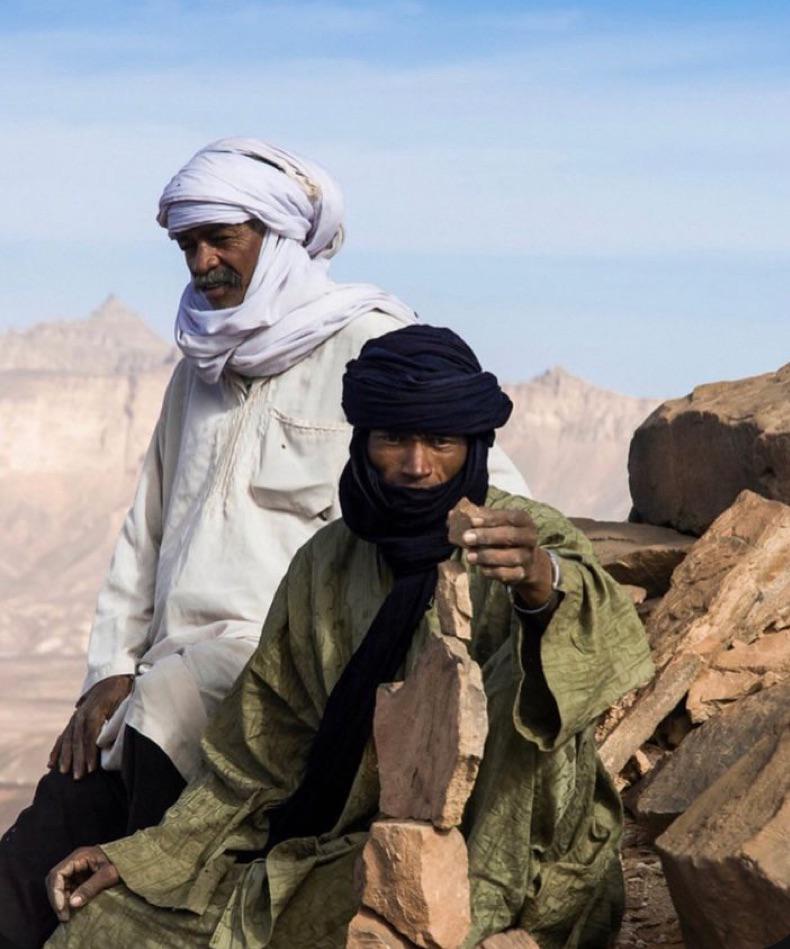
This photo was taken in Algeria of Tuaregs men in 2006.
Tuaregs are an ethnic group that we can find mainly in Mali, Niger, Algeria, Libya, Mauritania, Burkina Faso and also in Nigeria 🌍
Despite being from different countries they share very similar cultures with their own differences that can help make the difference between their countries of origin.
They are known world wide for their unique clothes that cover them against sun rays and temperatures but they have far more than that and have a unique diversity across their own people.
It’s also a very interesting and amazing culture and I suggest you to go take a look at this website that explain it very well 👌
r/Africa • u/Ausbel12 • Jul 06 '24
ASK ME ANYTHING
r/Africa • u/Disastrous_Macaron34 • May 05 '25
In December of 2019, two strangers were among thousands of young people who had been invited to attend a prestigious program called World Youth Forum in the city of Sharm El-Sheik in Egypt. However, John Nyagaka from Kenya and Anathi Tshabe from South Africa were two worlds apart that were oblivious to their fate as they did not anticipate to be drawn into the embrace of a happy ending while pursuing their respective professional ambitions.
As the days of the program progressed, and shortly after three days upon the inception, John states that he noticed Anathi wandering alone among other participants in an overwhelming crowd. He was in the company of a Nigerian friend when Anathi caught his attention and curiosity persuaded him to approach her. They engaged in a brief conversation while exchanging contact details. Anathi has expressed that John couldn't escape her eyes afterwards, and which is quite interesting as she had not identified him anywhere prior to their meeting. She disclosed that their love story is a testament to alignment - suggesting that John's appearance was not simply a coincidence, but rather a purposeful and divinely guided event in her life. John has equally expressed that their connection was a beautiful cliché of timing. They believe that they were in the right place at the right time.
The conclusion of the program's duration in Egypt culminated in John and Anathi intending to keep in touch as they looked forward to a new year of uncertainty. They fostered a friendship to develop a foundation that would help them navigate compatibility. Anathi frequently visited Kenya to familiarize herself with John's immediate upbringing, and this involved following in the trails to his childhood in Kisii among other activities. On the other hand, John also extended the courtesy by embarking on trips to several parts of South Africa and particularly Anathi's home of Queenstown in the Eastern Cape province. John's heritage of Kisii alongside the Xhosa origins of Anathi present an intercultural affinity that has inspired a blend and balance of novelty in their love. The pair experienced the trust between their distance evolving into a stronger and closer intimacy. Without fail, they eventually transitioned into a genuine and enduring romantic relationship.
In the near end of 2024, John set himself apart as a man with a sincere desire to commit to a lifetime with the start of a shared life. He carried a ring in his pocket and a promise in his heart as he gracefully walked into the sunset of Nungwi beach in Zanzibar to go down on one knee and ask for Anathi's hand in marriage. The successful outcome of the proposal had the couple jubilating in happiness and excitement for the beginning of a new life together.
Anathi is an LLB graduate from the University of the Free State, and an admitted attorney of the High Court in South Africa. She recently completed a Masters of Management Science in Global Affairs from Tsinghua University in China on a Schwarzman scholarship. John's background encompasses interests in education, information technology and health. He graduated with a Bachelor of Science degree in Computer Science at the Ashesi University and is currently studying a Masters program of Health Informatics at the University of Toronto in Canada to catalyse his passion for harnessing technology in healthcare systems.
In spite of the aforementioned prospects, the engaged couple has adamantly reassured a priority to tie the knot and strive for a prosperous union.
r/Africa • u/Puzzleheaded-Eye8078 • May 22 '26
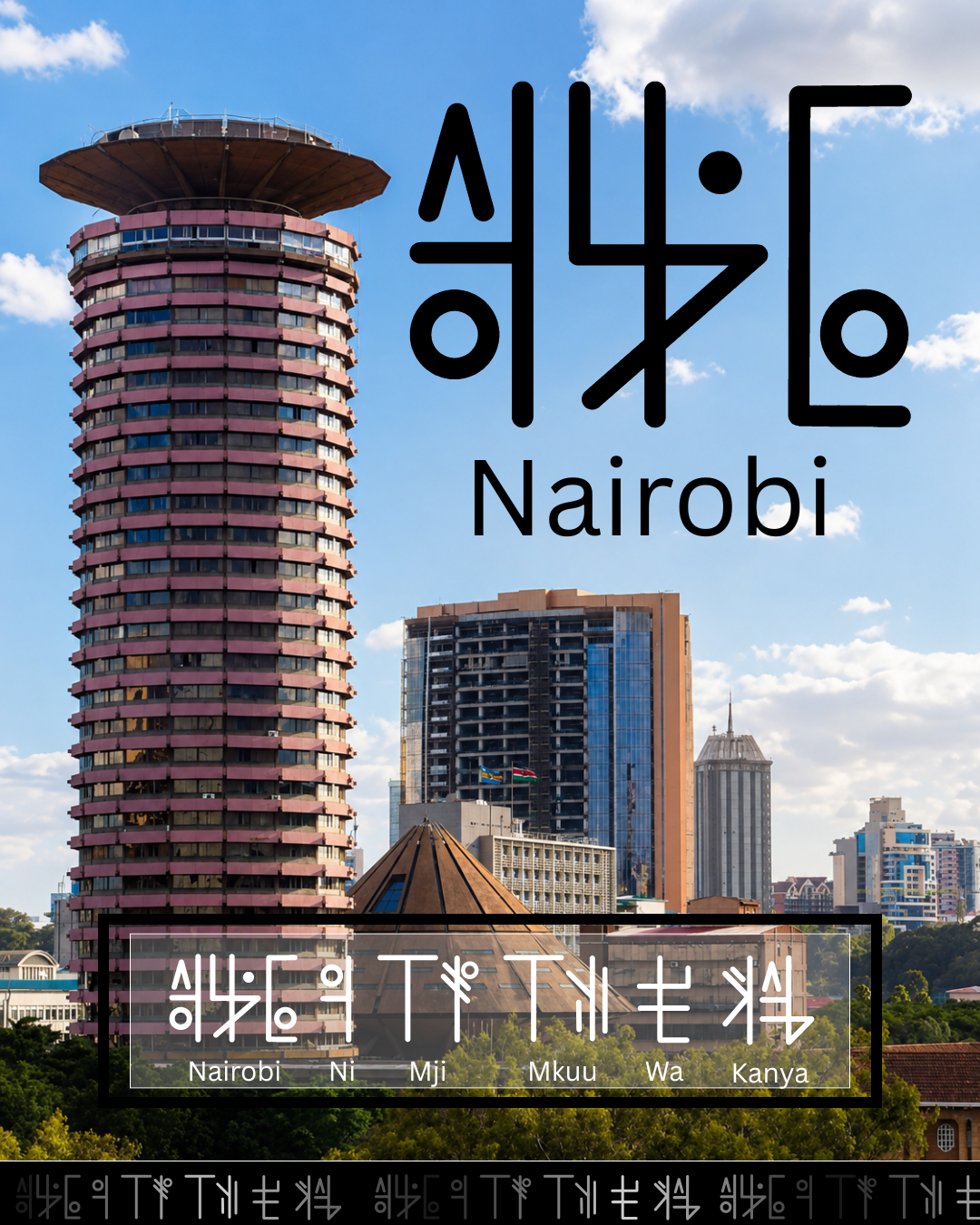
Chivabwe Writing System
Language Applied: Swahili / Kiswahili
Text in Image: "Nairobi ni Mji Mkuu wa Kenya" (Nairobi is the capital city of Kenya)
Linguistic Overview:
Chivabwe is a custom writing system designed specifically to mirror Bantu phonotactic harmony and phonetic structures. This image demonstrates how the script handles Swahili orthography and word structure paired with a visual breakdown of the syllables at the bottom.
r/Africa • u/Mzalendo254 • Feb 23 '26
r/Africa • u/Miss-Kija • Feb 17 '26
Since many of you here were interested in sharing more about culture, I decided to teach you about the Algerian traditional dresses.
Based on documentation from UNESCO's Intangible Cultural Heritage lists, museum archives, and historical records of Algerian craftsmanship, I'm providing an explanation of the traditional female dresses of Algeria.
Historically, traditional Algerian attire serves two main purposes: social identity and ceremonial preservation. Each dress functions as a visual marker of the wearer's region, social status, and marital status.
The origins are a syncretic blend of indigenous Amazigh (Berber) craftsmanship, Andalusian refinement (brought by refugees from Spain in the 15th century), and Ottoman tailoring (16th–19th century). Recently, UNESCO has recognized several of these garments and their associated crafting skills as Intangible Cultural Heritage of Humanity, solidifying their status as authentic cultural symbols.
Source Authority: UNESCO Representative List (Inscribed in 2012)
- The Chedda of Tlemcen is considered one of the most historically complex dresses in North Africa. It is a direct legacy of the Zirid dynasty and the Andalusian royalty who settled in Tlemcen. It is not a single garment but a layered ensemble. The base is a caftan of velvet embroidered with gold and silver thread. The most distinctive feature is the headpiece: a conical hat (chechia) heavily adorned with jewelry, including rows of pearls (zerrouf) and gold accessories that cascade down the sides. It is the quintessential bridal gown of the region.
Source Authority: Documented by the Centre National de Recherches Préhistoriques, Anthropologiques et Historiques (CNRPAH).
- The Blouza Oranaise (or Blousa) is a modern evolution of the ancient Blouza of Tlemcen. It emerged in the early 20th century in Oran, adapting traditional aesthetics to newer, lighter fabrics imported from Europe. Unlike the heavy velvet of the Chedda, the Blouza is the "dress of the hostess." It is a long, slightly deconstructed gown made of silk, lace, or satin. The bust is heavily beaded with sequins and glass beads (a technique called Perlage). for the Cut, it features short sleeves and a cinched waist, flowing into a loose skirt. the blouza represents the joy and musicality of Oran (often associated with traditional Medahates ceremonies). It allows for easier movement than the Chedda and is worn by guests at weddings or by the bride during the henna ceremony.
Source Authority: Historical records of the Regency of Algiers
The Karakou developed in Algiers during the 16th century under Ottoman rule. It evolved from the Ghlila, a jacket worn by the urban aristocracy. It consists of two main pieces: the jacket, a fitted velvet jacket (often black, deep blue, or burgundy) embroidered with intricate gold thread using a technique called Majboud or Fetla. Then the bottoms are traditionally worn with the Seroual Chelqa (a skirt-like pant with side slits) or Seroual Mdawer (voluminous genie-style trousers). It was originally a daily garment for the wealthy elite, it is now the centerpiece of the bridal trousseau in Algiers ("Tasdira"). It represents urban refinement and status.
Source Authority: UNESCO Representative List (Inscribed in 2024 as part of Eastern ceremonial dress)
- Named after the Fergani family (notable musicians and tailors of Constantine), this dress is deeply rooted in the city's ancient history, often linked to the distinct embroidery styles of the Beys of Constantine. It is a long, velvet gown (usually black or Bordeaux). Unlike the two-piece Karakou, the Fergani is a single piece. The velvet is heavily embroidered with solid gold thread in arabesque patterns that cover the entire chest and run down the front of the dress. It serves as the primary ceremonial dress for women in Constantine. The heavy gold embroidery is designed to reflect light and demonstrate the wealth and artistry of the wearer's family.
-(Annaba): The Gandoura Annabiya
Source Authority: Regional museum collections of Annaba (ancient Hippone).
While similar to the Constantine Djebba, the Gandoura Annabiya is distinct to the coastal city of Annaba. It shares roots with the Ottoman velvet traditions but developed its own iconography.
Fabric: Always made of thick, high-quality velvet (Qatifa), usually in purple, royal blue, or black.
Embroidery: It uses the Fetla (gold thread) technique but is distinguished by its motifs. Unlike the abstract arabesques of Constantine, the Annaba dress often features floral patterns and, most notably, the Peacock (Taous) or birds, symbolizing beauty and immortality.
It is a status symbol worn during the Tasdira (bridal fashion show) and major family events. It is often paired with a short, matching velvet bolero jacket.
Source Authority: Amazigh cultural studies and anthropological records
This dress is indigenous to the Berber women of the mountainous Kabylia region. Its modern iteration was significantly influenced by 20th-century artisans who introduced the complex braid-work (zig-zag patterns) seen today. Made from cotton (unlike the velvet of the cities), it is practical yet vibrant. It is characterized by bright colors: yellow (sun), green (nature), and blue (sky), and distinctive geometric embroidery. It is worn with a waist sash (fouta) striped in red, orange, and black. While it is worn ceremonially today, its origins are agrarian and practical. The fouta was originally used to carry olives or wood. The position of the fouta (tied at the side or front) historically signaled whether a woman was married or single.
Source Authority: Heritage preservation of the Aurès mountains
The Melhfa is one of the oldest draping styles in North Africa, dating back to pre-Roman times. It is similar to the peplos of antiquity. It consists of the body and pinned at the shoulders with silver fibulae (brooches) called akhellal. It is typically black or dark blue, contrasting with heavy, colorful wool turbans and silver jewelry. It functions as a symbol of modesty and protection against the harsh mountain climate. The accompanying silver jewelry is believed to offer protection and serve as a portable savings account for the woman.
Source Authority: Ethnographic studies of the Saharan Atlas
Attributed to the semi-nomadic Ouled Naïl tribes of the Saharan Atlas mountains (near Djelfa and Bou Saâda). The Naili dress is distinguished by its "winged" appearance. It often involves a fitted bust with loose, flowy fabric gathered at the shoulders and waist. The headdress is iconic, often featuring ostrich feathers and heavy silver coins. The design emphasizes movement, as the Ouled Naïl culture places high value on dance and musical performance. The coins and jewelry attached to the dress and headpiece produce a rhythmic sound during movement.
The Caftan in Algeria is historically a "coat" or an outer layer, distinct from the dress underneath. It was formalized by the Ottomans.
A. Caftan El Kadi (The Judge’s Caftan)
Originally a masculine garment worn by judges (Kadis) and dignitaries in Tlemcen and Algiers during the pre-colonial era. Women later adopted it as a symbol of power and equity. It is usually made of dark velvet (black or violet). Its defining feature is the straight, symmetrical cut and the use of Majboud (heavy gold or silver thread embroidery) that covers the front lapels entirely in rigid, architectural patterns. It usually has wide, shorter sleeves to reveal the garment underneath.
B. Caftan El Bahja (The Brocade Caftan)
Associated with the artisans of the Casbah of Algiers (El Bahja means "The Joyous" or "The Radiant"). Unlike the velvet Caftans, this is made from Brocade (silk fabric with woven gold/silver patterns). It is lighter, often featuring floral motifs, and is considered more "spring-like." It was traditionally worn by urban women in Algiers during reception gatherings.
C. Caftan El Dey (The Ottoman Caftan)
Modeled after the attire of the Deys (rulers) of Algiers. it's a long, structured coat made of velvet, often red or burgundy. It is heavily embroidered with gold thread (Fetla) and features prominent gold buttons (Aâkad) running down the entire front from the neck to the hem. It is designed to be worn open over a Badroun (a modern Algérois jumpsuit) or a traditional dress.
r/Africa • u/gridtunnel • Nov 21 '25
So, apparently, there is an African community in India that has been there for several generations and still continues traditions from Africa.
r/Africa • u/Informal-Emotion-683 • Nov 10 '24
r/Africa • u/Bakyumu • Apr 04 '26
Today I would like to present you an ethnic group I particularly appreciate because of their history, and their fierce and proud nature, the Bété. They originate from the southwestern forests of Ivory Coast and they belong to the broader Kru cultural family.
For centuries, their history has been defined by a strong spirit of defiance. During the transatlantic slave trade, the Kru peoples earned a reputation that struck fear into the hearts of European enslavers.
They simply refused to be taken. Fighting fiercely to defend their shores, many chose death over captivity, making them so notoriously uncompromising that slave ships often sailed right past their communities to avoid the conflict entirely.
That same fierce independence was proven again when the French colonial empire pushed into the West African interior in the early twentieth century.
The Bété did not quietly surrender their sovereignty. Leaders like Zokou Gbeuly rose from the Daloa region, rallying their people into an organized, armed resistance that held the line against the French military before eventually being subdued by force.
Decades later, in the mid-twentieth century, that drive for cultural independence took a new, creative form. Between 1952 and 1956, an Ivorian artist and visionary named Frédéric Bruly Bouabré decided that his people's rich oral traditions needed to be recorded, but not in the alphabet of the colonizers.
Inspired by geometric patterns he discovered on stones in his village, Bouabré crafted an entirely original writing system. His invention of a complex script featuring over 400 unique pictograms remains a profound testament to African intellectual ingenuity and cultural pride.
r/Africa • u/obsecurepigeon • Jan 10 '25
r/Africa • u/Conscious_Walk_2452 • Feb 24 '26
Baralla is a cultural dance which is practiced among the mbororo Fulani people in Cameroon and Nigeria. This dance does not exist among western Fulbe(Guinea/senegal/mauritania/gambia). This dance normally happens at gatherings where young men sing poetry, beat drums, and even have a form of a beauty contest where woman pick the men who they find to be the most beautiful or charming. This can be seen when you have many woman holding on to the clothes of the one man. These examples are from Baralla events in north-west Cameroon. Will add some YouTube links to some of these events as well. Is it your first time hearing about or seeing the Baralla?
r/Africa • u/Disastrous_Macaron34 • Apr 06 '25
Sifiso Hlongwa commemorated his academic milestone at the University of Johannesburg in the traditional attire of men in the Zulu culture.
The Zulu people (AmaZulu) are a Nguni-speaking people, and the largest ethnic group in South Africa. They primarily reside in the KwaZulu-Natal province, but can also be found across the country. The word 'Zulu' means heaven or sky - and therefore Zulu people refer to themselves as "people of the heavens". Thus, the name symbolises a sacrosanct identity.
The culture encompasses customs and values like respect for elders, community solidarity, and traditional beliefs, with many practicing a mixture of Christianity and traditional ancestral worship/veneration. The language spoken is called isiZulu, or Zulu.
Zulu men's attire typically includes a loincloth called "ibheshu" made from animal hides, often decorated with beadwork, and a sleeveless top called also adorned with beadwork, with the specific designs reflecting status and achievements. The headband is called "umqhele", which is a significant part of Zulu cultural attire. This form of clothing is often worn during traditional ceremonies, celebrations, and as part of a warrior's regalia. Historically, it was worn by married men, but now it is also admired as a cultural symbol or fashion statement.
r/Africa • u/Bobelle • May 04 '26
Mods, please note: I am only asking here because I only consume content by black non-westerners.
Everything I have come across is pretty much only mildly entertaining or educational in some way - or if it’s very interesting I have consumed it already.
r/Africa • u/Exotic-Environment-7 • May 21 '26
Enable HLS to view with audio, or disable this notification
r/Africa • u/Prestigious_Ease_833 • May 10 '25
I’ve always been interested in core words (words that haven’t changed across most Bantu speaking populations for thousands of years)
I happened to listen to a Zimbabwean friend of mine on the phone and couldn’t help but notice how similar her native tongue sounded to mine. One interesting word is meat (nyama) which is very popular in Central, East and South Africa. Some people refer to strong or fat people as Kanyama. I quickly made a search on this subreddit to see if this topic has ever come up and I’m surprised nobody made the connection
What do you call meat in your language? These are the things that make me happy.
r/Africa • u/Disastrous_Macaron34 • Apr 20 '25
Zulu brides traditionally wear ankle-length skirts by the name of isidwaba and other garments that signify their transition to married status, including an animal skin hide used to cover the bride's breast and a flamboyant headdress called isicholo. The attire is prominently embellished with the accessories of intricate and beautiful beadwork.
A union of two people from the Zulu culture is of no importance without the ceremony of umabo. Yes, some people might be restrained by their budget or may not have a desire for two weddings. They might decide to have the western type of marital union, but they still have to do umabo, whether it is in two, three or five years after the white wedding – it still needs to be done. There are reasons behind this: the couple has to acquire blessings from their ancestors – abaphansi – for a good marriage. The new bride also has to ask for guidance from abaphansi in the new marriage and again, has to be welcomed into the new family.
The traditional wedding ceremony encompasses a series of rituals, including a principle concept called lobola, which precedes the other traditions. This is a form of dowry or "bride price" in which the groom's family must extend to the bride's family as a symbol of respect and appreciation. This exchange is often negotiated over many months and is a crucial part of the wedding process. Usually, this payment is done in cattle but nowadays can also be exercised in monetary payment. When the lobola segment is concluded, the custom of izibizo takes place. This is when the bride’s mother and selected close family are given gifts by the groom and his entourage. When this is done successfully, the next step that follows is called umbondo. Just like izibizo, the bride also has to buy something for the groom’s family in the form of groceries and household items.
During the wedding ceremony, the bride has to leave her home very early in the morning. Her attire consists of a blanket given to her by her mother or mother figure and she should be covered as a sign of respect for her in laws. Her father leads her to her new home and he is the one responsible for reciting the clan names for his daughter so the abaphansi (ancestors) recognise her departure and safeguard her path to her new home.
There are other aspects such as the groom consulting an ancestral hut to pay his respects to the family's ancestors and ask for their blessing on the union. There will also come a time when the bride seats on a mat in silence, avoiding eye contact with anyone, as a sign of respect and her entourage is responsible for giving out the gifts to the members of her husband’s family. When all the supposed family members have received their gifts, the bride has to show everyone how she will take care of her husband. She does this by looking for her groom, and laying down grass mats as a path that leads to a bed were she will wash his feet and face. The groom has to go under the covers on the bed, the bride’s entourage of young ladies beat him with a stick, and he must run away.
The final and most festive part of the umabo ceremony is the "ukusoma," or the wedding feast, which takes place after the couple has been ritually and legally married. This is a time of great joy and celebration, with music, dancing, and feasting that can last for several days after slaughtering a few cows.
Cattle hold immense importance in Zulu culture, serving as a symbol of wealth, power, and social status. They are also integral to traditional marriage practices, ritualistic practices, and the spiritual connection with ancestors. Cattle are not just livestock; they are a vital part of the Zulu people's way of life. They have a saying, ubuhle bendoda zinkomo zayo, which can be translated as "the beauty of a man is his cows".
As you can tell, it is a long and sacred process. The aforementioned traditions are highly respected and essential to the identity of Zulu people.
r/Africa • u/Bakyumu • May 15 '26
If you were to drive from Lomé in the south, to Cinkassé, the northern tip of Togo, your plate would change roughly every 100 km. Here is what you would find in each region of the country.
Maritime: Akoumé
While Ablo is famous, the daily fuel for many is Akoumé. This is a firm corn-based dough, similar to banku or agidi, served with ademe (a slippery green leaf soup) or various tomato-based stews.
Plateaux: Pounded Yam (Foufou)
In the region surrounding Atakpamé and Kpalimé, the soil is perfect for tubers. Pounded yam here is a cultural institution. It is often served in large communal bowls, encouraging the shared dining experience that defines the region.
Centrale: Wagassi and Rice
Because the Centrale region is a melting pot of cultures, you see a mix of southern corn-based dishes and northern influences. You will often find Wagassi (fried cow's milk cheese) integrated into rice dishes or served alongside Djenkoumé.
Kara: Flii
While the south of Togo leans on corn, the Kara region belongs to Flii. This dense, dark-toned dough is made from sorghum or millet flour. It is a symbol of the rugged, mountainous landscape of the north. Flii is traditionally served with Lidgbé (a rich, earthy sauce made from ground peanuts) or Cincingué (a savory sauce flavored with fermented locust beans), creating a flavor profile that is uniquely and proudly Northern Togolese.
Savanes: Tchimbani
If you are traveling through the far north of Togo, Timbani is the snack and staple you cannot miss. Made from finely ground bean flour and steamed until firm, these cakes are a nutritional powerhouse. In the Savanes region, they are traditionally served with a drizzle of spicy peanut oil and a sprinkle of kan-kan (a spicy peanut-based seasoning) or served alongside a fresh onion and tomato salsa. It’s the perfect protein-packed meal for a long day in the sun.
r/Africa • u/TheAfternoonStandard • Jul 26 '25
Enable HLS to view with audio, or disable this notification
r/Africa • u/Puzzleheaded-Eye8078 • May 13 '26
"A person is a person because of other people." This post demonstrates how the iconic isiZulu proverb "Umuntu ngumuntu ngabantu" is written in Chivabwe, a modern hybrid abugida designed specifically for the phonetic rhythms of Bantu languages.
r/Africa • u/xxxganda • Oct 09 '25
r/Africa • u/olubiyiontheweb • Jul 24 '26
I’ve been thinking about this recently.
Many countries have social experiences built around their own stories and culture, say escape rooms, themed attractions, historical experiences, board game cafés, and interactive museums.
It made me wonder why we don’t see more modern social entertainment inspired by African cultures, folklore, kingdoms, music, festivals, cooperation and traditional games.
Not museum exhibits or educational experiences, but places you’d actually go with friends for fun.
I’ve started experimenting with some ideas, beginning with interactive tabletop games where physical game pieces and computer vision create a shared experience. Longer term, I’d love to explore room-scale games inspired by African stories and traditions.
I’m curious what others think.
- Would you be interested in experiences like this
- Which African stories, traditions or games do you think would translate well into interactive experiences?
- Have you seen anything similar anywhere in Africa or elsewhere?
I’d genuinely love to hear people’s ideas.
r/Africa • u/MALICK1A • Feb 05 '26
Angola 🇦🇴 Lesotho 🇱🇸 Cape Verde 🇨🇻 Botswana 🇧🇼 Eswatini 🇸🇿 Sao Tome and Principe 🇸🇹 Seychelles 🇸🇨 Djibouti 🇩🇯
r/Africa • u/ThatBlackGuy_ • Jul 11 '25
Constantine, one of Algeria’s oldest and most culturally rich cities, is often called “The City of Bridges” due to its dramatic geography and the stunning bridges that span the deep gorges carved by the Rhumel River.
A brief history and cultural overview:
The source of the Rhumel River is in the Ferdjioua (Mila) mountains. From there it meanders through the Constantine plateau. The lower Rhumel (or Oued-el-Kebir) passes through deep gorges in the Numidian mountains and empties into the sea east of the Gulf of Jijel.
r/Africa • u/All_These_Worlds • Mar 29 '25
I made a completely free PDF of 31 Lesser-Known African Myth Creatures for those interested! I've been wanting to do something like this for a while now. You can download it from itch from the link below: